
Ozone Applications

Plastic Adhesion
Ozone for Plastic Adhesion
Ozone is a powerful oxidizer that modifies polymer surfaces, improving the bond between plastics and coatings, inks, adhesives, or foam insulation. When used as a surface treatment, ozone increases the surface energy of plastics, creating polar functional groups that promote strong chemical and mechanical adhesion—without primers, solvents, or heat.
The Problem: Poor Adhesion on Plastics
Many plastics are chemically inert and hydrophobic, meaning:
- Their surface energy is low.
- Adhesives, paints, or coatings don’t “wet out” well.
- Bonds can easily fail or peel off.
So before printing, painting, or gluing, the surface must be activated — i.e., chemically modified to make it more receptive.
The Solution: Ozone Surface Treatment
Ozone is a strong oxidizer that reacts with the top molecular layer of the plastic surface.
When exposed to ozone the surface undergoes oxidation that:
- Breaks C–H bonds, creating polar oxygen-containing groups (like –OH, –C=O, –COOH).
- Raises surface energy, improving wettability.
- Introduces functional sites that interact chemically or physically with adhesives and coatings.
The result: a cleaner, higher-energy surface that allows coatings, paints, or glues to spread and bond uniformly.
Applications in Plastic Manufacturing
Film and Sheet Production
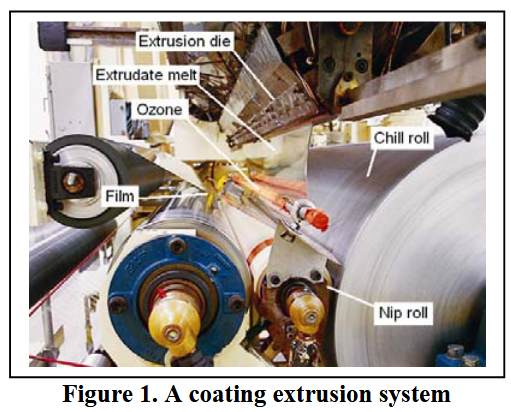
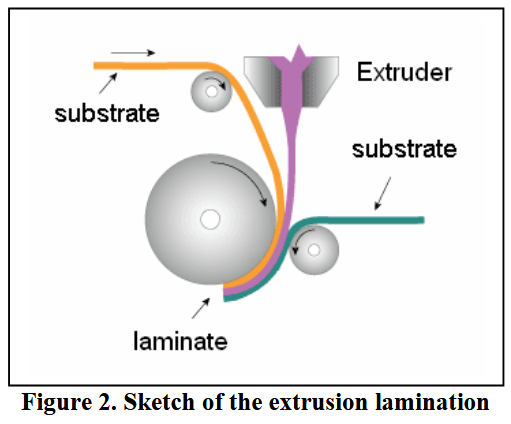
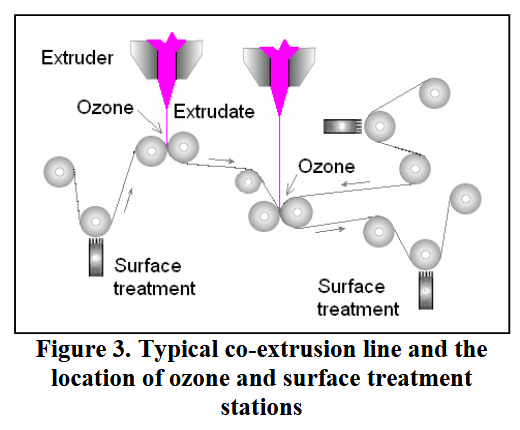
Ozone improves adhesion in extrusion coating and lamination lines. When introduced near the die, ozone oxidizes the molten polymer surface, allowing strong bonding to paper, foil, or other films.
Typical benefits include:
- Reduced melt temperatures
- Improved adhesion and heat-seal strength
- Elimination of primer coatings
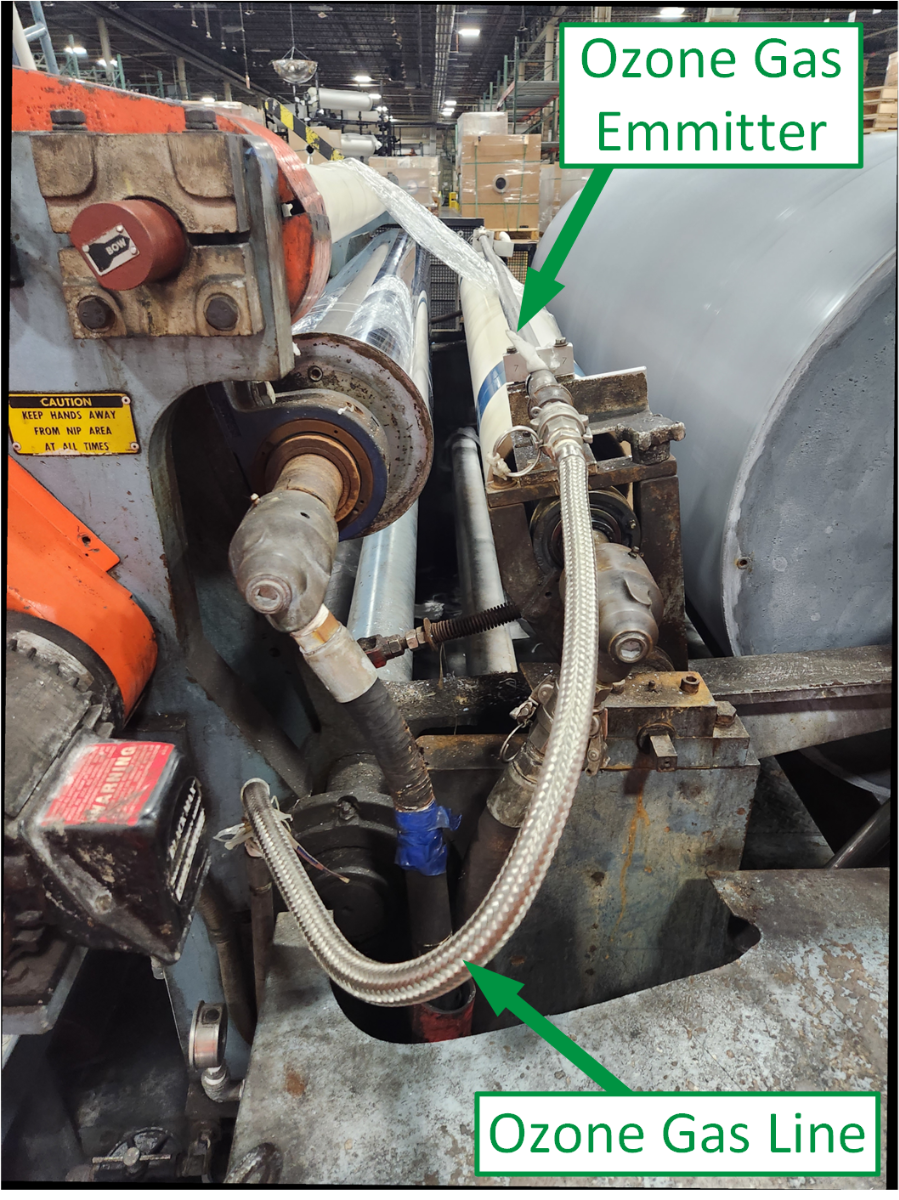
The image above shows the a plastic lamination process using ozone gas for improved adhesion.
Injection and Blow-Molded Parts
Surface activation using ozone allows for better adhesion of paints, coatings, labels, or overmolded components—ideal for consumer goods, medical parts, and electronics housings.
Ozone for Rotationally Moulded Insulated Boxes and Foam Adhesion
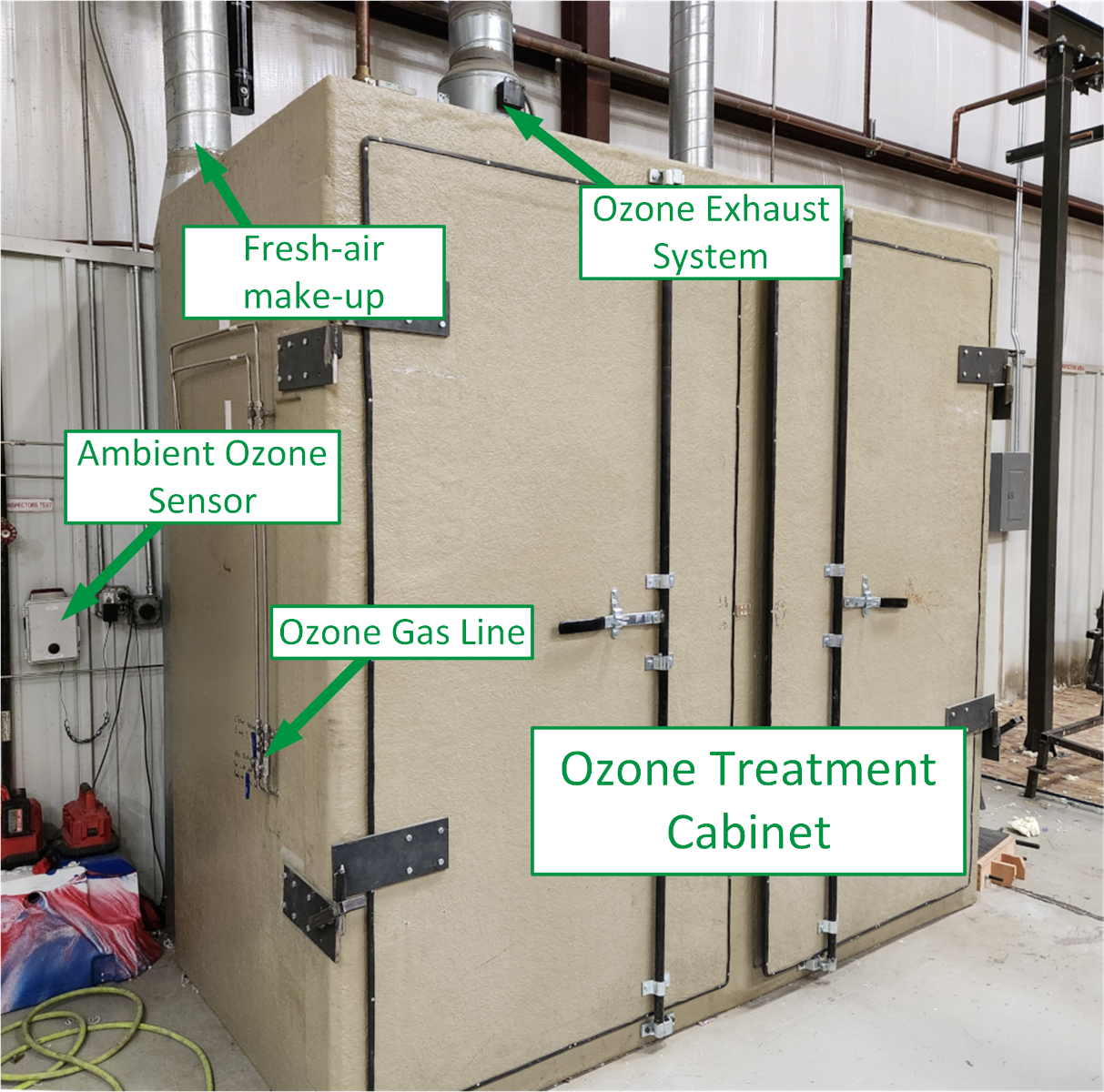
Plastic parts are placed into the enclosed cabinet. Ozone gas lines are connected to the each part. The door is closed and the process is started, ozone purges the void of each plastic component that will be filled with foam. The ozone gas flow will cease after a few minutes, and the box is purged so the parts can be removed safely.
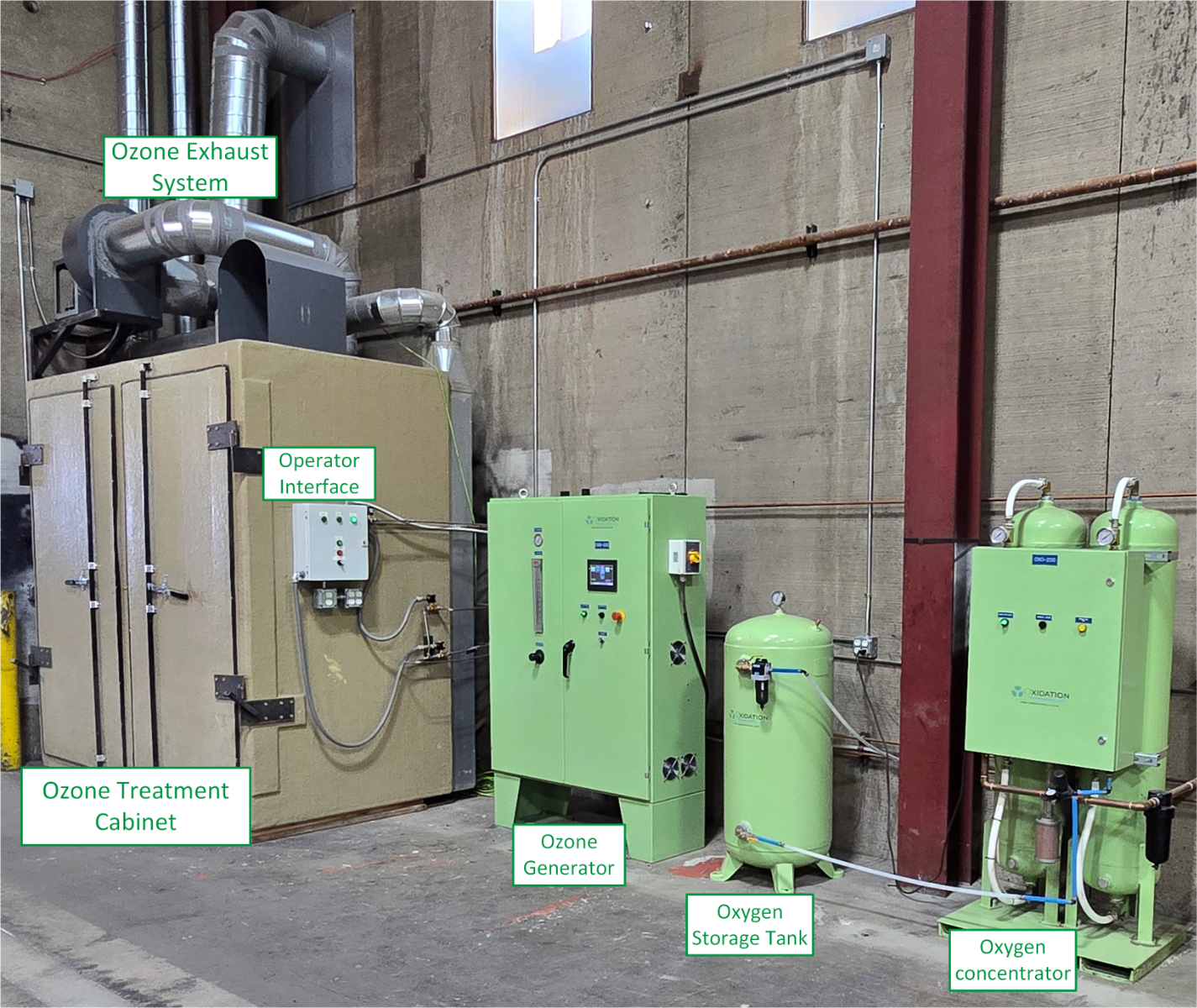
The Challenge
Rotationally molded coolers, ice chests, and insulated containers are made from durable polyolefin shells. These plastics are extremely non-polar and difficult for polyurethane (PU) foam to bond with. Poor adhesion can lead to foam delamination, air gaps, or reduced structural strength.
The Ozone Solution
Ozone gas is introduced directly into the interior cavity of the molded shell prior to foam filling. This gas-phase treatment oxidizes the inner plastic surface, increasing its surface energy and allowing polyurethane foam to adhere securely.
Typical process:
- The cavity is filled with ozone-enriched air (typically 5–7% ozone).
- The ozone is allowed to dwell for several seconds to minutes, depending on size.
- Air is flushed through the cavity to remove remaining ozone (>97–99% purge).
- Polyurethane foam is injected for insulation and structural reinforcement.
Results:
- Strong, uniform foam adhesion to plastic
- Elimination of primer chemicals or flame treatment
- Improved structural integrity and insulation performance
- Environmentally safe and easily automated
Industry Validation
This ozone-based method is commercially proven, with multiple systems in operation today for internal treatment of rotationally molded containers. Applications include:
- Ice coolers and outdoor gear boxes
- Refrigeration cabinets and insulated panels
- PU-foamed appliance housings
Advantages of Ozone Surface Treatment
|
Feature |
Benefit |
|
Dry, solvent-free process |
No chemicals or VOCs |
|
Low temperature |
Safe for heat-sensitive plastics |
|
In-situ treatment |
Works inside closed cavities |
|
Energy efficient |
Low operating cost |
|
Consistent results |
Easy to automate |
Ozone Systems and Integration
Oxidation Tech designs and supplies complete ozone systems for industrial surface treatment.
Options include:
- Corona-discharge, oxygen-fed ozone generators for ozone production
- Ozone delivery and monitoring control systems
- Automated purge and safety systems for production environments
- Ozone Scrubbers to eliminate ozone gas after the treatment process
References:
References and white papers below are provided below:

Application of the Ozonation Process for Shaping the Energy Properties of the Surface Layer of Construction Materials
Authors:
- Mariusz Kłonica
Faculty of Mechanical Engineering, Department of Production Engineering, Lublin University of Technology,
ul. Nadbystrzycka 36, 20-618 Lublin, Poland
Journal of Ecological Engineering 2022, 23(2), 212–219
https://doi.org/10.12911/22998993/145265
ISSN 2299–8993, License CC-BY 4.0
Abstract:
The properties of the surface layer of construction materials are very important for making adhesive bonds. The article presents the test results for surface free energy in PA6 polyamide subjected to surface layer modification using the ozonation process. To develop the surface geometrically, the samples were subjected to mechanical processing. The comparison of results demonstrated that ozonation is an efficient and eco-friendly method of modifying the surface layer. The article also presents the comparison results for measurements of selected surface
roughness parameters.
Link:

Modifying Surface Features Extrusion Coating and Lamination
Authors:
- Roy A. Wolf
- Amelia Sparavigna
Abstract:
Extrusion coating, lamination and film lamination give rise to complex manufacturing techniques which allow a converter to make high-performance packaging films. The physical properties and the related performance characteristics of composites obtained by extrusion coating and lamination can be comparable to that produced by film lamination. This is not surprising since many of the major components involved by these techniques in the production of the final composites are also the same. The paper examines how the use of ozone combined with corona discharge compares to ozone combined with atmospheric plasma relative to seal strength for these composite film constructions, and suggests a direction for future improvements in seal strength.
Link:
Statistical Analysis of the Effects of Ozone on Adhesion in the Extrusion Coating Process
Authors:
- Gary Cheney
- David A. Markgraf
- Michael Benson
Abstract:
Ozone application to an extrudate web has been used for over a decade to enhance adhesion of polymer to the substrate in the extrusion coating process. However, to date, ozone’s effectiveness has not been quantified by published statistical data. A two level fractional factorial design consisting of 64 experimental runs was utilized to study the effects of ozonation and other variables (nine total variables) thought to affect
adhesion and heat seal strength in the extrusion coating process.
The 64 experimental runs were performed by coating LDPE (0.923 g/cc, 10 g/10 min) onto a 40-pound Natural Kraft paper. Logistic regression was utilized to study the factors affecting adhesion in extrusion coating and ordinary linear regression techniques were used to quantify the affects of the variables on heat seal strength. The coating line variables found to have a statistically significant effect on adhesion and heat seal
strength were corona treatment of the substrate, melt temperature, air gap, line speed, coating weight and ozone treatment of the extrudate.
The most striking adhesion results were observed for the combination of ozone treatment of the extrudate and corona treatment of the substrate. This combination provided acceptable adhesion at conditions which otherwise could not be utilized in extrusion coating. Besides these adhesion results, heat seal strength was higher for samples utilizing both corona treatment and ozone treatment compared to samples where
only the substrate was treated
Link: