
Ozone Applications

Flour Milling
Ozone use in Flour Milling
Ozone has become an increasingly valuable tool in the flour milling industry because it’s a powerful oxidizer, broad-spectrum antimicrobial, and residue-free treatment option. In modern milling facilities, ozone can be used at multiple points in the process to enhance food safety, quality, and shelf life — without adding chemical residues.
Below is a detailed breakdown of how ozone is used throughout the flour milling process, along with why it’s chosen over conventional chemicals such as chlorine or bromates.
Why Ozone is the Smart Choice for Flour Milling
- Residue-free – decomposes naturally to oxygen
- Regulatory approval – widely accepted in food processing
- Cost-effective – on-site generation, no chemical purchasing
- Broad-spectrum – works against microbes, odors, pigments, and pests
- Improved food safety – enhances hygiene throughout the process
 |
 |
| Flour mills and sifters require less cleaning, and build-up bacteria more slowly when ozone is used strategically in the flour mill |
Grain Storage and Pre-Milling Sanitation
Applications:
- Fumigation of stored grain: Ozone is introduced into grain silos or storage bins to control mold, fungi, insects, and microbial contamination before milling.
- Aeration system treatment: Ozone gas can be injected into the headspace or airflow during storage, helping maintain grain quality over time.
- Surface sanitation: Ozone can be used to disinfect belts, elevators, and conveying equipment before grain enters the mill.
Benefits:
- Reduces risk of mycotoxin formation by inhibiting fungi such as Aspergillus flavus and Fusarium graminearum.
- Controls insect pests without chemical fumigants like phosphine or methyl bromide.
- Reduces the microbial load before milling.
Reference example: Studies show ozone treatment can achieve >90 % reduction of fungal spores and 80–100 % mortality in stored-grain pests after several hours of exposure.
Wheat Washing and Conditioning
Applications:
- Ozone dissolved in wash water helps sanitize wheat kernels prior to tempering or conditioning.
- Replaces or reduces the need for chlorinated wash water.
- Oxidizes surface contaminants, molds, and microbes without leaving residues.
Benefits:
- Reduces total plate count (TPC) and coliforms on grain surfaces.
- Lowers the microbial load entering the mill, improving final flour hygiene.
- Maintains kernel integrity and moisture balance during conditioning.
Reference example: Several milling studies have shown up to 2–3 log reductions in microbial counts when ozone is used during the washing stage.
 |
| Ozone water is added to a temper process blender. The PVC water line is flowing ozone water at levels of 15+ ppm of ozone in water. |
Air & Surface Sanitation Within the Mill
Applications:
- Continuous low-dose ozone gas in milling rooms can reduce airborne mold spores and microbial buildup.
- Periodic high-dose ozone treatments are used between production runs for deep sanitation.
- Ozone is applied to flour collection points, sifters, pneumatic conveying lines, and bagging areas.
Benefits:
- Keeps processing equipment and air cleaner with minimal downtime.
- Reduces risk of cross-contamination and product spoilage.
- Complements or replaces chemical fogging or UV systems.
Reference example: Facilities using ozone report a significant reduction in airborne microbial counts and extended sanitation intervals.
Flour Whitening and Oxidation
Applications:
- Ozone reacts with carotenoid pigments in freshly milled flour, naturally bleaching it to a whiter color — similar to chlorine or benzoyl peroxide but without chemical residues.
- Acts as a mild oxidizer to improve dough strength and baking properties.
- Can be applied inline to the flour stream or in a fluidized bed.
Benefits:
- Produces naturally whiter flour without banned bleaching agents.
- Improves flour oxidation index and dough rheology.
- Meets clean-label and regulatory requirements in many countries.
Reference example: Research has demonstrated that ozone treatment can reduce carotenoid levels by >90 % in minutes, achieving similar bleaching to chlorine but with no harmful byproducts.
 |
| Ozone gas is used in a flour bleaching process. Ozone can be used as a bleaching aid to eliminate chemicals such as chlorine. |
Finished Flour Disinfection & Shelf Life Extension
Applications:
- Ozone gas can be circulated through storage silos or packaging lines to control mold and spoilage organisms in finished flour.
- Periodic treatment maintains low microbial counts during storage.
Benefits:
- Extends flour shelf life naturally.
- Reduces the risk of mold growth or off-odors.
- Helps maintain product quality without chemical preservatives.
Reference example: Treated flour stored under ozone has been shown to have significantly lower mold counts after 30–60 days compared to untreated flour.
 |
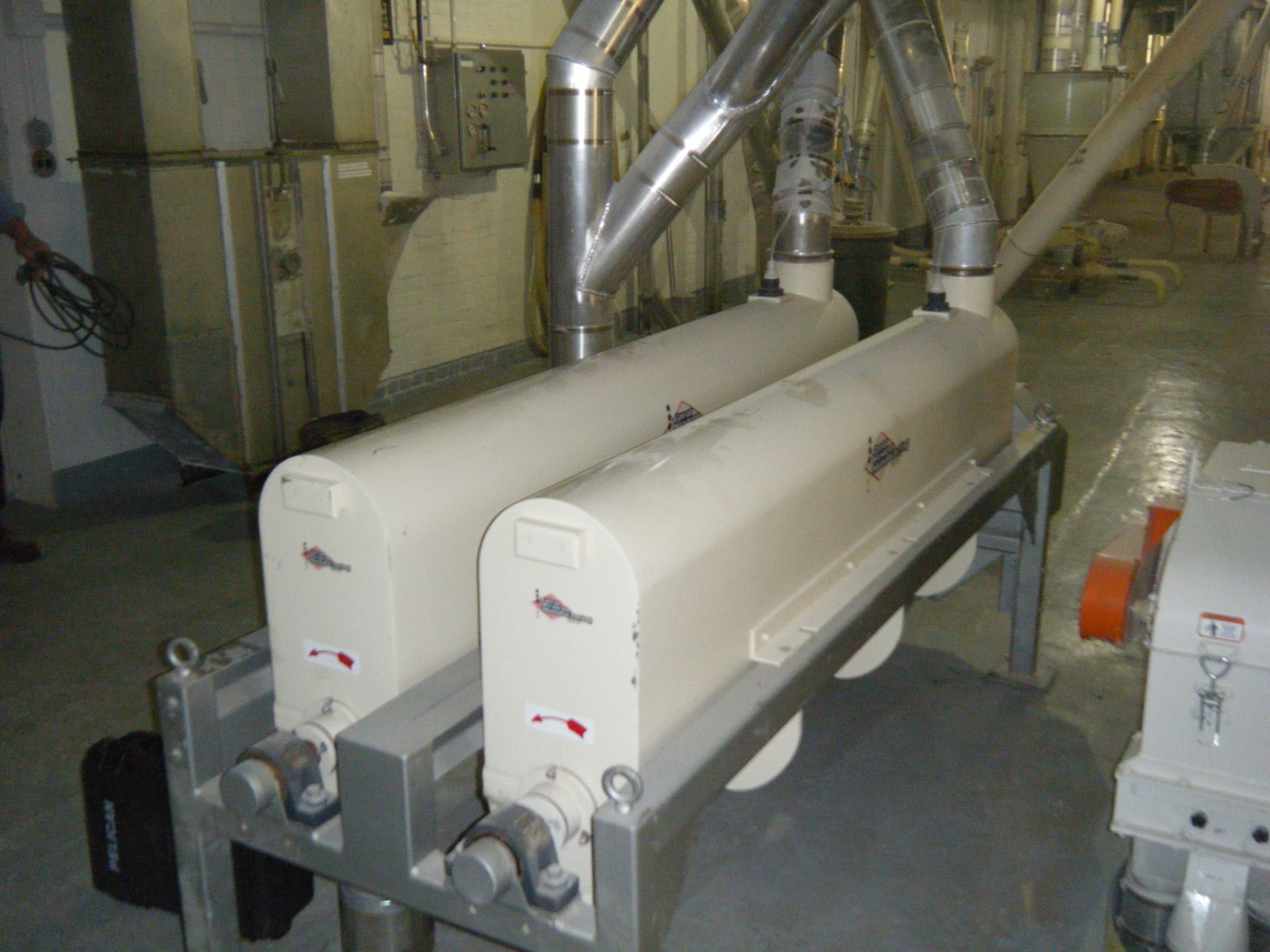 |
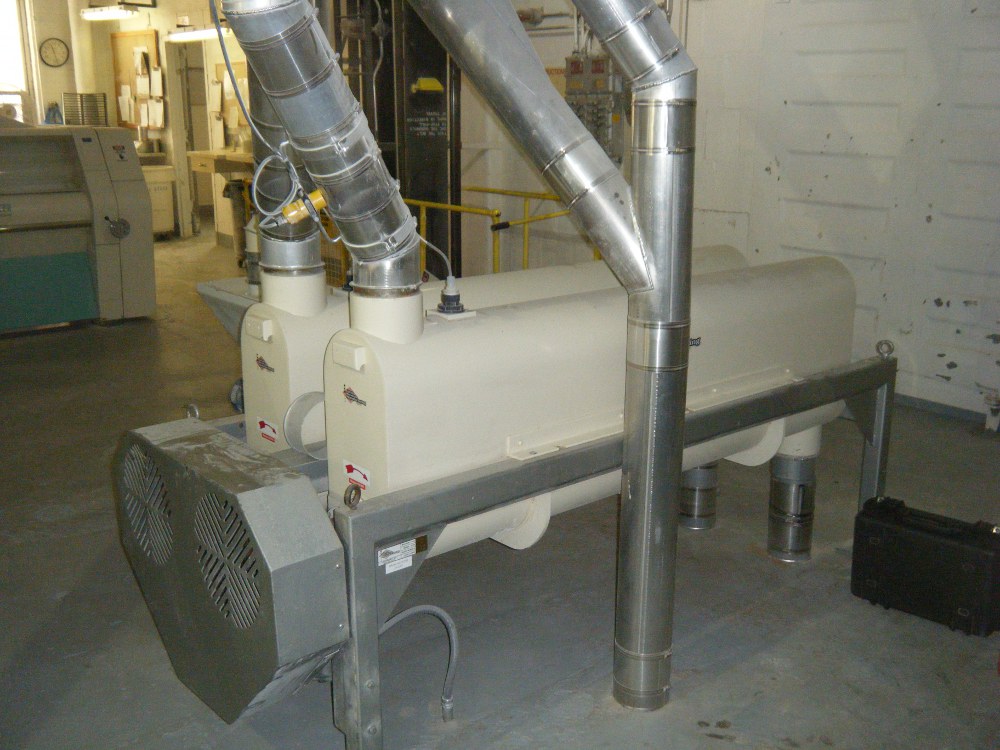
| Ozone gas is added directly to a bran mixer as an antimicrobial in the bran product to extend shelf-life. Teflon tubing for ozone gas lines can be seen on the top of each mixer. | Ozone gas is used in a bran mixer to extend shelf-life. The ozone generator can be seen on the wall in the background. |
Summary Table: Ozone Use Points in Flour Milling
|
Milling Stage |
Ozone Application |
Main Benefits |
|
Grain storage |
Fumigation, aeration treatment |
Pest control, mold prevention, mycotoxin risk reduction |
|
Washing & conditioning |
Ozonated wash water |
Microbial reduction, clean conditioning water |
|
Processing environment |
Air & surface sanitation |
Clean equipment, reduced airborne microbes |
|
Flour whitening |
Inline ozone treatment |
Natural bleaching, clean-label oxidation, dough quality |
|
Finished flour storage |
Headspace ozone treatment |
Shelf life extension, mold control |
References and Case Studies:
Selected white papers, research, and case studies listed below for reference.

A Comparison between Chlorinated Water and Ozonated Water as an Antimicrobial Treatment during Tempering of Wheat
Authors:
- Bhavnita Dhillon
- Harkanwal Sandhu
- Dennis Wiesenborn
- Frank Manthe
- Charlene Wolf-Hall
An ASABE Meeting Presentation
Paper Number: 076169
Abstract:
Tempering of wheat is done to improve its physical state for milling. Chlorinated water is being used in industry to decrease the microbial load of tempered wheat but chlorine leaves a residue which limits its application in food industry. Ozone gas is highly reactive. Compared to chlorine, ozone gas is a stronger and more rapid antimicrobial agent. Ozone gas can be dissolved in water. It is expected that ozone treatment may inhibit or minimize bacterial, yeast and mold count which has been a dominant safety and quality concern for wheat grown in the Northern Plains. Hence, the objective of this study was to compare the efficacy of ozonated water with the efficacy of chlorinated water during tempering of durum wheat. Tempering was done using water containing 700 ppm chlorine and water containing 10 and 16 ppm ozone. Wheat grains were tempered at 17ºC. Wheat grains were tempered in two steps with resting time of 6 hours after each step to raise the initial moisture content (MC) from initial m.c. to a final of 17%(db), with an intermediate MC of 12.5% after first step. The wheat grains were also washed using 16 ppm of ozonated water. These tempered and washed grains along with their control samples were tested for total bacterial, yeast and mold count and also for color change and germination capacity.
Link:
Study Summary
This research compared the antimicrobial effectiveness of ozonated water and chlorinated water during the tempering of durum and hard red spring wheat. Traditionally, 600–700 ppm chlorinated water is used to lower microbial loads during tempering—but it leaves chemical residues. Ozone, a stronger oxidizer that leaves no harmful residues, was tested at concentrations of 10 and 16 ppm to determine its effectiveness as a safer alternative.
Key Findings
-
Ozone Generation & Stability
-
Peak ozone concentration: 15 ppm in tap water (half-life ~6.7 min) vs. 18 ppm in distilled water (half-life ~13 min).
-
Ozone was more stable in pure (distilled) water, allowing for more effective application.
-
-
Color & Quality Effects
-
No significant changes in color (L, a, b values) were observed after tempering or washing with ozonated water.
-
This indicates ozone at tested levels did not bleach or degrade grain pigments.
-
-
Germination Capacity
-
No significant difference between ozonated water and control (distilled water) treatments.
-
Ozone treatment did not damage seed viability.
-
-
Microbial Reduction
-
Yeast and Mold Counts (YMC) were significantly lower in both durum and hard red spring wheat tempered or washed with ozonated water compared to controls.
-
Aerobic Plate Counts (APC) decreased in hard red spring wheat treated with ozone but showed mixed results in durum wheat (likely due to older samples).
-
-
Chlorine vs. Ozone
-
Chlorine remains effective but poses residue and by-product concerns (e.g., trihalomethanes).
-
Ozone provides comparable or better microbial control without leaving residues, making it more suitable for food-grade applications.
-
Practical Implications
-
Ozonated water at 10–16 ppm can significantly reduce yeast and mold counts during tempering.
-
Ozone maintains grain color and germination, supporting quality preservation.
-
With proper system design and contact time, ozone can be a viable replacement for chlorinated water in flour milling facilities.
-
Short half-life requires careful handling and optimized delivery systems.

Application of ozone in grain processing
Authors:
- B.K. Tiwari
- C.S. Brennan
- T. Curran
- E. Gallagher
- P.J. Cullen
- C.P. O’ Donnell
Article Info:
Article history:
Received 21 October 2009
Received in revised form
5 December 2009
Accepted 12 January 2010
Abstract:
Ozone is an effective fumigant for insect killing, mycotoxin destruction and microbial inactivation which has a minimal or no effect on grain quality. Studies have demonstrated that ozone which is a natural agent, may offer unique advantages for grain processing along with addressing growing concerns over the use of harmful pesticides. This paper focuses on the efficacy of ozone for preservation of food grain
and discusses the possible effects on product quality. Inactivation mechanisms for micro-organisms and mycotoxins are detailed. Critical intrinsic and extrinsic factors governing inactivation are discussed along with potential grain applications.
Link:
Study Summary
Ozone is a powerful oxidizing agent that offers an effective and environmentally friendly alternative to conventional grain fumigants. It can eliminate storage insects, inactivate microbes, and degrade mycotoxins without leaving chemical residues or significantly impacting grain quality. Because of its broad-spectrum efficacy and GRAS status, ozone is increasingly viewed as a sustainable tool for grain preservation and processing. This paper reviews ozone generation, movement within grain silos, mechanisms of action, its effects on pests, microbial contaminants, mycotoxins, and final product quality.
Key Points & Findings
1. Why Ozone for Grain Storage
-
Ozone effectively kills insects, degrades mycotoxins, and inactivates microbial contaminants.
-
Breaks down quickly to oxygen, leaving no harmful residues.
-
Considered GRAS (Generally Recognized as Safe) for food processing.
-
Offers an alternative to banned or restricted chemical fumigants like methyl bromide.
2. Ozone Generation & Application
-
Produced on-site via corona discharge from oxygen or air (1–16% ozone concentration achievable).
-
Applied to grain typically in silos or vessels after moisture adjustment (e.g., Oxygreen® process).
-
Ozone diffusion is initially consumed by surface organic matter, then freely moves once reactive sites are saturated.
3. Insect Control
-
Demonstrated high mortality rates for storage pests such as:
-
Tribolium castaneum (red flour beetle)
-
Sitophilus zeamais (maize weevil)
-
Plodia interpunctella (Indian meal moth)
-
-
50 ppm ozone for 3 days achieved up to 100% mortality in several species.
-
Effectiveness depends on insect species and life stage (larvae and pupae most sensitive).
4. Microbial and Mycotoxin Reduction
-
Achieves up to 3-log reductions of bacteria, fungi, and spores.
-
Effective against:
-
Aspergillus
-
Penicillium
-
Bacillus spores and other common grain contaminants.
-
-
Degrades major mycotoxins including aflatoxins, ochratoxin A, fumonisin B1, and deoxynivalenol through oxidative reactions (Criegee mechanism).
-
Moist conditions enhance ozone effectiveness.
5. Grain Quality Effects
-
No significant negative impact on amino acid or fatty acid profiles of wheat, corn, soy, or rice at normal fumigation levels.
-
Some surface discoloration or odor can occur but is removed during milling.
-
Baking and milling properties (e.g., farinogram profiles, dough rheology) remain largely unchanged.
-
Soft wheat may show slightly higher susceptibility to changes than hard wheat due to easier ozone penetration.
6. Environmental & Economic Advantages
-
Eliminates reliance on toxic pesticides and fumigants.
-
Compatible with consumer demand for chemical-free grains.
-
Demonstrated economic viability for long-term storage (up to 6 months at 20 °C).
-
No post-treatment residue concerns.
Example Efficacy Data (from studies)
| Target | Ozone Dose | Time | Effect |
|---|---|---|---|
| Red flour beetle, maize weevil, Indian meal moth | 50 ppm | 3 days | 92–100% mortality |
| Bacillus spores | 0.16 mg/g barley | 5 min | 96% inactivation |
| Deoxynivalenol in wheat | 1.1 mol% moist ozone | 1 h | 90% reduction |
| Aflatoxin in corn | 10–12 wt% ozone | 92 h | >95% reduction |
Conclusion
- Ozone fumigation provides multi-target control (insects, microbes, mycotoxins) with minimal impact on grain quality.
- Ideal for sustainable grain milling and storage, especially as traditional fumigants face regulatory pressure.
- Optimizing moisture content, exposure time, and ozone concentration maximizes effectiveness.

Comparitive Effects of Two Ozonation Treatment on Wheat Flour Technological Properties
Authors:
- Julien Saint Paul
Department of Grain Science & Industry
College of Agriculture
KANSAS STATE UNIVERSITY
Manhattan, Kansas
Abstract:
Ozone, a triatomic form of oxygen with a Generally Recognized As Safe (GRAS) status from the U. S. Food and Drug Administration, is a strong antimicrobial and sanitizing agent with numerous potential applications in the food industry. One of them is the improvement of wheat flour baking qualities, by replacement of the actual chlorination treatment. Following recent developments realized by the company Goëmar (France) which invented and patented an ozone treatment device for wheat grain and a method for making flour from ozone-treated grains, this study aims to determine the effect of ozone treatment on wheat grain and on wheat flour, and to compare them. Three different ozone concentrations with different application times rendering three quantities of absorbed ozone have been investigated. Rheological, physicochemical and baking properties of soft wheat flours stemming from both treatments were evaluated and compared to untreated flour. Results were overall significant and showed that the treatment of flour gives more marked results than the treatment on grain for retention capacity in sucrose and volume of cakes but decreases the α-amylase activity. On the other hand, action of ozone on grain augments the maximum viscosity of the flour. Bread volume was found to be increased by both treatments in similar proportions. The treatments were also analyzed in particular and showed specific
characteristics. A single treatment has not been determined to enhance all characteristics of the flour. Hence, the modification of precise features of the flour has to be related to a specific treatment
Link:
Study Summary
This master’s thesis from Kansas State University compared two ozone-treatment methods: one applying ozone to grain prior to milling, and the other applying ozone directly to flour. The study investigated how each treatment impacts wheat flour’s technological and baking properties (rheology, viscosity, sucrose retention, cake/bread volume), in comparison to untreated flour. Results showed that flour-ozonation generally produced stronger functional changes, though neither treatment improved every attribute, implying customized treatment design is needed.
Key Findings
-
Bread/Loaf Volume Increase
-
Bread volume increased for both treatments (grain- and flour-ozonation) in “similar proportions”.
-
For example: untreated flour vs treated showed increases though exact % wasn’t given in the summary excerpt.
-
-
Maximum Viscosity (Flour from Grain Treatment)
-
Ozonation of grain (pre-milling) resulted in an increase in maximum viscosity of the flour.
-
-
Sucrose Retention Capacity & Cake Volume (Flour Treatment)
-
Flour-ozonation (post-milling) showed more marked improvements in sucrose retention capacity and cake volume than grain treatments.
-
Also, flour-treated samples showed decreased α-amylase activity.
-
-
No Universal Improvement
-
The study found no single ozone treatment improved all flour characteristics; each attribute responded differently depending on treatment mode, dose and time.
-
Practical Implications
-
If your milling/bleaching system aims to boost cake or loaf volume, flour-ozonation (post-milling) is likely to yield stronger effects, according to the data.
-
If you’re interested in increasing viscosity of flour (for certain functional uses), grain-ozonation may offer better benefit.
-
Because improvement is attribute-specific, designing the ozone treatment (concentration, duration, whether before or after milling) should be guided by the specific flour quality target.
-
Use of ozone does not guarantee improvement across the board—so demonstrate to customers that you can tailor the system for their key performance indicators (KPIs).

OZONE FOR TREATMENT AND STORAGE OF GRAIN – Harvest States Amber Milling, Huron, OH, USA
Papter Information:
IOA/PAG AGRI-FOOD TASK FORCE
User Success Report
Abstract:
Mold and bacteria in grain traditionally are addressed by the use of chlorinated water. However, this technique frequently is inadequate for removing these harmful materials allowing tempering bins, holding containers, and processing lines to become contaminated and have to be cleaned. This requires complete shutdown of the plant and results in production and financial losses Elevated bacterial and mold counts sometimes cause final products to fail to meet client microbial standards. Returned shipments can cost up to $5,000 per rail car plus reprocessing
costs. Chlorine also causes corrosion in metal parts in the mixing and grain transfer equipment and is a hazardous chemical to store and handle. Furthermore, chlorine chemically reacts with some materials and organics, and the resulting chlorinated compounds sometimes remain in the
final product as contaminants. A project sponsored by the Electric Power Research Institute (EPRI) at Harvest States Amber Milling demonstrated that ozone and ultraviolet radiation overcame the problems encountered with chlorine use, and resulted in significant cost savings to the plant as well.
Link:
Study Summary
Grain tempering water in milling is traditionally disinfected with chlorinated water to control mold and bacterial growth. However, chlorine treatment often proves inadequate — leading to contamination in tempering bins and equipment, plant shutdowns for cleaning, costly returned shipments, corrosion, and potential formation of unwanted chlorinated byproducts.
A full-scale demonstration project at Harvest States Amber Milling in Huron, Ohio, tested ozone combined with ultraviolet (UV) light as a replacement for chlorine disinfection in the tempering and handling of wheat grain.
The system used corona discharge ozone, UV-generated ozone, and UV/hydroxyl radicals in tempering water, above the augers, and in tempering bins. Over 1,000 samples were tested to compare microbial control and operational performance between chlorinated and ozonated water systems.
Key Findings
1. Microbial Control
-
Average APC (aerobic plate count) with chlorine: 181,675 cfu/g
-
Average APC with ozone: 42,627 cfu/g
77% reduction in bacterial counts in finished flour. -
Later in the study, 38% of flour lots (75 of 195) had APC <10,000 cfu/g, demonstrating excellent control of bacterial contamination.
-
Although mold counts weren’t quantified, visual inspections showed a similar reduction in mold buildup on equipment and lines.
2. Operational & Quality Benefits
-
The ozone system effectively prevented contamination in tempering bins and equipment, which previously required shutdowns for chlorine-based cleaning.
-
Reduction in microbial levels helped meet client microbial standards, minimizing the risk of product returns (which cost ~$5,000 per railcar).
-
Eliminated corrosion issues and safety hazards associated with chlorine handling and storage.
-
No chlorinated byproducts were introduced into the product stream.
3. Cost & ROI
-
Estimated annual cost savings: $40,000/year compared to chlorine treatment.
-
Operating cost: $0.18/hour (~$1,600/year).
-
Capital payback: approximately 30 months.
-
Additional savings likely from reduced downtime, fewer cleanings, and lower reprocessing rates.
4. System Design & Safety
-
System included:
-
Corona discharge ozone for tempering water
-
UV/ozone hoods over augers to generate hydroxyl radicals
-
Gaseous ozone injection in tempering bins for surface sanitation
-
-
Safety measures:
-
Automatic UV shutoff when hoods are opened
-
Continuous ambient ozone monitoring with auto shutdown on high levels
-
-
System installed in parallel with existing chlorine system (backup ready).
Practical Implementation Takeaways
-
Replace chlorinated tempering water with ozonated water to significantly reduce bacterial counts in finished flour.
-
Integrate ozone and UV at multiple stages (water, augers, bins) for more complete microbial control.
-
Expect substantial cost savings from reduced chemical handling, lower product reprocessing, and less frequent sanitation shutdowns.
-
Corrosion reduction improves equipment longevity.
-
A well-designed safety system allows for safe, automated operation and regulatory compliance.

Ozone and UV for Grain Milling Systems
Authors:
- Bhavnita Dhillon
- Harkanwal Sandhu
- Dennis Wiesenborn
- Frank Manthe
- Charlene Wolf-Hall
An ASABE Meeting Presentation
Paper Number: 076169
Summary:
The Electric Power Research Institute and First Energy Services have joined in a Tailored Collaboration Project to investigate the feasibility of using ozone as a substitute for chlorinated water for bacteria and mold control in a wheat processing plant. Microbiological test data of flour samples after milling show that the use of ozone results in a reduction in bacteria of approximately 75-80 percent compared with grain treated with chlorinated water. Visual inspection of equipment and lines indicates a similar reduction in mold growth. RGF Environmental Group provided the engineering design, manufacture, and installation of the ozonation equipment
Introduction:
Food safety is the most important concern confronting food processors today. This is particularly true in the grain milling industry, where incoming grain carries contamination from the field and the milling process itself creates environments conducive to the growth of mold and bacteria. Traditionally, chlorinated water is used to control bacteria and mold in grain processing. However, chlorine frequently carries its own cost concerns as well as problems in storage and the handling of chlorine gas. This project investigates the feasibility of substituting ozone for chlorine in wheat milling. Ozone has strong antimicrobial qualities and does not leave a residue, unlike chlorine. Although ozone has proven effective in disinfecting drinking water and wastewater, its effectiveness for controlling organisms in the food processing industry is only beginning to be recognized. Because of the importance of bacteria and mold control and the problems associated with chlorine, ozone is an excellent candidate for application to grain steeping and storage. The project is a Tailored Collaboration effort between EPRI and First Energy Services to introduce and evaluate the use of ozone as an antimicrobial agent in grain milling. Other participants include Harvest States Amber Milling of Huron, Ohio, which operates the facility where the test is conducted, and RGF Environmental Group of West Palm Beach, Florida, which was selected to design the ozonation system and supply the equipment.
Link:

Influence of tempering with ozonated water on the selected properties of wheat flour
Authors:
- Senol ibanoglu
Department of Food Engineering, Faculty of Engineering, The University of Gaziantep, 27310Gaziantep, Turkey
Accepted 14 October 2000
Abstract:
Soft and hard wheat samples were tempered using ozonated water ¬1.5 and 11.5 mg ozone/l). Milling ¬rate of extraction),
rheological ¬farinograph and extensograph characteristics), chemical ¬protein, falling number, sedimentation volume), colour
¬Hunter Lab values) and microbiological ¬total bacterial and yeast/moulds) properties of the parent ¯ours were evaluated.Results
indicated that tempering with ozonated water did not signi®cantly alter the chemical, physical and rheological properties of the
¯ours.A statistically signi®cant reduction in the total bacterial and yeast/mould counts were obtained after tempering with ozonated
water
P 6 0:05.Results suggest that the water ozonated up to 11.5 mg ozone/l can be successfully used in the tempering of soft and
hard wheat without deterioration in the ¯our quality. Ó 2001 Elsevier Science Ltd.All rights reserved.
Link:
Study Summary
This study investigated the effects of tempering wheat with ozonated water (1.5 mg/L and 11.5 mg/L ozone concentrations) on the milling, rheological, chemical, color, and microbiological properties of the resulting flours from both soft and hard wheat varieties. The goal was to determine whether ozonated water could be used in tempering without degrading flour quality.
Key Findings
-
Milling Efficiency:
-
Ozone treatment did not significantly affect extraction rates for either wheat type.
-
Indicates no structural modification in kernel components due to ozone.
-
-
Chemical Properties:
-
Protein, ash, and moisture content were unchanged.
-
Falling number (α-amylase activity indicator) and sedimentation volume were unaffected, showing no enzymatic or protein degradation.
-
-
Rheological Properties:
-
Farinograph & extensograph results showed no significant differences after ozonation.
-
No increase in dough strength or elasticity, implying the oxidizing effect of ozone was minimal during tempering (likely due to short contact time and ozone’s short half-life).
-
-
Color (Hunter Lab values):
-
No significant change in lightness (L), redness (a), or yellowness (b) values.
-
Ozone concentration and contact time were insufficient to bleach or oxidize pigments in the wheat.
-
-
Microbiological Quality:
-
Significant reduction (p ≤ 0.05) in total bacterial and yeast/mold counts with ozonated water.
-
Microbial load decreased further with higher ozone concentration (11.5 mg/L).
-
Suggests ozone’s strong antimicrobial potential compared to chlorine.
-
Practical Implications
1. Food Safety and Quality
-
Ozonated water can be safely used for tempering both soft and hard wheat without altering flour quality.
-
It provides effective microbial control, reducing contamination risks during milling and extending flour shelf life.
2. Alternative to Chlorination
-
Ozone is 30,000× more effective than chlorine against some microorganisms and leaves no chemical residues.
-
Ideal for sustainable and chemical-free disinfection in grain processing.
3. Operational Recommendations
-
Maintain ozone concentration ≤ 11.5 mg/L for optimal microbial reduction without altering functional flour properties.
-
Use in-line ozone generation systems for on-demand application since ozone decomposes rapidly.
-
Monitor ozone contact time and water temperature (around 20°C) to ensure efficacy.
4. Industrial Benefits
-
Enhances food safety compliance and product shelf life.
-
Reduces dependence on chemical sanitizers, aligning with clean-label and eco-friendly processing trends.
Conclusion
Tempering wheat with ozonated water up to 11.5 mg/L ozone:
-
Reduces microbial contamination significantly.
-
Preserves milling, chemical, and rheological quality of flour.
-
Does not cause oxidative or bleaching effects under tested conditions.
Thus, ozonated water is a practical and safe method for wheat tempering that can improve microbial safety without compromising flour performance in milling or baking.
Use of ozone as an alternative to chlorine for treatment of soft wheat flours
Authors:
- SASIVIMON CHITTRAKORN
Abstract:
Ozonation was studied as an alternative to chlorination for cake flour. Ozone treatment in a wooden tumbler at room temperature was conducted. Unchlorinated flour was treated with ozone at the rate of 0.06 L/min for 10 and 36 min using 5 lb of flour. Ozonation of cake flour
decreased pH and increased the lightness (L value) of flour. Baking studies using a high-ratio white layer cake formulation showed that the volume of cakes significantly increased (p< 0.05) as ozonation time increased and cakes were softer than those made with chlorinated or control flours. The cell brightness and number of cells measured by image analysis (C-Cell) of cakes from ozone treated flour for 36 min exhibited similar values to those from chlorinated flour. Cakes made from flours after lipid extraction and after lipid extraction plus ozonation had low volume, indicating that lipids play a role in cake performance. Identification of volatile compounds that contribute to the odor of ozone treated flour was conducted. Volatile compounds of chlorinated, unchlorinated, defatted control, and ozonated defatted flours were analyzed using a purge and trap instrument and GC-MS. Aldehydes, alcohols, hydrocarbons and other compounds were found in unchlorinated and chlorinated flours while the volatile compounds present in ozone treated flours were mainly aldehydes and ketones. A rapid reduction in volatile compounds was detected when ozone treated flours were stored uncovered in a fume hood. Ozonation of defatted soft wheat flour produced less volatile aldehydes than ozone treated whole flour.
The optimum temperature and time for ozone treatment in a metal tumbler using a response surface methodology design was studied. Time (5, 15, and 25 min) and temperature (25, 35 and 45 ºC) was used with three response parameters. The optimum ozonation time was about 8 to 11 min with the temperature range between 36 and 46 ºC. Ozone treatment for 5 to 25 min at room temperature showed an increase in unextractable polymeric protein, indicating a shift of protein to a higher molecular weight. Increase in Mixograph peak time, peak viscosity,
and water retention capacity were observed as ozonation time increased. The ozone treatment did not affect the transition temperature and enthalpy change of the flour samples.
Link:
Study Summary
This research explores the use of gaseous ozone treatment as an alternative to chlorine for the treatment of soft wheat flour, specifically in the context of cake-flour production (e.g., high-ratio white layer cakes). The main objectives were to:
-
Investigate the effect of ozone on the properties of soft wheat flour and its performance in cakes.
-
Analyze volatile compounds in ozone-treated flour and examine the effect of flour lipids on generated volatiles.
-
Study the effects of varying ozonation time and temperature on flour functionality and cake quality.
Key Findings
Here are the major bullet-points of what the study found:
-
Ozonation decreased flour pH and increased lightness (L value) of the flour. (Abstract)
-
Cakes made from ozonated flour showed significantly increased volume compared to control (p < 0.05), and were softer than those made with chlorinated or untreated flour. (Abstract)
-
Image analysis of cake cell structure (C-Cell) indicated that cakes from flour treated with ozone for 36 min had cell brightness and number of cells similar to the chlorinated flour. (Abstract)
-
Volatile compound analysis: In untreated and chlorinated flours various aldehydes, alcohols, hydrocarbons were found; in ozone-treated flours mainly aldehydes and ketones. (Abstract)
-
Lipid extraction experiments: Cakes made from flours after lipid extraction (and after lipid extraction + ozonation) had lower volume, indicating that flour lipids play a role in cake performance under ozonation. (Abstract)
-
Using response-surface methodology, optimum ozonation time was found to be ~8-11 min at a temperature range of ~36-46 °C (for a metal tumbler) for the measured responses. (Abstract)
-
Ozonation (5-25 min) at room temp increased unextractable polymeric protein content, indicating a shift to higher molecular weight proteins; also increased mixograph peak time, peak viscosity, and water retention capacity as ozonation time increased. (Abstract)
-
Ozone treatment did not significantly affect transition temperature or enthalpy change (thermal properties) of the flour samples. (Abstract)
-
More specific results: For the flour properties and cake baking tests:
-
pH and colour of flour: Ozone increased lightness (L) and possibly reduced a* and b* values under some conditions.
-
Cake volume improved with increasing ozonation time.
-
Texture: Softer cakes from ozonated flour.
-
Volatile compounds: Ozone treatment generated a different volatile profile; some volatiles diminished quickly when stored open to air (fume hood overnight).
-
Protein: SE-HPLC showed increase in high molecular weight (HMW) polymeric proteins (unextractable polymeric protein, UPP) with ozonation time, which might correlate with enhanced cake cake-baking performance.
-
Batter properties: Specific gravity decreased and viscosity increased with ozonation time/temperature; these changes correlate with improved cake volume.
-
-
The study concluded that ozone is a viable alternative to chlorine for soft wheat flour treatment in cake applications. (Chapter 5, Conclusions)
Practical Implications
-
Ozonation of soft wheat flour can enhance cake-making performance (higher volume, softer texture) compared to untreated flour, and comparable or better than chlorinated flour.
-
Because ozone decomposes rapidly and leaves no persistent chemical residues, it may be a more environmentally friendly alternative to chlorine for flour treatment.
-
The modification of flour protein architecture (increased unextractable polymeric protein) suggests that ozonation may function as an oxidizing treatment improving cake flour properties (similar to what chlorine does, but with perhaps fewer side-effects).
-
Volatile compound changes indicate potential sensory impacts (odor/volatile profile) that need to be managed.
-
The identification of optimal time/temperature conditions provides a basis for process control when scaling up.
Implementation Suggestions
-
Pilot-scale/bench-scale trials: Use a tumbler/blender apparatus to treat soft wheat flour with ozone gas at controlled flow (~0.06 L/min in the study) for the identified optimal time (approx. 8-11 min) and temperature (36-46 °C) as starting parameters.
-
Control pH, colour, and mixing behaviour: Monitor pH drop, increase in L value, protein distribution (via SE-HPLC or simpler proxy) and mixing properties (mixograph peak time, viscosity) to ensure the treatment yields desired functional changes.
-
Baking trials: Perform high-ratio cake baking tests (or other target product) comparing untreated, chlorinated, and ozonated flour; measure cake volume, crumb texture, cell structure (image analysis), and sensory parameters.
-
Sensory/volatiles management: Check for off-odours or volatile compounds arising from ozonation (especially lipid oxidation products). If detected, consider lipid stabilization (antioxidants) or post-treatment aeration/venting (the study noted rapid reduction in volatiles if flour was stored exposed).
-
Process integration: For industrial scale, integrate ozone generator and contact chamber ensuring uniform gas–flour interaction; monitor ozone concentration, flow, and off-gas destruction to comply with worker exposure limits (OSHA, etc.). The literature review in the study gives guidance for ozone generation and safety.
-
Quality and regulatory compliance: Confirm that ozonation treatment does not negatively affect other flour specifications (e.g., protein content, ash, moisture, thermal properties) and that the flour still meets regulatory and functional standards for the intended baked product.
-
Cost–benefit analysis: Compare capital and operating costs of ozone system versus chlorination (or other oxidants), factoring in environmental/safety benefits and improvements in product quality (e.g., higher cake volume, softer crumb).
-
Shelf‐life/oxidation trade‐off: Because ozonation may increase lipid oxidation and change volatile profile, consider storing flour appropriately (cool, sealed, minimal oxygen exposure) and possibly adding antioxidant strategies if shelf life is a concern.
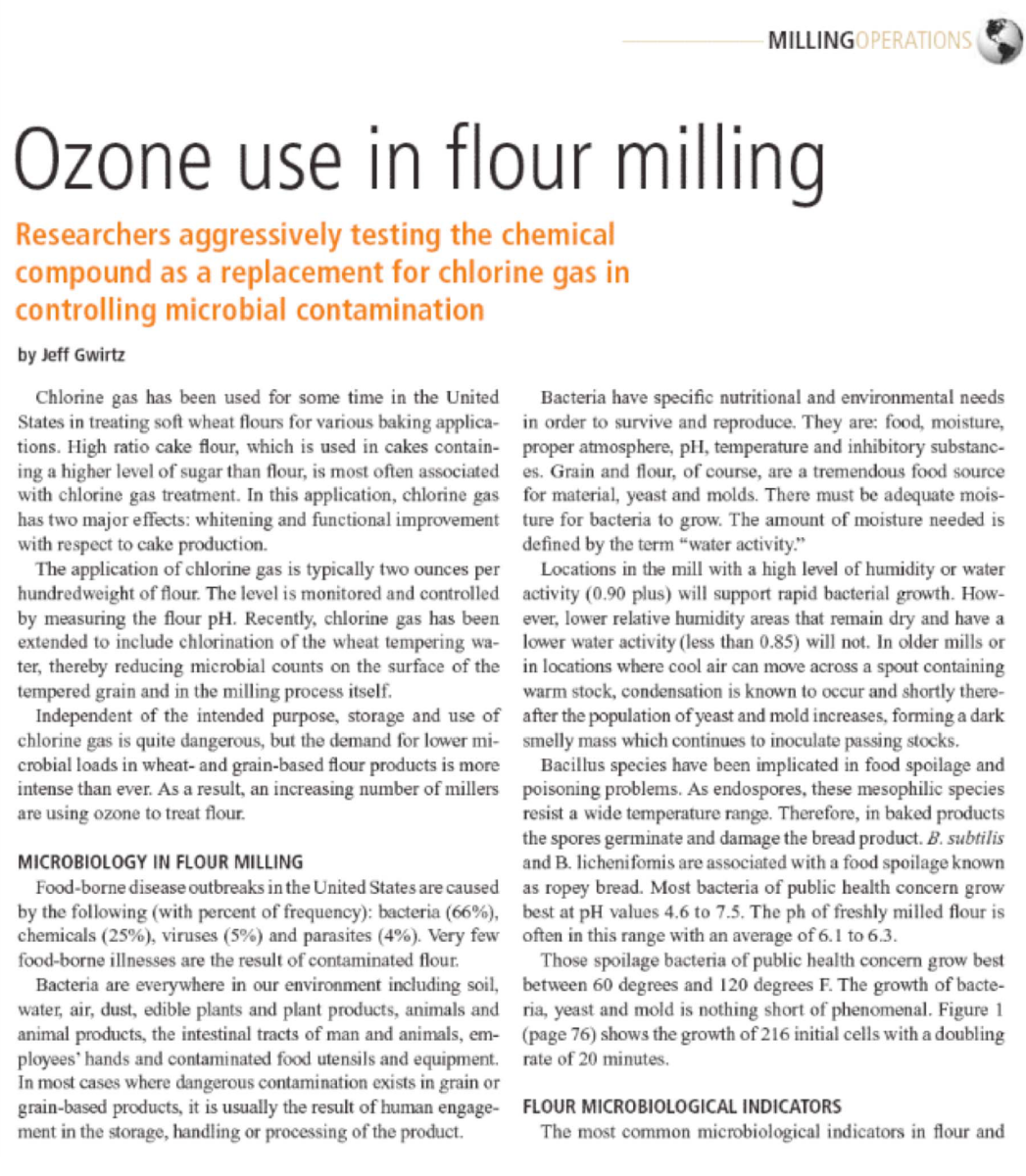
Ozone use in Flour Milling - Milling Operations Article
Authors:
- Dr. Jeff Gwirtz
Chlorine gas has been used for some time in the United States in treating soft wheat flours for various baking applications. High ratio cake flour, which is used in cakes containing a higher level of sugar than flour, is most often associated with chlorine gas treatment. In this application, chlorine gas has two major effects: whitening and functional improvement with respect to cake production.
The application of chlorine gas is typically two ounces per hundredweight of flour. The level is monitored and controlled by measuring the flour pH. Recently, chlorine gas has been extended to include chlorination of the wheat tempering water, thereby reducing microbial counts on the surface of the tempered grain and in the milling process itself.
MICROBIOLOGY IN FLOUR MILLING
Food-borne disease outbreaks in the United States are caused by the following (with percent of frequency): bacteria (66%), chemicals (25%), viruses (5%) and parasites (4%). Very few food-borne illnesses are the result of contaminated flour.
Bacteria are everywhere in our environment including soil, water, air, dust, edible plants and plant products, animals and animal products, the intestinal tracts of man and animals, employees’ hands and contaminated food utensils and equipment. In most cases where dangerous contamination exists in grain or grain-based products, it is usually the result of human engagement in the storage, handling or processing of the product.
Bacteria have specific nutritional and environmental needs in order to survive and reproduce. They are: food, moisture, proper atmosphere, pH, temperature and inhibitory substances. Grain and flour, of course, are a tremendous food source for material, yeast and molds. There must be adequate moisture for bacteria to grow. The amount of moisture needed is defined by the term “water activity.”
Locations in the mill with a high level of humidity or water activity (0.90 plus) will support rapid bacterial growth. However, lower relative humidity areas that remain dry and have a lower water activity (less than 0.85) will not. In older mills or in locations where cool air can move across a spout containing warm stock, condensation is known to occur and shortly thereafter the population of yeast and mold increases, forming a dark smelly mass which continues to inoculate passing stocks.
Bacillus species have been implicated in food spoilage and poisoning problems. As endospores, these mesophilic species resist a wide temperature range. Therefore, in baked products the spores germinate and damage the bread product. B. subtilis and B. lichenifomis are associated with a food spoilage known as ropey bread. Most bacteria of public health concern grow best at pH values 4.6 to 7.5. The ph of freshly milled flour is often in this range with an average of 6.1 to 6.3.
Those spoilage bacteria of public health concern grow best between 60 degrees and 120 degrees F. The growth of bacteria, yeast and mold is nothing short of phenomenal. Figure 1 (page 76) shows the growth of 216 initial cells with a doubling rate of 20 minutes.
FLOUR MICROBIOLOGICAL INDICATORS
The most common microbiological indicators in flour and baked products are total aerobic count (often referred to as total plate count), coliform/enteric bacteria count, and yeasts and mold counts.
Total aerobic count refers to a total count of microbe colonies growing on the media plate from the sample. Coliform or enteric bacteria count is a subset of the total aerobic microbe colony count and is often used as an indicator of direct or indirect fecal contamination. Yeasts and mold counts are not included in total aerobic counts, although they are also often subject to maximum tolerances. Their main relation to food safety is the potential to produce mycotoxins, which are toxic compounds produced by fungi that contaminate plants.
It has been reported that microbial counts found in a flour mill will vary widely, depending on a number of factors such as initial counts in the grain from crop conditions, milling practices, post-milling handling, moisture content of flour and storage conditions.
Typical microbiological counts in 4
flour are 1 .5 × 10 for total aerobic count; 200 for coliforms; 120 for yeasts and 800 for molds. Significant correlations have been observed between all microbial indicators and some quality criteria (e.g. test weight) and grading factors (e.g. wheat grade number, vitreous kernel content). A weak but significant correlation has also been reported between the total plate count and the moisture content of grain.
MILLING ENVIRONMENT AND MICROBIOLOGY
Warm temperatures are required for the successful separation of bran germ and endosperm to prevent bran shattering and improve ease of endosperm reduction. Moreover, the energy input dissipates in the form of heat, driving moisture off the milled product within the process.
While temperature and relative humidity of the milling room are important, it is the temperature and humidity inside the milling processing environment where bacteria, yeast and mold may cause problems. The optimal relative humidity and temperature for milling is approximately 75 degrees F (plus or minus 10 degrees F) and 65% relative humidity (plus or minus 10%), respectively.
Figure 2 (page 78) ? presents the relative humidity inside various break sifters and on the sifter floor during a mill run in the Kansas State University Pilot Flour Mill. Notice that the room relative humidity is less than the relative humidity measured inside the sifter, which is besides the roller mill and purifier in which the wheat processing environment exists. In some locations, constantly elevated humidity and/or rapid increases in humidity cause sifting, handling and general flow problems for the miller. Temperature and relative humidity conditions outside the optimal range have significant and negative economic and technical consequences. Rapid cooling and condensation create conditions for microbial growth.
Some management practices can be employed to reduce microbial loads in the mill environment. Reducing microbial load on the wheat surface through addition of chlorine in tempering water has been reported to effectively reduce microbial load in the milling process and ultimately the flour.
In automated mills, there is a considerable temptation to simply shut down the unit when the load is taken off the milling unit. However, many automated mill programmers have extended set shutdown time periods, allowing mill shake down while pulling aspiration or suction to reduce humidity in the system where condensation onto product and processing surfaces could occur. Such practice assists in reducing surface condensation and caking, which lead to microbial development and start-up challenges. While the building and unit are warm, condensation may not be an issue. But it is best to let it cool down and dry out before shutting it down.
Another tool often used in older mills is dragging or cleaning the spouts to prevent active mold colony build-up.
OZONE PRODUCTION AND CONTROL
The following steps have been identified for the use of ozone in a primarily aqueous system and apply to milling when used in tempering water.
• Oxygen/feed gas preparation. Produce clean, dry 95% pure oxygen from the air to improve efficiency and protect the ozone generator. It requires 50% to 75% less energy to produce ozone with purified air.
• Ozone generation: Control input oxygen concentration, increase voltage and lower feed gas flow rate to optimize ozone output.
• Mass Transfer: This was generally applied to the use of ozone in the aqueous phase, which would not be applicable to use of gas on flour. Ozone transfer in PVC piping is not recommended since a portion of the ozone is lost when it reacts with the PVC pipe. Stainless steel, such as 304 or 316, has been suggested for use in ozone transfer systems.
• Monitoring and Control: Control of oxygen concentrations, flow rates, voltage, etc., should be adequate for monitoring and control. However, any or all of these could be adjusted based on production rate, product moisture and temperature to optimize addition and provide control.
Exposure to ozone is hazardous to humans. Like chlorine gas, it attacks the respiratory tract. Standards set by the Occupational Safety and Health Administration in the United States allow a permissible exposure level of less than 0.1 milligrams per liter (mg/L) on a time-weighted average for an eight-hour work period and a maximum single exposure of 0.3 mg/L for less than a 10-minute duration. Ambient air should be tested for safety using monitors which operate on the basis of UV light absorption being a function of ozone concentration.
OZONE-CHLORINE REPLACEMENT
Ozone, zanthan gum, L–cysteine, malto-dextrins, heat, combinations of heat and ozone, chlorine and ozone blends are being studied as chlorine replacements with varying degrees of success. Ozontation was studied as an alternative to chlorination for cake flour. Flour was treated with ozone at the rate of 0.06 liters per minute for 10 and 36 minutes using 5 pounds of flour. Ozonation of cake flour decreased pH and increased the lightness (L value) of flour. Baking studies using a high-ratio white layer cake formulation showed that the volume of cakes significantly increased (p < 0.05) as ozonation time increased, and cakes were softer than those made with chlorinated or control flours. The cell brightness and number of cells measured by image analysis (C-Cell) of cakes from ozone-treated flour for 36 minutes exhibited similar values to those from chlorinated flour.
The optimum ozonation time was about 8 to 11 minutes with the temperature range between 36 and 46 degrees C. Increase in Mixograph peak time, peak viscosity, and water retention capacity were observed as ozonation time increased. Ozonated flour was reported to have a strong odor that affected the odor and flavor in the cakes. Volatile gases dissipated when ozonated flour was stored under a fume hood, suggesting that additional research needs to be focused on how to decrease the strong odor in flours by using processing techniques or other methods.
OZONE AND UV-MICROBIAL LOAD REDUCTION
A study to investigate the feasibility of using ozone and UV light as a substitute for chlorinated tempering water for bacteria and mold control in a wheat flour mill was conducted. In the study, microbiological test data of flour samples after milling show that the use of ozone results in a reduction in bacteria of approximately 75% to 80% compared with grain treated with chlorinated water.
Visual inspection of equipment and lines indicates a similar reduction in mold growth. Data gathered during the project indicate a potential 75% to 80% reduction in total plate count bacteria in comparison to conventional treatment with chlorinated water. The average anaerobic plate count (APC) of one group of flour samples from grain treated with chlorinated water averaged 181,675 colony forming units per gram (cfu/g). In comparison, the average APC for flour from ozone-treated grain is 42,627 cfu/g, a reduction of 77%.
The last data collected on 195 samples of flour processed showed 75 lots (38%) with APC of less than 10,000 cfu per gram. Although the project did not include mold counts to quantify the effectiveness of ozone over chlorine in mold abatement, visual inspection of equipment and lines by plant staff indicates a similar reduction of mold growth in the equipment.
International use of ozone to reduce or control microbial contamination threats appears to be growing rapidly in all food sectors. Grain-based products, because of their low moisture and water activity and the non-deleterious nature of their general microbial contaminants, make this product group one of the last to be treated with ozone for microbial control. Use of ozone to replace chlorine gas driven by both safety and residue concerns continues to be aggressively pursued.