
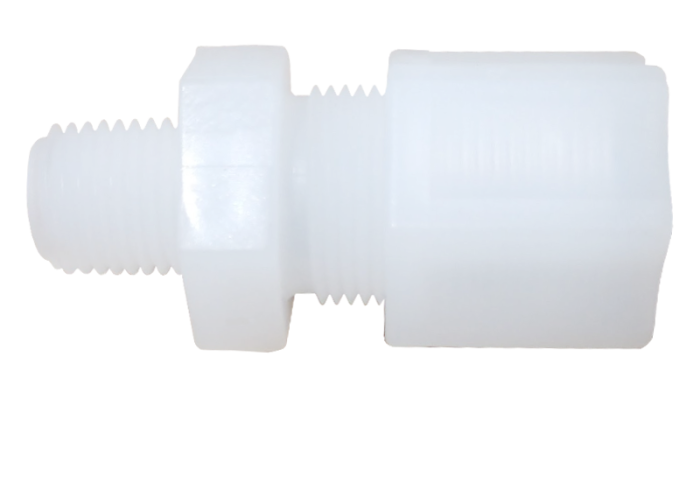
When dealing with highly corrosive fluids, selecting the right fittings is crucial to ensure system integrity and longevity. The Kynar Fitting 10-4-2, a male connector made from polyvinylidene fluoride (PVDF), stands out as a superior choice for such demanding applications. This blog post delves into the features, benefits, and installation process of this exceptional fitting, highlighting why it should be your go-to solution for handling corrosive fluids.
Key Features of Kynar Fitting 10-4-2
- Material: Made from PVDF, an ozone-compatible material renowned for its resistance to abrasion and chemical corrosion.
- Dimensions: Tube O.D. 1/4″, Pipe Thread NPT 1/8″.
- Durability: PVDF exhibits outstanding aging resistance, maintaining its properties even after prolonged exposure to harsh conditions.
Why Choose PVDF (Polyvinylidene Fluoride)?
Exceptional Durability and Resistance
PVDF is an abrasion and corrosion-resistant thermoplastic, boasting the broadest working chemical range among plastics. Its impact strength is over twice that of PVC, allowing it to withstand harsh mechanical abuse over time. This material also has a working temperature range of -40°F to 250°F, making it suitable for a wide array of applications.
Chemical and Fire Resistance
PVDF is highly resistant to strong inorganic and organic acids, aliphatic and aromatic hydrocarbons, and halogenated solvents. Additionally, it is fire-resistant, receiving the highest rating in the Underwriter’s test for being non-flammable and self-extinguishing. These properties make PVDF ideal for environments where chemical exposure and fire hazards are a concern.
FDA Compliance
PVDF is FDA compliant, non-toxic, and safe for repeated contact with food products, adding another layer of versatility to its applications.
The Plastic Gripper Advantage
The Kynar Fitting 10-4-2 features a plastic gripper nut designed to create a secure hold on plastic tubing. When tightened, the nut’s internal components adjust to seal around the tubing, providing a leak-proof connection. Both the nut and its internal components are made from the same durable Kynar material, ensuring long-term reliability.
Installation Instructions
Proper installation is key to ensuring the fitting performs optimally. Follow these steps for a secure connection:
- Prepare the Tubing: Cut the tubing end squarely and remove any internal and external burrs.
- Insert the Tubing: Insert the tubing through the back end of the nut, all the way through the nut assembly until it reaches the tube stop in the fitting body.
- Hand Tighten: While holding the tubing firmly against the tube stop, hand tighten the nut.
- Wrench Tighten: Use a wrench to tighten the nut an additional 1 1/2 to 2 turns.
- Retighten: All nuts must be retightened when the system reaches the projected operating temperature to ensure a secure seal.
PVDF Compared to Similar Materials
When compared to other materials used in similar applications, PVDF stands out for its superior chemical resistance, durability, and wide temperature range. While materials like PVC and polypropylene offer certain benefits, PVDF’s combination of properties makes it a more robust choice for handling corrosive fluids and extreme conditions.
Conclusion
The Kynar Fitting 10-4-2 is an outstanding choice for applications requiring high durability and resistance to chemical corrosion. With its advanced material properties, secure plastic gripper mechanism, and ease of installation, this fitting ensures reliable performance in even the harshest environments. Whether you’re dealing with aggressive chemicals, high temperatures, or food-grade applications, the Kynar Fitting 10-4-2 is designed to meet and exceed your expectations.
You can find this product here: https://www.oxidationtech.com/kynar-fitting-10-4-2.html