
Ozone Applications

Cooling Tower
Ozone is used as a biocide in cooling tower applications. Ozone can lower costs and offers a green alternative to traditional chemicals.
Ozone Treatment for Cooling Towers: Cleaner Water, Lower Costs, Higher Efficiency
Cooling towers are essential components of industrial and commercial thermal systems—but they also face persistent challenges: microbial growth and biofilm formation, mineral scale and corrosion, high chemical usage, frequent blow-down and makeup water demand, and deteriorating heat transfer efficiency.
The good news: on-site generated ozone provides a powerful alternative to conventional chemical treatment programs, unlocking performance, cost and sustainability benefits.
Why Ozone Works for Cooling Tower Water
-
Broad-spectrum biocide + oxidant: Ozone (O₃) rapidly destroys microbes (including Legionella), breaks down biofilm matrix and oxidizes organic contaminants, rather than simply inhibiting growth.
-
Leaves no harmful residues: Unlike many halogen-based biocides, ozone naturally decomposes to oxygen—minimizing residual persistence in blow-down water and simplifying discharge compliance.
-
Enables higher cycles of concentration / lower blow-down: By suppressing biofilm and scale precursors, treatment with ozone allows water to stay cleaner longer—reducing make-up water demands and effluent volumes.
-
Improves heat transfer and energy efficiency: Cleaner heat-exchange surfaces and less fouling mean more efficient cooling and lower energy consumption.
-
Safe, automated, chemical-free delivery: On-site ozone generation eliminates chemical storage and handling risks. Systems can be monitored and controlled with ORP/dissolved ozone sensors.
Typical Application Benefits
| Benefit | Outcome |
|---|---|
| Reduced chemical buying, storage & handling | Fewer biocides, dispersants, defoamers required |
| Lower make-up and blow-down volumes | Water savings, reduced waste discharge |
| Reduced scaling / corrosion risk | Longer equipment life, fewer cleaning shutdowns |
| Improved thermal efficiency | Lower chiller/pump energy usage |
| Simplified environmental footprint | Lower AOX/DBP formation, better permit compliance |
Benefits to Ozone Use in Cooling Towers are:
- Lower chemical costs 
- Lower overall operational costs
- Lowers discharge chemicals
- Prevents condenser fouling
- Green, environmentally friendly chemical alternative
- Lower energy costs
Ozone is used in place of existing chemicals as a biocide. Lower chemical consumption and therefore lower chemical discharge is the result when ozone is implemented. Cost savings can be realized by reducing chemical consumption and lower costs for discharge water treatment or costs.
Depending upon cooling tower operation and conditions water consumption can be reduced, energy costs can be lowered and the overall efficiency of the cooling tower can be improved.
 |
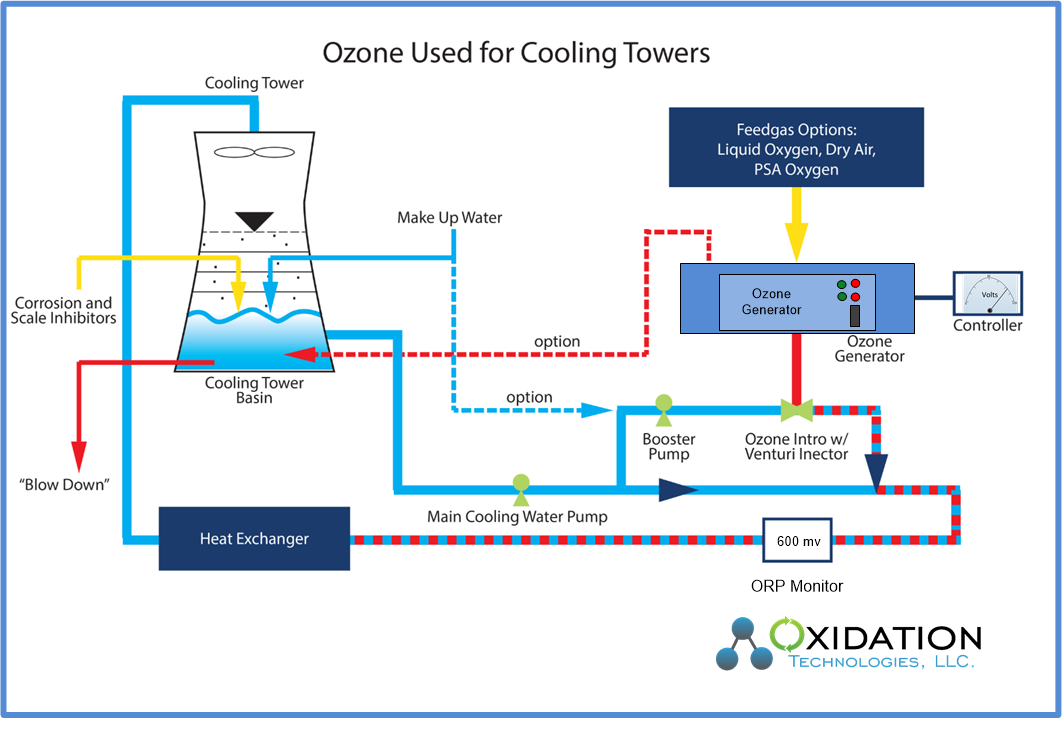
| Ozone gas is injected directly into the cooling tower water line via a diffuser. Due to the high water volume and high concentrations of ozone the solubility of ozone into water is excellent with minimal mechanical mass transfer equipment in some cases. |
When Ozone Is the Right Choice
- Facilities looking to reduce chemical treatment costs, water consumption, or environmental footprint
- Systems suffering from persistent biofilm/fouling, or where Legionella control is a regulatory imperative
- Sites with strong sustainability goals—zero chemical discharge, high cycles of concentration, or water reuse strategies
Why Choose Oxidation Technologies for Your Cooling Tower Ozone Solution
- Deep experience designing turnkey ozone systems tailored to industrial cooling tower loops
- Full system sizing, installation support, control integration, and on-site commissioning
- Proven equipment reliability with high concentration generators, venturi injectors, sensors and off-gas destructors
- Ongoing service, training and monitoring support to ensure your system achieves the expected savings and performance
Next Steps
- Contact us to discuss your cooling tower loop and water quality.
- Complete our online Cooling Tower Questionnaire to assist us in sizing the right solution for your application
- We’ll develop a custom ozone dosing calculation, show your potential water and chemical cost savings, and integrate into the design.
- Implementation can be phased: side-stream pilot loop ➜ full system; we support both approaches.
- After installation, we’ll validate performance (cycles of concentration, microbial load, heat-transfer efficiency, chemical usage) to ensure payback and ongoing optimization.
Papers on the Use of Ozone in Cooling Towers:
Ozone Cooling Tower Treatment With and Without Mineral Removal
Cooling Tower Water Conditioning Study
Ozone Treatment of Cooling Water: results of a full-scale performance evaluation
Practical guidelines for safe operation of cooling tower water ozonation systems
Application of ozone in cooling water systems
One year full-scale study of ozone cooling treatment at electric power station
Cooling water treatment in a thermal power station
Ozone treatment for cooling towers - review water and energy savings
View the Questionnaire for Cooling Towers so we can help design your Ozone System

Bacteria and Fungi Dipslide Test Kits:
These Test Kits provide a simple, scientific way to monitor your level of contamination on-site, saving you money and time, so you can take action before it's too late.
All water-based fluids are susceptible to microbial contamination—bacteria, fungi, and mold. Bugs eat the complex organic molecules that are the raw materials and additives that make up 90% of the cost of your material. High levels of contamination lead not only to foul odors but also to microbial spoilage of your products and health concerns for your workers.
Avoid the long wait (and expense) of an outside lab. Test on-site! Each bacteria dip slide test kit contains all needed supplies—no laboratory equipment or lab experience required. You do not have to be a microbiologist to use the dip slide test kits. Test Kits are non-hazardous microbiological culture media. No hazard class label is required. Solutions can be simple.
Regular bacteria testing allows you to take corrective action that prevents damage to your products, reduces equipment downtime, and prevents employee health issues.

| Product | Listing Description | Price |
|---|---|---|
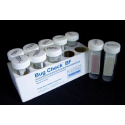 Bacteria & Fungi Test Kit
|
Simple easy-to-use bacteria test kit for counting total bacteria and fungi in all water-based fluids. |
$78.00
|
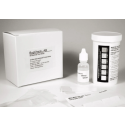 Bacteria Test Kit
|
Bacteria Test for use in hydrocarbon-based fluids, such as diesel fuel, gasoline, hydraulic fluids and similar low-water-content or water-contaminated fluids. |
$288.50
|
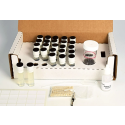 Sulfate-Reducing Bacteria Test Kit
|
Detect and quantify sulfate-reducing bacteria (SRB) in fluids with Bug Check® SRB, a self-contained test kit designed for field and industrial use. |
$350.00
|
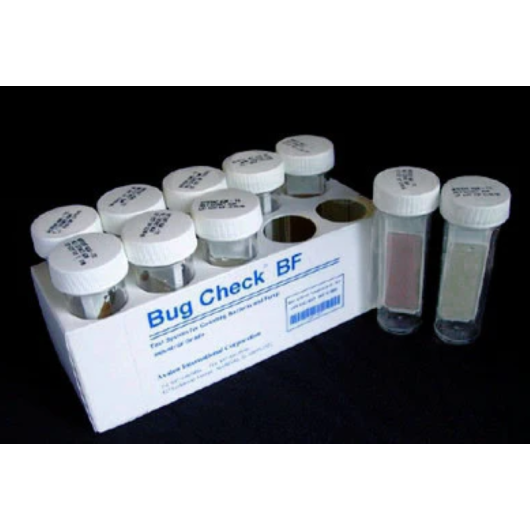
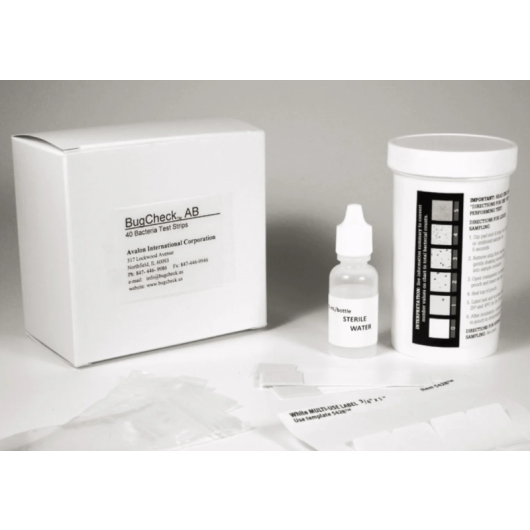
Bacteria & Fungi Test Kit
Listing Description
Simple easy-to-use bacteria test kit for counting total bacteria and fungi in all water-based fluids.
Bacteria Test Kit
Listing Description
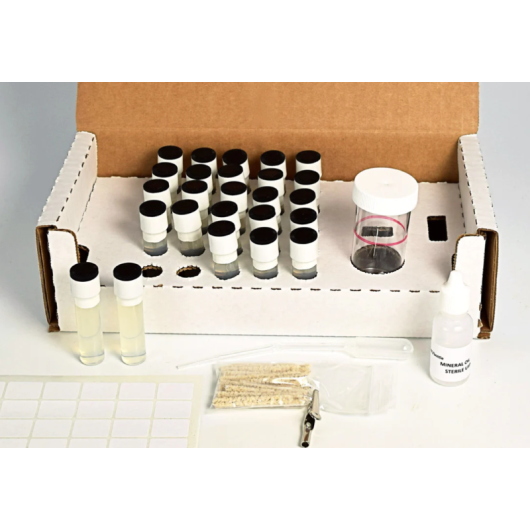
Bacteria Test for use in hydrocarbon-based fluids, such as diesel fuel, gasoline, hydraulic fluids and similar low-water-content or water-contaminated fluids.
Sulfate-Reducing Bacteria Test Kit
Listing Description
Detect and quantify sulfate-reducing bacteria (SRB) in fluids with Bug Check® SRB, a self-contained test kit designed for field and industrial use.