

phone Contact Us

Ozone Applications

Aircraft Water Disinfection AOP Agri-Food Processing Air Treatment Ammonia Removal From Water Aquaculture Aquatic Life Support Systems Beef (Red Meat) Processing with Ozone Biological Oxygen Demand Bottled Water Cannabis Car Wash Water Reclaim Systems Case Studies Case Studies: Force Main Treatment Case Study: Enhancing Fish Processing with Ozone Technology in Georgetown, Guyana Case Study: Ozone Water Disinfection System for Major U.S. Airline Case Study: Spice Warehouse Ozone Installation Chemical Oxygen Demand (COD) Removal with Ozone Clean In Place (CIP) Concrete Cooling Tower Cyanobacteria and Toxin Removal with Ozone Dairy Farms Drinking Water E.coli O157:H7 Reduction with Ozone Flour Milling Force Main Treatment Grain Treatment Groundwater Remediation Hydroponic Greenhouses Lake Remediation Laundry Listeria Inactivation with Ozone Machine Coolant Tanks Municipal Water Treatment NOx removal with Ozone Nanobubbles Odor Control with Ozone Odor Removal Oxidize Tannins from Water with Ozone Ozonated Ice & Fish Storage Ozone Applications in Mining Industry Ozone Regulations in Food Processing Ozone Regulations in Organic Food Production Ozone for Mold Elimination Ozone in Air Applications Ozone in Seafood Processing Ozone use for Post-Harvest Processing of Berries Ozone use in Wet Scrubbers Ozone-Biofiltration Plastic Adhesion Pool & Spa Pork Processing with Ozone Resolution Concerning the Use of Ozone in Food Processing Shellfish Depuration Surface Sanitation Ultra-Pure Water Vertical Farming with Ozone Waste Water Treatment Water Re-use Water Treatment Well Water Treatment

Water Treatment

Well Water/Drinking Water Treatment:

Many dairies use well water for all water use on the dairy.  In some cases this is the only option, in some cases, this is the most cost effective option.  Well water can contain contaminants such as Iron, Manganese, H2S, and other taste and odor causing elements.  

Ozone Can be Used for Water Treatment to Oxidize these Contaminates:

-Iron removal and filtration

-Manganese removal and filtration

-Hydrogen Sulfide (H2S) oxidation

-Taste and Odor issues

-Water disinfection, bacteria, coliform removal

-Total Organic Carbon (TOC) removal


If your dairy has poor quality well water, or are interested in drilling a well for your dairy, consider the use of an ozone water treatment system for your dairy.


How It Works:

Ozone is used to oxidize iron from water for safe and easy filtration.  Iron dissolved in water (Fe+2) will pass directly through a filter.  By oxidizing iron it will form a state (Fe+3) that will be easily filtered with a back-washable sand filter.

Manganese is oxidized from water much like iron is.  Manganese in well water is in the Mn form and is oxidized to MnO2 which will be easily filtered from water with the same back-washable sand filter.

H2S can cause major taste and odor issues in drinking water.  H2S will be oxidized to H2O and elemental sulfur, or sulfate (SO).  Ozone can oxidize H2S without filtration but requires sufficient contact time.

Organics in the water can cause taste and odor issues.  These organics will also cause bacteria to grow in downstream piping and drinkers.  Ozone will oxidize all organics as they will be carbon based and ozone will strip the carbon to create CO and CO2.

Ozone can also be used to treat rural water piped to the dairy.  Many rural water systems to not provide the quality of water necessary for efficient milk production from today’s dairy cows.  The same methods listed above, along with other technologies can be used to further treat your incoming water.

Click HERE for more info on ozone applications for well water treatment
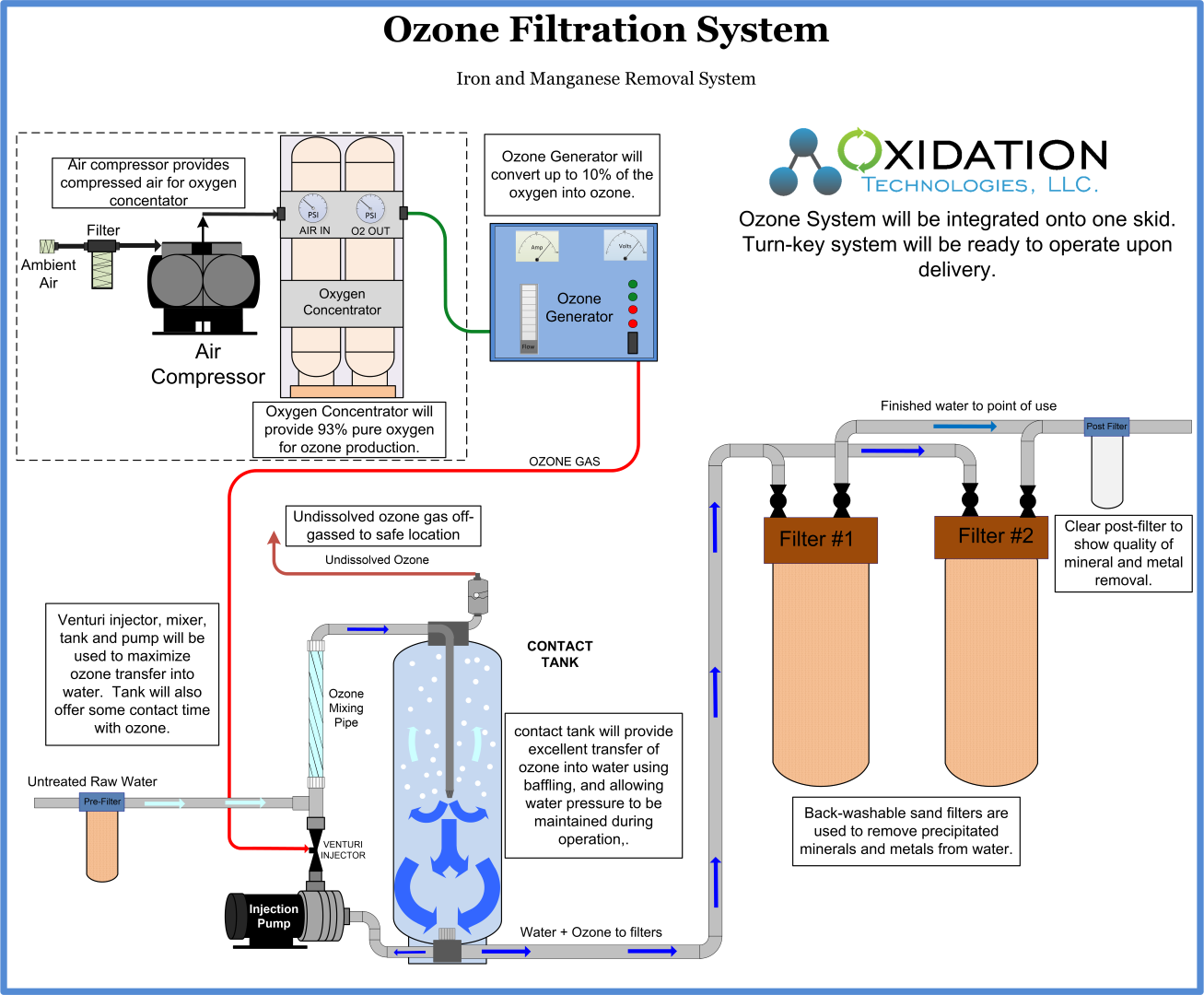
Ozone Injection and filtration system

Example of a complete ozone system to oxidize and filter iron and/or manganese from well water, click on image for a larger view.


Benefit of Ozone:

 
Ozone can improve water quality to your dairy.  Ozone can also save costs by using well water as opposed to rural water that mey be expensive to pump to your farm. Ozone water treatment systems will provide higher quality water, with less overall contamination in that water than rural water can provide.
 

14 Items