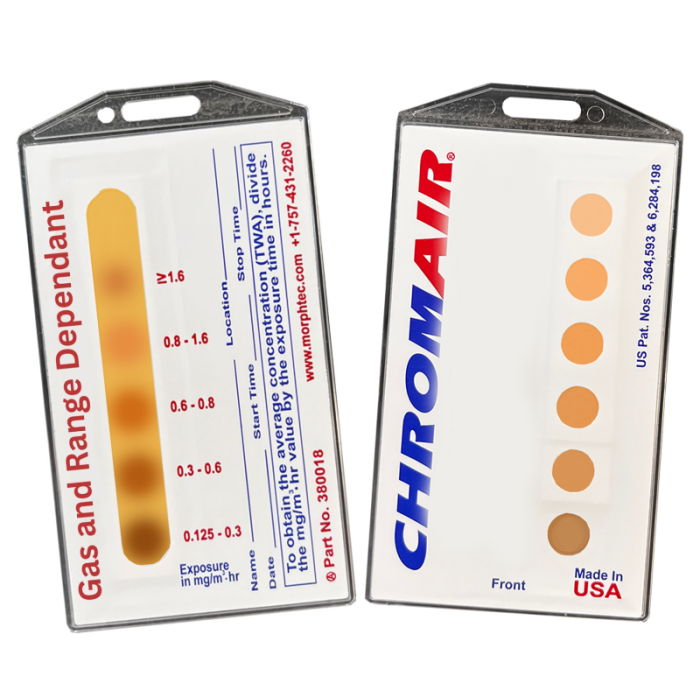
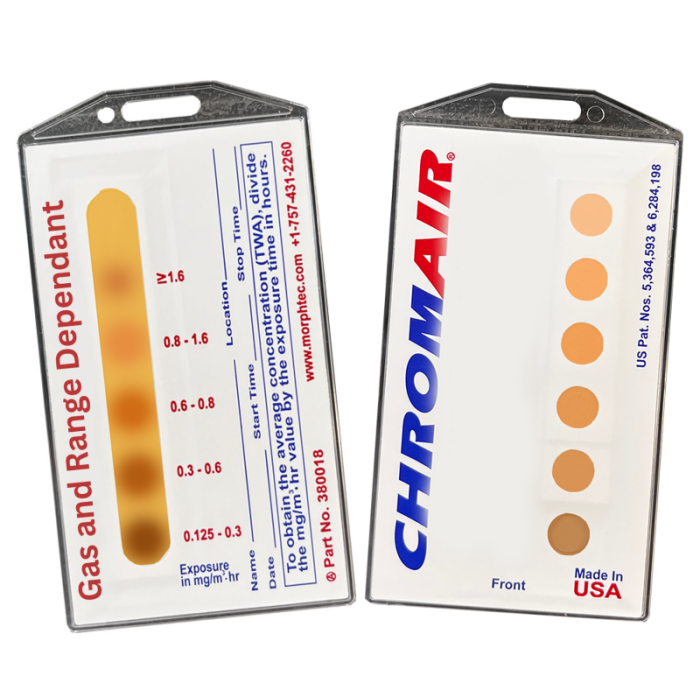
Workplace safety is a top priority, especially when dealing with hazardous substances like ozone. The ChromAir Ozone Badge offers a reliable, easy-to-use solution for monitoring ozone exposure. This badge uses color changes to provide a visual indication of ozone levels, making it ideal for both personnel and area monitoring. With the ability to detect exposure over periods ranging from 5 minutes to 10 hours, it’s a versatile tool for ensuring safety in various environments.
Understanding Ozone and Its Hazards
Ozone (O₃) is a bluish gas with a distinct odor at concentrations below 2 ppm. While it serves as an effective disinfectant for air and water and is used in bleaching processes, it poses significant health risks at higher concentrations:
- Short-term exposure: Causes irritation to the eyes and mucous membranes.
- Long-term exposure: Leads to pulmonary edema (fluid buildup in the lungs) and chronic respiratory diseases.
The OSHA and NIOSH exposure limit for ozone is 0.1 ppm (TWA), emphasizing the need for accurate monitoring in workplaces.
How the ChromAir Badge Works
The ChromAir badge is a passive, direct-read autogenic exposimeter. It consists of six cells connected to an indicator layer and a series of diffusive resistances. Ozone diffuses into the cells and reacts with the indicator layer, causing a color change from blue to white. The extent of this color change directly corresponds to the level of ozone exposure.
Key Features:
- Visual Readability: The badge is designed for straightforward color comparison, making it easy to determine the exposure dose.
- Direct-Read Accuracy: The color produced reflects the cumulative ozone exposure in ppm·hr.
Operating Instructions
Using the ChromAir badge is simple and efficient:
- Prepare the Badge:
- Remove the badge from refrigeration and let it reach room temperature.
- Record relevant details (name, location, date, start time) on the ID label.
- Start Monitoring:
- Remove the protective strip from the first cell.
- For personnel monitoring, attach the badge near the breathing zone (e.g., collar).
- For area monitoring, mount the badge in a centralized location.
- Monitor and Read:
- Periodically check the back of the badge to observe the color change.
- Identify the highest cell with the blue-to-white threshold color to determine the exposure dose.
- Calculate the average ozone concentration (ppm) by dividing the exposure dose (ppm·hr) by the monitoring time (hours).
- Post-Monitoring Storage:
- After use, store the badge in its sealed bag and refrigerate for future use.
Sampling Parameters
| Parameter | Details |
|---|---|
| Color Change | Blue to white |
| Exposure Range | 0.08 – 1.6 ppm·hr |
| Sampling Time | 5 minutes to 10 hours |
| Temperature Range | 16ºC – 30ºC (61ºF – 86ºF) |
| Relative Humidity Range | 20% – 90% |
| Face Velocity Range | 10 – 165 cm/sec |
| UV Light Effect | Not recommended (avoid direct sunlight exposure) |
| Shelf Life | 1 year (refrigerated) |
Why Choose the ChromAir Ozone Badge?
The ChromAir badge offers several advantages for safety-conscious workplaces:
- Convenience: Its simple color-change mechanism eliminates the need for complex instrumentation.
- Versatility: Suitable for both short-term and long-term monitoring.
- Reliability: Operates effectively across various temperature and humidity ranges.
By providing an easy, accurate, and cost-effective method for monitoring ozone exposure, the ChromAir Ozone Badge ensures that safety standards are maintained, protecting workers and their environments from the risks associated with ozone.
You can find this product here: https://www.oxidationtech.com/ozone-chromair-badge-380010-10.html