Ozone (O₃) is created from oxygen (O₂), and for most industrial and commercial applications, this is achieved through a corona discharge ozone generator. To produce ozone efficiently and reliably, the feed gas—whether it’s air or concentrated oxygen—must be properly prepared.
Air vs. Oxygen as Feed Gas
Dry Air for Ozone Generation
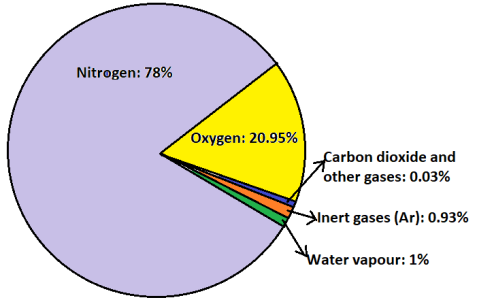
Atmospheric air contains about 21% oxygen, 78% nitrogen, and 1% other gases. While this oxygen can be used to make ozone, air-fed systems require the air to be clean, filtered, and extremely dry.
Moisture in the air reduces ozone production efficiency and can create harmful by-products such as nitric acid (HNO₃), which can damage the ozone generator.
Advantages of dry-air feed:
- Lower capital cost (no oxygen concentrator needed)
- Simple design, easy installation and operation
- Low power consumption
Disadvantages of dry-air feed:
- Low ozone concentration (3% or less)
- Lower ozone solubility in water
- Higher by-product formation and maintenance needs
Moisture control is critical. For best results, air should have a dew point of -40°C or lower (ideally -70°C). This reduces the risk of nitric acid buildup and improves ozone generation efficiency.
Oxygen-Enriched Feed Gas
Increasing oxygen purity (90–99%) greatly improves ozone production. This is done by removing nitrogen and other gases from air, resulting in higher ozone concentration and fewer impurities.
Advantages of oxygen feed:
- Higher ozone concentration (5–10%, sometimes over 20%)
- Better ozone solubility in water
- Reduced generator maintenance
- Fewer by-products
Disadvantages of oxygen feed:
- Higher equipment cost and complexity
- Additional energy requirements for oxygen production or delivery
Oxygen-fed systems are ideal when ozone is intended for aqueous applications, as both oxygen and ozone dissolve more efficiently in water.
Methods of Producing Feed Gas
Dry-Air Systems
- Vacuum-driven, heat-regenerative air dryers – Simple, energy-efficient, ideal for small water disinfection systems like pools, spas, and bottled water plants.
- Pressure swing adsorption (PSA) air dryers – Produce drier air with more consistent quality, suitable for larger ozone systems and humid environments.
Oxygen Supply Options
- Bottled compressed oxygen – Best for labs or short-term use; costly for long-term operation.
- Liquid oxygen (LOX) – Stored in cryogenic tanks; economical for large-scale, continuous ozone production (common in municipal water treatment).
- On-site oxygen concentrators (PSA or VSA) – Remove nitrogen from air using zeolite; cost-effective for both small and large ozone systems.
Choosing the Right Feed Gas for Your Application
| Feed Gas | Best Use Cases | Key Benefits |
|---|---|---|
| Dry Air | Low-cost, low-maintenance systems; small-scale disinfection | Simplicity, low capital cost |
| Oxygen | Industrial water treatment, high-ozone applications | High concentration, better solubility, fewer by-products |
Conclusion:
For general disinfection or odor control, dry-air feed systems may be the most economical choice. For high-performance water treatment or applications requiring maximum ozone transfer efficiency, oxygen feed gas is the superior option. Whichever feed gas you choose, ensure proper preparation—especially moisture removal—to protect your ozone generator and optimize performance.
You can find more information here: https://www.oxidationtech.com/ozone/ozone-generation/o3-feed-gas.html