
Ozone Applications

How to Correct Flow Reading for Pressure
A standard rotometer style flow-meter using a floating ball is commonly used on oxygen concentrators and ozone generators to measure gas flow-rates. This standard flow-meter may be used in a wide variety of applications and are therefore calibrated to read gas flow accurately at ambient temperatures and pressures of the gas passing through the flow-meter.
An accurate flow measurement is essential to diagnose low oxygen purity from oxygen concentrators, prevent damage to oxygen concentrators, and get accurate calculations of ozone production from an ozone generator.
When the gas, either air or oxygen, passing through the flow-meter is pressurized the flow-meter will read that flow inaccurately.
How to Correct Flow Reading for Pressure:
A standard rotometer style flow-meter using a floating ball is commonly used on oxygen concentrators and ozone generators to measure gas flow-rates. This standard flow-meter may be used in a wide variety of applications and are therefore calibrated to read gas flow accurately at ambient temperatures and pressures of the gas passing through the flow-meter.
An accurate flow measurement is essential to diagnose low oxygen purity from oxygen concentrators,
prevent damage to oxygen concentrators, and get accurate calculations of ozone production from an ozone generator.
When the gas, either air or oxygen, passing through the flow-meter is pressurized the flow-meter will read that flow inaccurately. The picture below shows two identical flowmeters side by side with the same amount of oxygen gas flowing through each flowmeter from an oxygen concentrator. The flowmeter on the left side is under 20 psi of pressure, while the flowmeter on the right is under 0 psi of pressure. Even though the amount of oxygen flowing through the flow-meters is identical, the flow readings are different. Under pressure, the flowmeter will read lower than the actual flow.

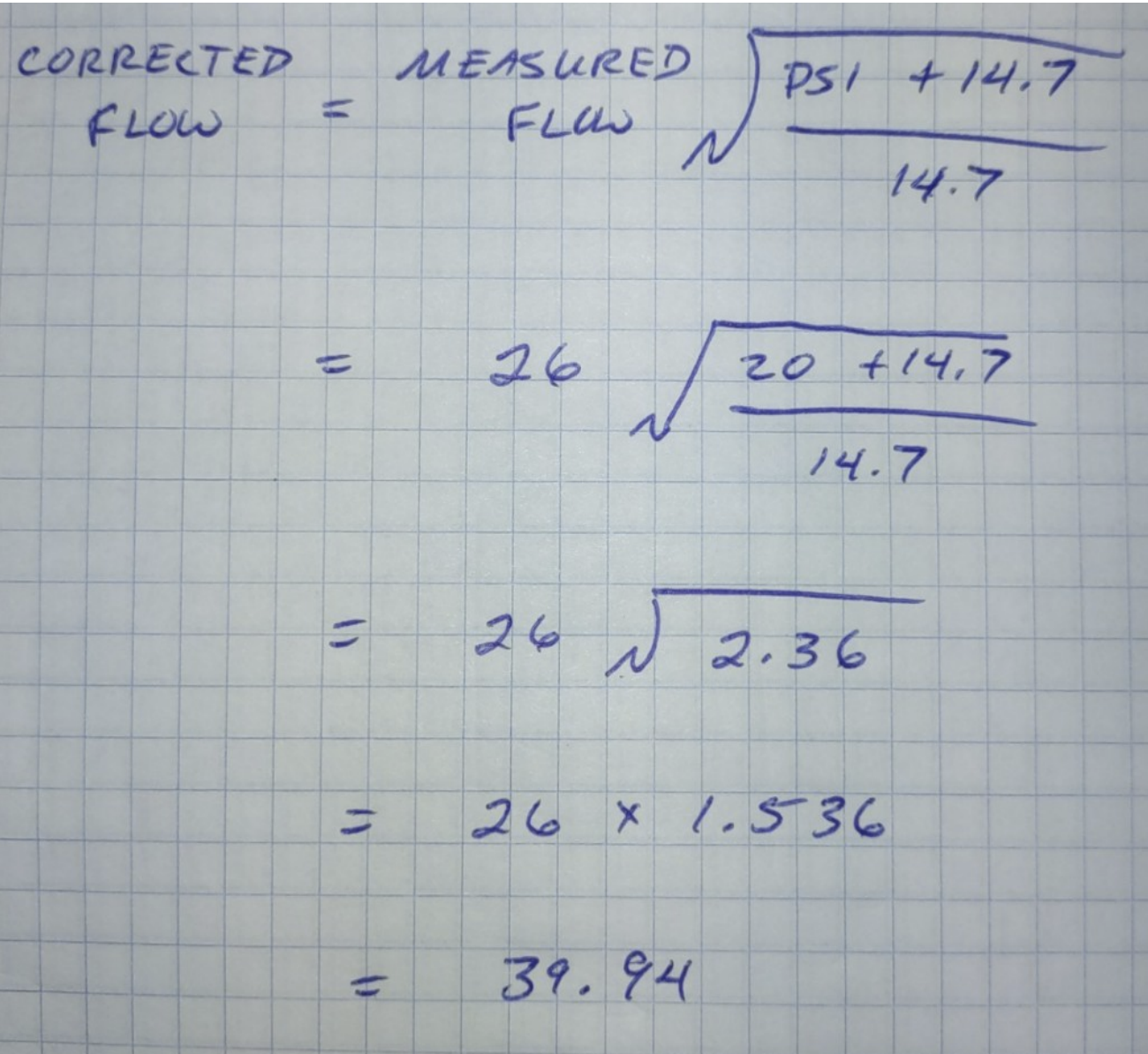
When reading a flow-meter under pressure, calculate the correcteded flow measurement using the math
formula, use our website calculator, or a chart.

Below, is an example of this calculation used to calculate the accurate flow for the flow-meter above.
Pressurized flow-meter Calculator:
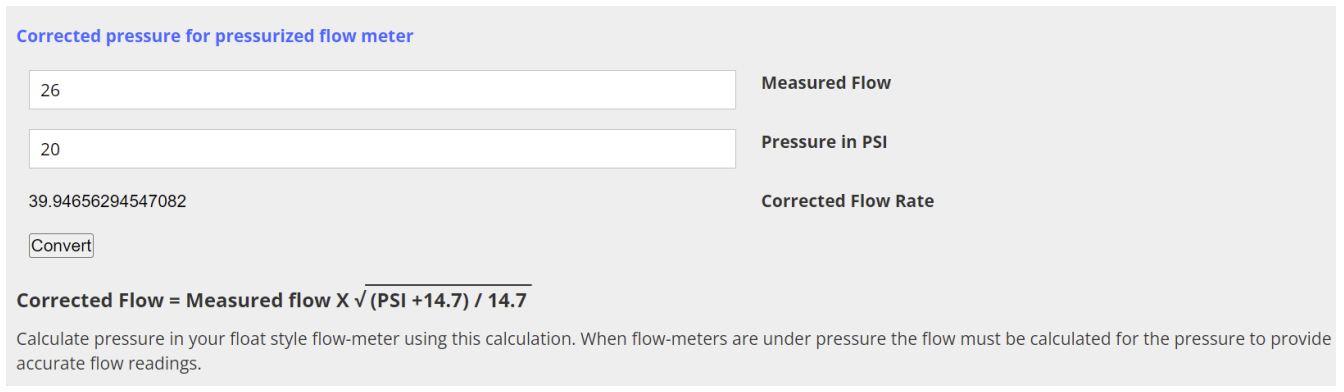
There are also online calculators that can be used to calculate this for you. Below is an example along
with the website link directly to this calculator: LINK HERE
Flow and Pressure Chart:
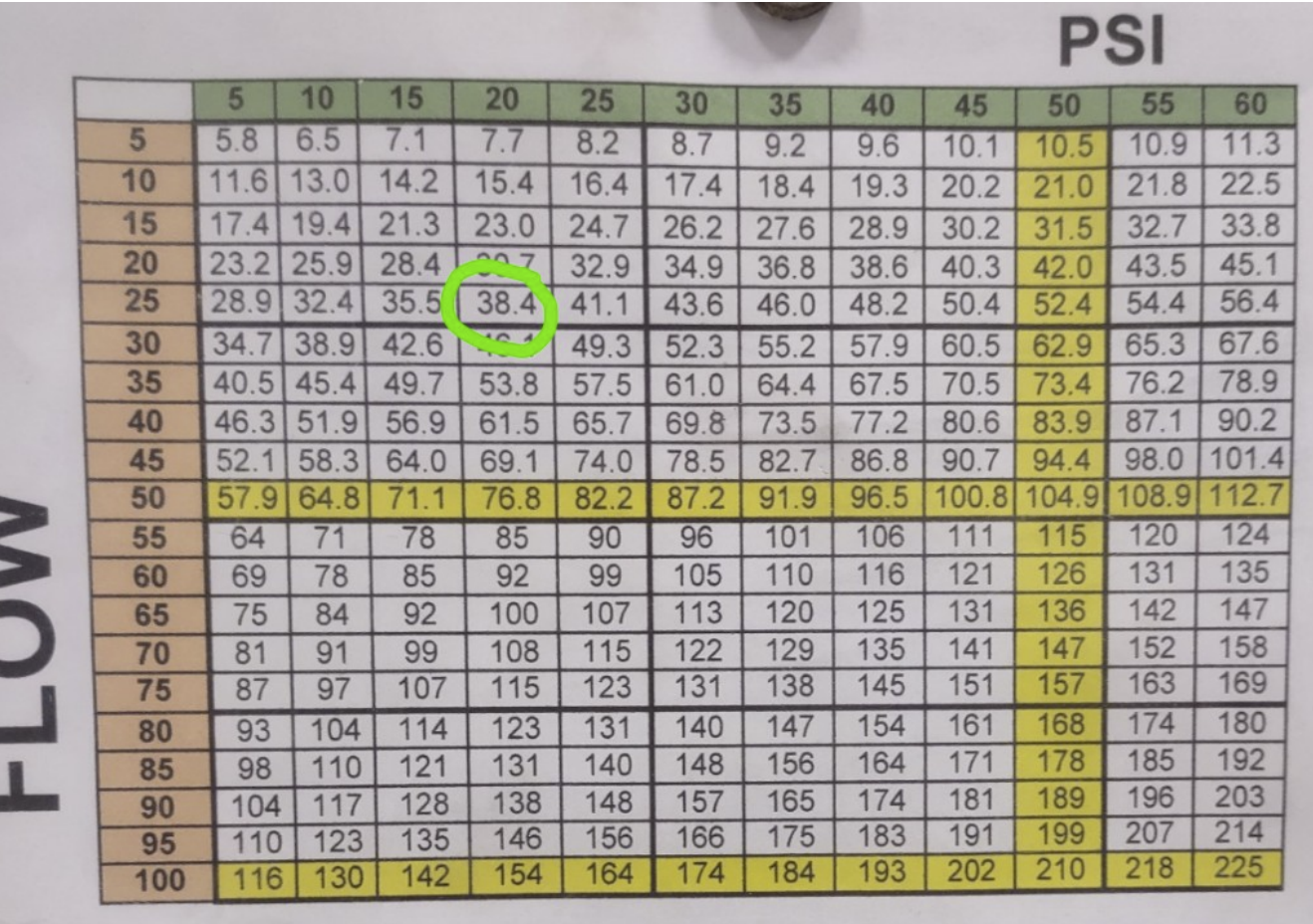
Pre-made charts can be created based on the common pressures and flows that would be used for your
equipment. The chart below shows a good example of such a chart. This chart can be created within a
spreadsheet document using the formulas outlined in this document.
Flowmeters are available that are calibrated for various different operating pressure. The flowmeters
we use at Oxidation Technologies on our equipment are all calibrated at 0 psi or atmospheric pressure.
This allows us to get an accurate flow reading under any pressure provided the reading is corrected for
pressure without questioning the original calibration pressure of the flow-meter in use.
How to Correctly Read a Flowmeter: