Ozone Applications
Advanced Oxidation Using Ozone and UV Light
Advanced Oxidation Using Ozone and UV Light
Also known as:
· AOP (Advanced Oxidation Processes)
· Hydroxyl Radical (•OH)
· Ozone Advanced Oxidation
· OH Radical
· UV Ozone AOP
Ozone is a powerful oxidizer. UV light is an effective water-treatment technology. When the two technologies are combined, however, they can create an oxidation process that is significantly different from either technology operating independently.
The combination of:
Ozone + UV Light + Water
can generate highly reactive chemical species known as hydroxyl radicals (•OH).
The Hydroxyl Radical has a higher oxidation potential than ozone alone.
What Is an Advanced Oxidation Process?
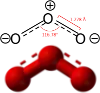
Conventional ozone treatment relies substantially on reactions involving molecular ozone, O₃.
An Advanced Oxidation Process intentionally promotes the formation of even more reactive species, particularly:
Hydroxyl radicals: •OH
Hydroxyl radicals are extremely reactive and short-lived. Rather than maintaining a residual in the water, they tend to react rapidly with nearby compounds.
This allows AOP treatment to attack some organic compounds that are difficult or relatively slow to oxidize using molecular ozone alone.
Using UV Light systems to Create the AOP Reactions:
When UV light at approximately 254 nm is applied to water containing dissolved ozone, ozone absorbs the UV photons to initiate decomposition of ozone.
The complete chemistry involves numerous intermediate reactions, but a simplified representation is:
O₃ + H₂O + UV → H₂O₂ + O₂
This is followed by reactions between ozone, hydrogen peroxide, and intermediate species that produce hydroxyl radicals.
One simplified representation is:
2 O₃ + H₂O₂ → 2 •OH + 3 O₂
These simplified equations illustrate the important practical result:
UV accelerates ozone decomposition and promotes hydroxyl-radical chemistry.
What is the Hydroxyl Radical?
Molecular ozone is a strong oxidizer with an oxidation potential of +2.07 V. The Hydroxyl Radical is extremely reactive with an oxidation potential of +2.80 V. This higher oxidation potential has great value in oxidizing (breaking down) strong chemical bonds, but results in a very short half-life. It is virtually impossible to measure the Hydroxyl Radical itself, only the resulting reactions are measured and quantified.
The O₃/UV AOP system can offer several treatment mechanisms simultaneously:
1. Molecular ozone oxidation
Ozone reacts directly with susceptible contaminants.
2. UV photolysis
Some compounds can absorb UV energy and undergo direct photochemical decomposition.
3. Hydroxyl-radical oxidation
UV decomposition of ozone promotes radical formation, providing another powerful oxidation pathway.
4. UV disinfection
The 254 nm UV energy can also provide germicidal activity against microorganisms.
The resulting treatment process can therefore accomplish considerably more than simply removing the ozone residual.
Common Applications for UV/Ozone AOP
AOP is particularly interesting for organic compounds that are not effectively treated by conventional biological treatment, filtration, or molecular ozone alone.
Potential applications include:
-
- Industrial organic contaminants
- Micropollutants
- Certain taste and odor compounds
- Refractory organic compounds
- Some solvents and chemical contaminants
- Organic contaminants in recycled or reclaimed water
- Specialized high-purity water applications
Performance is highly contaminant-specific. A compound that reacts rapidly with hydroxyl radicals may respond very differently from one that relies primarily on direct UV photolysis or molecular ozone oxidation.
Therefore, removal percentages should not be generalized across contaminants.
Determining AOP Performance
Unlike simple equipment selection based primarily on flow, Advanced Oxidation Process design requires an understanding of the treatment objective and water chemistry.
Important factors include:
UV Dose
The amount of UV energy delivered to the water affects ozone photolysis and radical generation.
Dissolved Ozone Concentration
Ozone acts as the oxidant and precursor for radical formation. The appropriate concentration depends on the water and treatment objective.
UV Transmittance
UV must penetrate the water to drive photochemical reactions. Poor UV transmittance reduces effective UV exposure.
Target Contaminant
Different compounds have different rate constants and treatment mechanisms.
Natural Organic Matter
Background organics can consume hydroxyl radicals before the radicals reach the target contaminant.
Alkalinity and Carbonate
Carbonate and bicarbonate can act as radical scavengers, reducing the amount of useful hydroxyl-radical oxidation available for the target contaminants.
Nitrate and Other Water Constituents
Other substances within the water matrix can also influence photochemical and radical reactions. Research literature specifically identifies UV transmittance, natural organic matter, alkalinity and other water-quality parameters as important considerations when designing UV AOP systems.
Sizing the UV/Ozone AOP System
This is an important distinction from our UV Ozone Destruction sizing guidelines.
An AOP system should not simply be sized using the germicidal-flow ÷ 3 guideline.
For AOP applications, there are two major controllable treatment variables:
UV Dose + Oxidant Dose
The optimum combination depends on the treatment objective and water quality. Professional UV/AOP design therefore considers the required contaminant reduction, UV transmittance, ozone concentration and radical-scavenging characteristics of the water. [uvsolutionsmag.com]
Examples:
· Ozone dissolved in water will naturally break down and create •OH. 254 nm UV light simply increases the rate of •OH. Therefore, if very high dissolved ozone levels in water used similar •OH reactions can be created with ozone in water alone compared to low dosage rates of ozone in water and 254 nm UV light.
· Converse to above, low dosage rates of ozone combined with 254 nm UV light may function similarly to much higher ozone dosage rates into water and may be a more cost effective solution.
· To create an effective AOP reaction with 254 nm UV Light + Ozone in water the intensity of UV (UV dosage) must be sufficient to inactive the ozone in water. Higher levels of dissolved ozone in water will require higher UV dosages
· In some applications an ozone residual may be desired. Therefore, a lower UV dosage may be desirable to leave an ozone residual in water for downstream ozone reactions. An example may be an ozone dosage rate of 2.0 ppm enters the UV light system with an outgoing level of ozone in water of 0.5 ppm.
· Ozone nanobubbles should also be considered. Most efficient ozone dissolution systems will create a high number of ozone nanobubbles in water. These nanobubbles will reflect/refract the UV Light and cause interference to ozone destruction and AOP reactions. Inversely the ozone nanobubbles create •OH naturally. Therefore, the ozone nanobubble consideration should be considered from all aspects.
For proper sizing of ozone systems using AOP, bench testing or pilot testing may be appropriate before designing a full-scale system.
UV/Ozone Compared with UV/Hydrogen Peroxide
UV/Ozone is not the only Advanced Oxidation Process.
Another common process is:
UV + Hydrogen Peroxide (H₂O₂)
When hydrogen peroxide absorbs UV energy, it can split to produce hydroxyl radicals:
H₂O₂ + UV → 2 •OH
This provides another pathway for creating hydroxyl radicals in water.
Possible AOP combinations therefore include:
|
Process |
Oxidant/Activator |
|
O₃/UV |
Ozone + UV |
|
H₂O₂/UV |
Hydrogen peroxide + UV |
|
O₃/H₂O₂ |
Ozone + hydrogen peroxide |
|
O₃/H₂O₂/UV |
Ozone + peroxide + UV |
Each combination has advantages depending upon the contaminant and water chemistry.
Also as noted above, Ozone dissolved in water does naturally create •OH at low rates. Ozone nanobubbles also create •OH without the addition or either UV or H2O2.
Advantages of 254 nm UV for AOP Reactions
There are distinct advantages that make the Ozone + UV = AOP reactions preferable
· UV light + Ozone require no chemicals or chemical storage, only electrical power is required for both ozone and UV generation
· Dosage rates are simpler, high ozone dose rages can be used resulting in high dissolved ozone levels that are eliminated with UV leaving now residuals
· Ozone leaves no long-term residual in water, therefore if ozone in water leaves the system it will decay quickly and naturally to only oxygen vs H2O2 which will decay much slower in water
· H2O2 addition to water may alter the water PH
Is UV/Ozone AOP Right for an Application?
UV/Ozone AOP is particularly worth considering when:
-
- An ozone system is already being used;
- conventional ozone alone does not provide the required oxidation potential;
- a difficult organic contaminant must be addressed and higher oxidation potential is required;
- maintaining a chemical residual isn't necessary;
- or ozone needs to be destroyed after accomplishing its primary treatment purpose.
For contaminant-removal applications, the best starting point is identifying:
-
- Target contaminant and concentration
- Required removal percentage or outlet concentration
- Water flow
- Dissolved ozone concentration
- UV transmittance
- pH and alkalinity
- General water chemistry
- Existing ozone and UV equipment
From this information, the required ozone dose, UV dose and contact conditions can be evaluated.