Ozone Applications

Oxygen Concentrator Cycles Explained
How an Oxygen Concentrator Captures Oxygen from Air
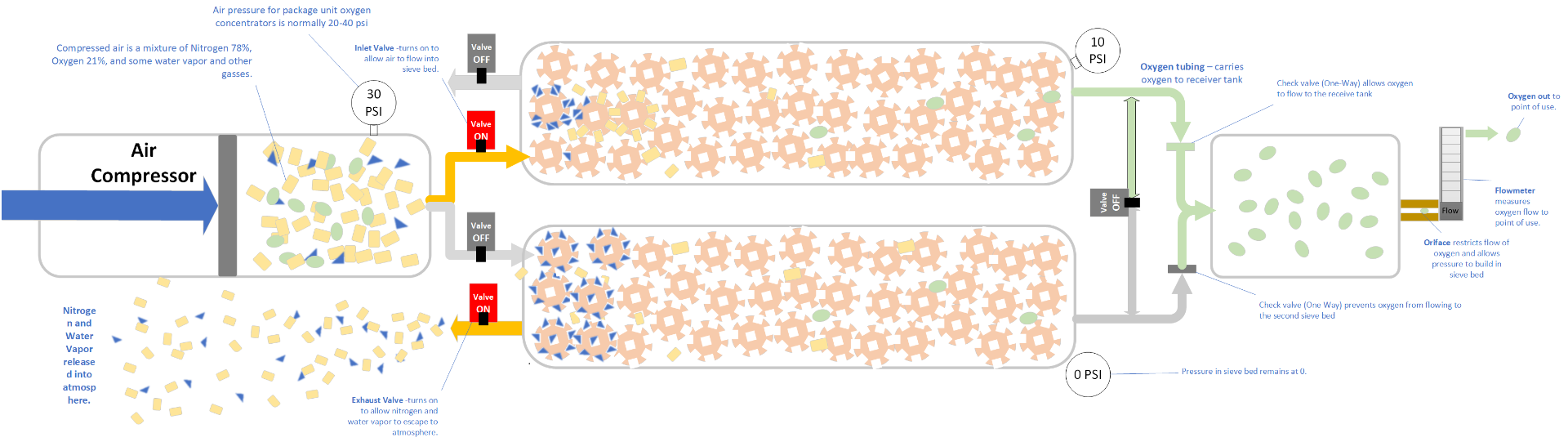
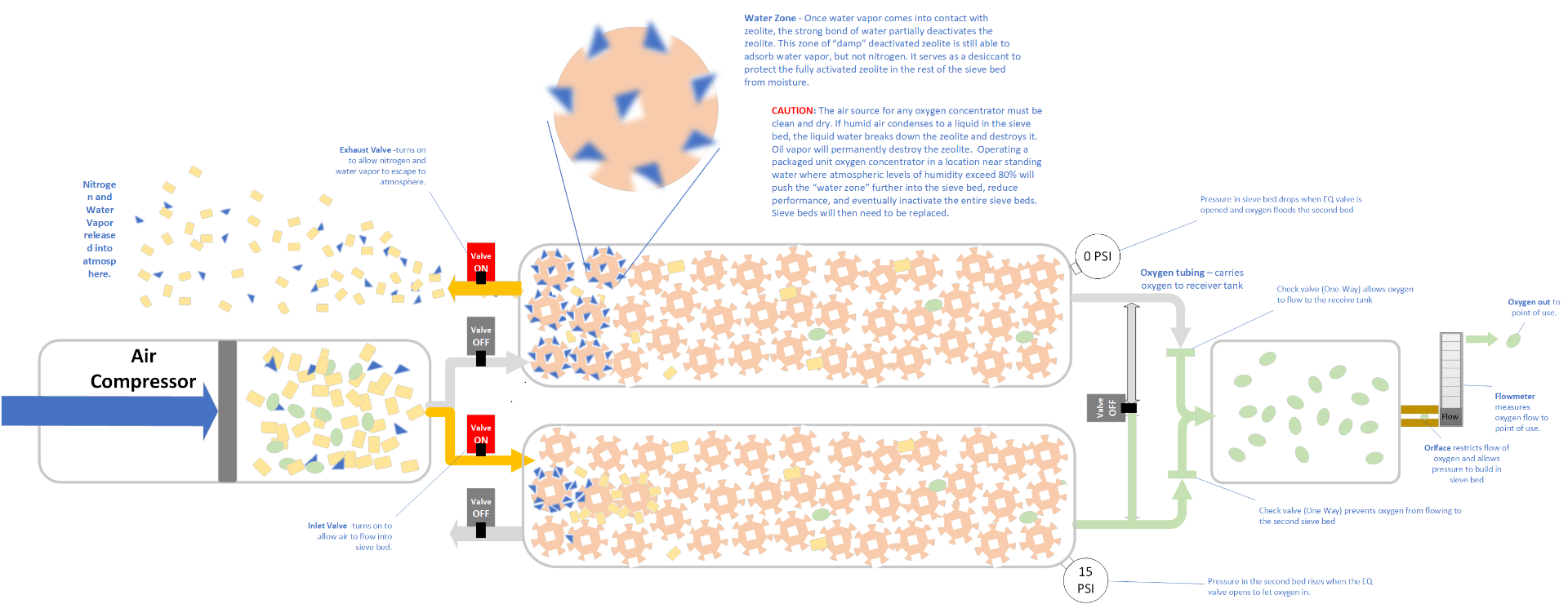
Air is 21% oxygen and 78% nitrogen. An oxygen concentrator separates the oxygen in Air, from the nitrogen using Pressure Swing Adsorption (PSA) technology. Molecular Sieve (Zeolite) is an inert material that adsorbs nitrogen and water vapor under pressure and lets the oxygen pass through. By using a pair of sieve beds filled with zeolite, the oxygen can be separated from compressed air using valves to complete a fill and release cycle. The following diagrams illustrate this process.
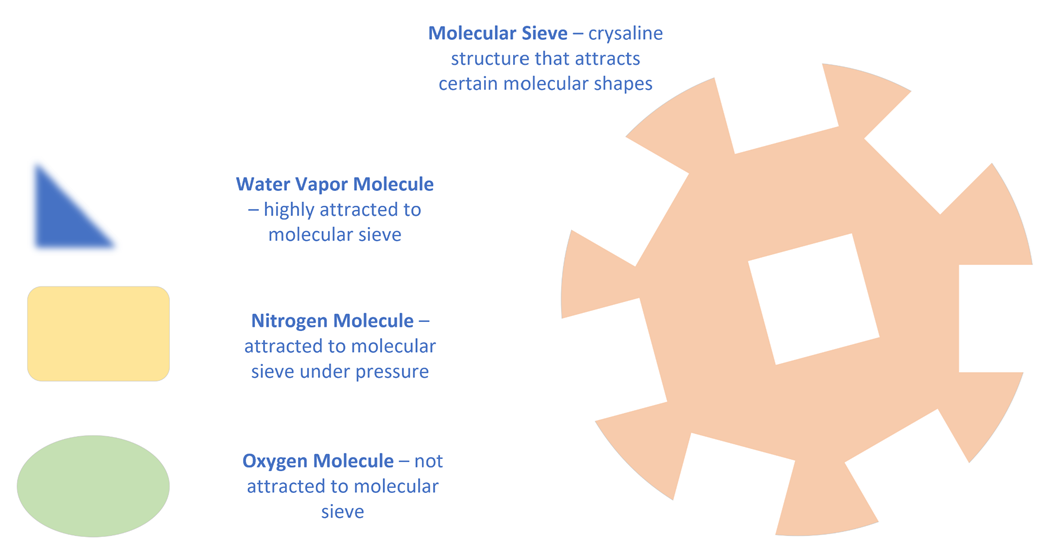
An oxygen concentrator provides 95% oxygen by removing the nitrogen and water vapor from air. It removes the nitrogen and water vapor by passing the air through molecular sieve. This molecular sieve, also called zeolite, is modeled below with the shape that looks and acts something like a sponge. The molecular structure of the surface is “sticky” to water vapor and nitrogen molecules. Like a sponge, the surface area is multiplied by the cavities that permeate the material.
STAGE 1
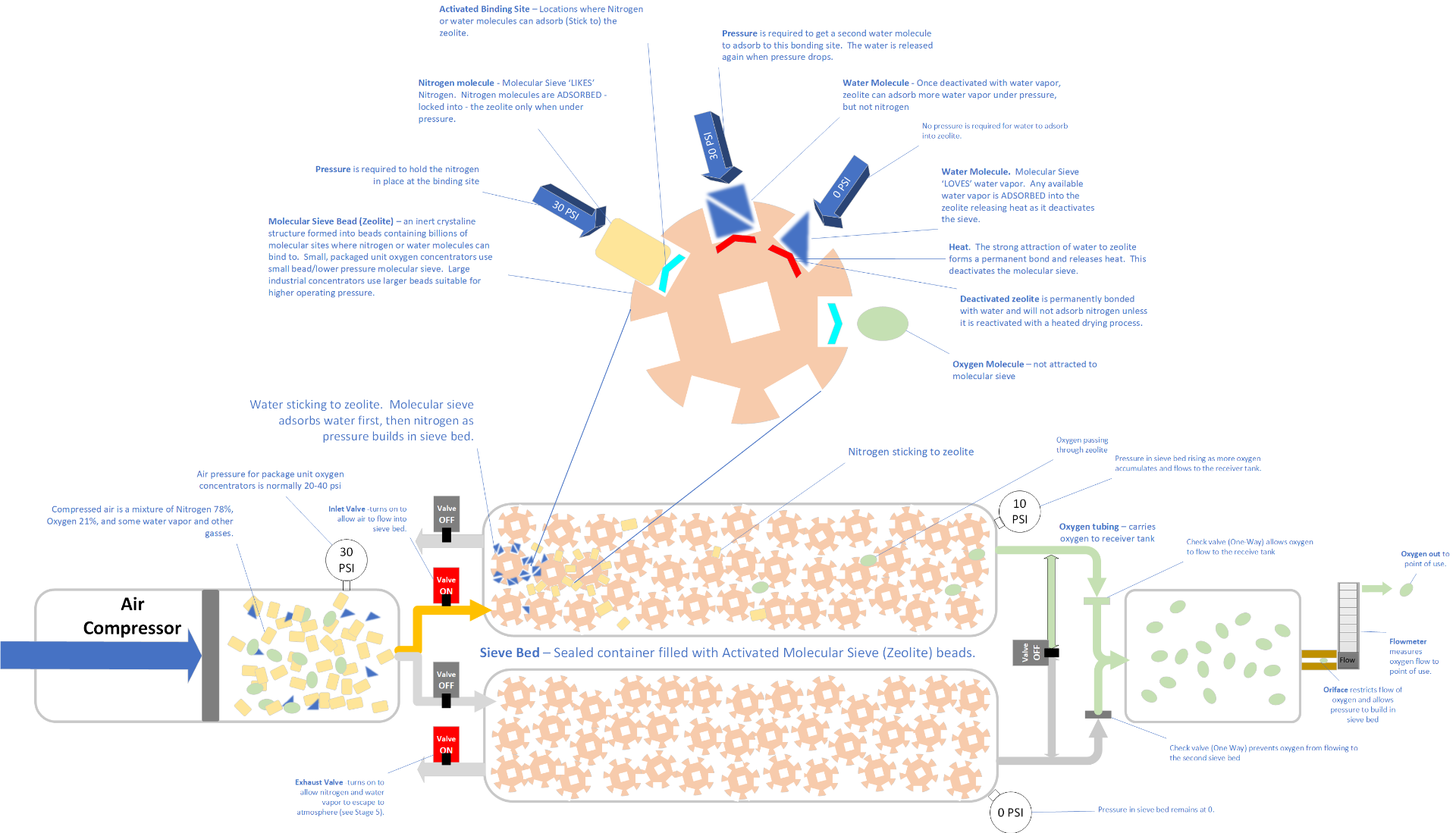
Air Compressor pushes air into the sieve bed. Water vapor is immediately trapped, and nitrogen gets trapped as pressure in the sieve bed builds. Oxygen passes completely through and out the opposite end.
STAGE 2
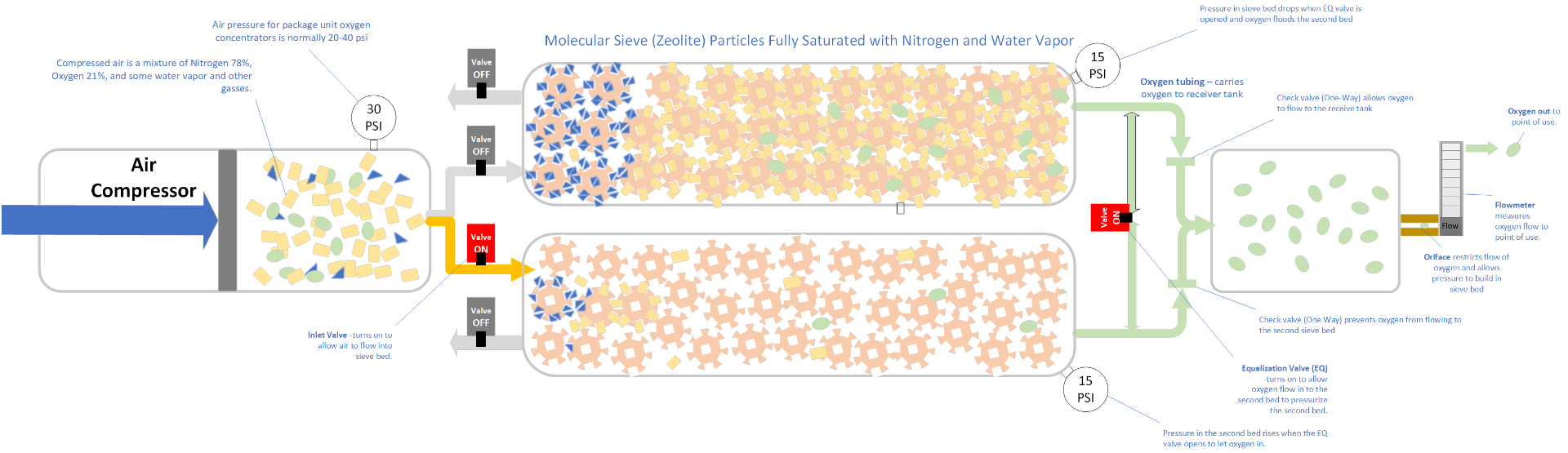
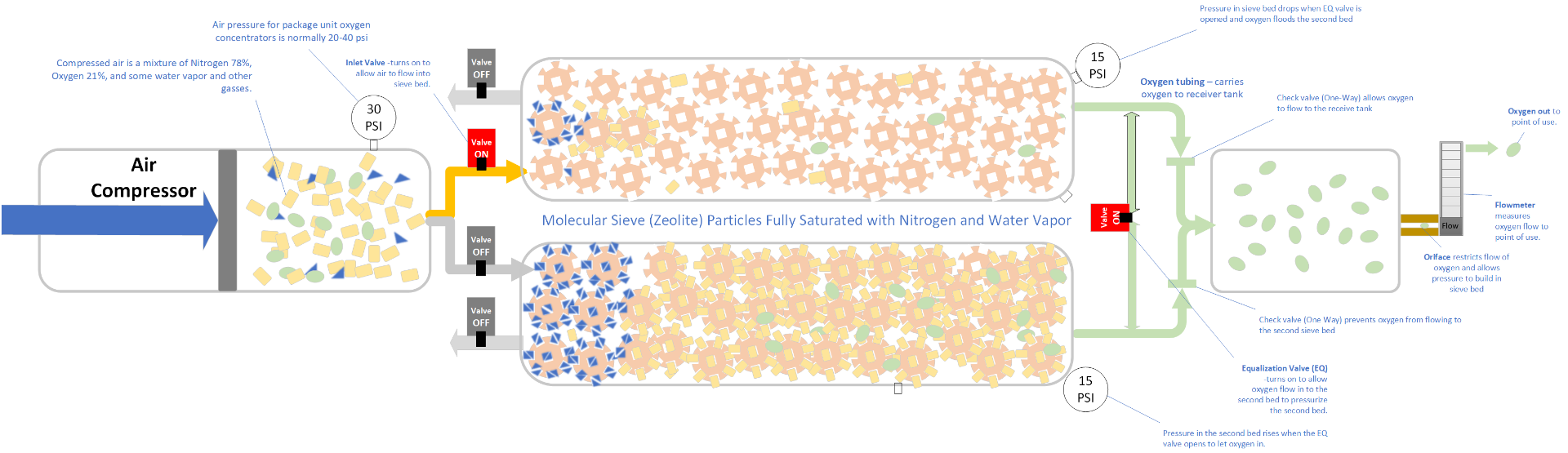
After the first bed becomes fully saturated with nitrogen, the inlet valves to bed 1 closes, then the EQ valve opens on the oxygen end, and when pressure is equalized between the two beds, the air inlet valve opens on the second bed to allow air flow into the second bed.
STAGE 3
The exhaust valve on bed one opens to release pressure and allow the nitrogen and loosely bonded water molecules to escape to atmosphere. The EQ valve closes to allow oxygen now flowing through the second bed to continue filling the receiver tank.
STAGE 4
Repeat of stage 2, but with opposite beds. After the second bed becomes fully saturated with nitrogen, the inlet valves to bed 2 closes, then the EQ valve opens on the oxygen end, and when pressure is equalized between the two beds, the air inlet valve opens on the second bed to allow air flow into the second bed.
STAGE 5
EQ valve turns off, and the Exhaust valve for bed 2 opens to vent nitrogen and water vapor. Return to stage 1. This process is repeated continuously to provide a constant flow of oxygen.