Metalworking machines are indispensable in modern manufacturing, but maintaining their coolant systems can be both costly and labor-intensive. Enter ozone technology, an innovative solution to extend coolant life, eliminate foul odors, and reduce maintenance caused by biofilm buildup in machine coolant tanks.
Let’s dive into how ozone offers a game-changing approach to managing machine coolant systems.
The Problem: Bacteria and Odors in Coolant Tanks
Coolant fluid is essential in metalworking, cooling and lubricating the process while circulating through the machine. However, over time, bacteria from the air and machined materials accumulate in the coolant tank. This leads to:
- Foul Odors: A byproduct of bacterial activity in the tank.
- Biofilm Build-Up: Slimy residues that clog filters, screens, and pumps.
- Increased Costs: Coolant is often replaced prematurely—not because it fails as a coolant or lubricant, but due to contamination from bacteria. Disposal, labor, and replacement coolant add up quickly.
Without intervention, these issues can significantly impact operational efficiency and expenses.
The Ozone Solution: Clean, Odor-Free Coolant Systems
Ozone, a powerful oxidizing gas, offers an effective, low-maintenance way to address bacterial contamination in coolant tanks. Here’s how it works:
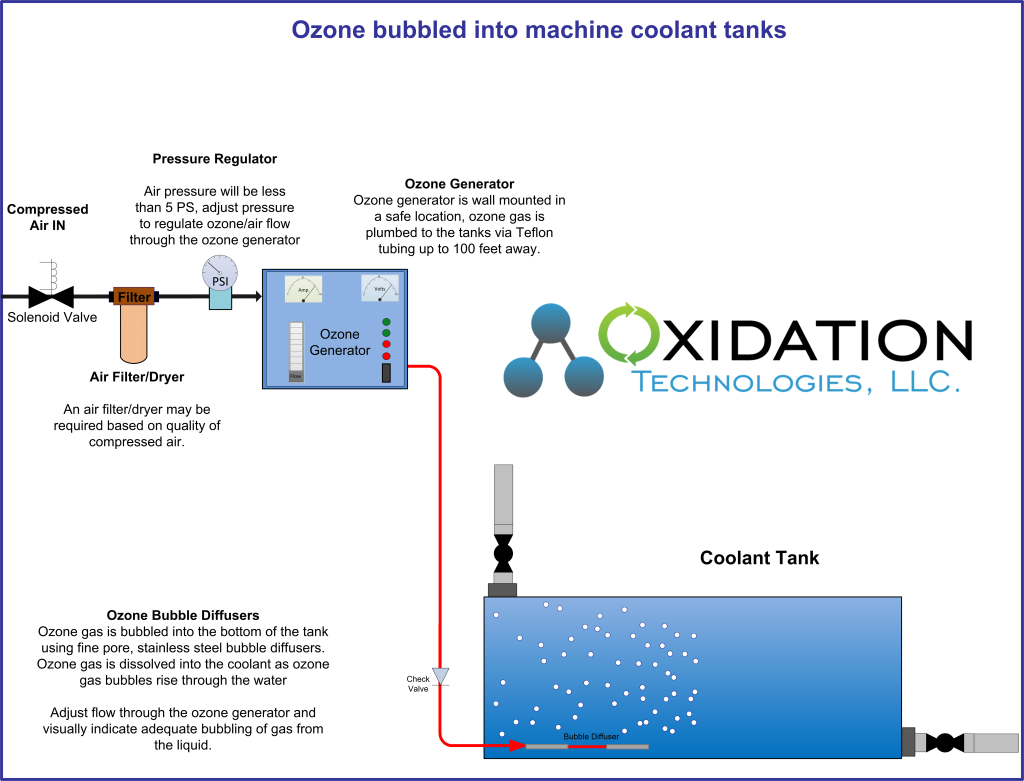
- Ozone Generation: Ozone is created from oxygen in the air using a corona discharge system.
- Bubble Diffusion: The ozone gas is bubbled into the coolant tank using fine-pore diffusers, dissolving ozone into the liquid.
- Bacterial Elimination: Ozone neutralizes bacteria, halting odor production and biofilm buildup.
- Coolant Preservation: Unlike harsh chemical additives, ozone has minimal impact on the coolant’s chemical composition, ensuring its lubricating and cooling properties are maintained.
By using ozone, businesses can extend the life of their coolant, reduce waste, and cut costs associated with frequent coolant replacement.
Necessary Equipment for Ozone Implementation
To integrate ozone technology into a machine coolant system, the following equipment is needed:
- Compressed Air: Provided by an on-site air supply.
- Solenoid Valve: For automatic airflow control, or a manual ball valve for simpler setups.
- Air Filter/Dryer: Ensures clean, dry air for optimal ozone generation.
- Pressure Regulator: Controls airflow to the ozone generator, adjusted to achieve visible air bubbling in the tank.
- Ozone Generator: Converts oxygen in the air to ozone.
- Ozone Tubing: Uses FEP or stainless steel tubing, as ozone is highly reactive.
- Check Valve: Prevents liquid backflow into the ozone generator.
- Diffusers: Break up ozone gas into fine bubbles for better dissolution in the coolant.
Ozone Generator Selection and Sizing
The size of the coolant tank determines the required ozone output. Larger tanks need higher-capacity generators, while smaller tanks can use lower settings. Notably, ozone generators can be adjusted to lower output levels, making them versatile for various tank sizes.
Why Choose Ozone for Coolant Maintenance?
By adopting ozone technology, machine operators can:
- Eliminate Odors: A fresher, cleaner work environment.
- Reduce Biofilm Maintenance: No more clogged filters or pumps.
- Extend Coolant Life: Save money by reducing coolant replacement frequency.
- Minimize Chemical Use: Ozone provides a safe, eco-friendly alternative to chemical biocides.
Transform Your Operations
Ozone technology represents a simple yet powerful way to revolutionize machine coolant maintenance. It’s cost-effective, environmentally friendly, and proven to combat bacteria and biofilm buildup.
You can find more information here: https://www.oxidationtech.com/applications/water-treatment/machine-coolant-tanks.html