
Ozone generators are rated and selected based on the amount of ozone they produce, making performance testing an important step in ensuring your system operates efficiently. Understanding the method and equipment needed to measure ozone output will help you confirm that your generator meets its specifications and performs reliably.
This guide provides an overview of how to test ozone production for different styles of ozone generators. Detailed, step-by-step instructions are available in linked resources, but the following summary will help you determine which method applies to your system.
1. Industrial Ozone Generators
Industrial ozone generators typically use corona discharge to produce ozone. They often operate with oxygen or dry air as the feed gas and are designed to generate high concentrations of ozone at low flow rates.
Key characteristics of industrial generators:
- High ozone concentration in a sealed, controlled flow rate
- Tubing connections via barbed fittings, compression fittings, or National Pipe Thread (NPT)
- Suitable for water treatment, lab applications, or small-scale industrial processes
Testing Considerations:
When measuring output from industrial generators, it’s important to use instruments designed for high concentration, low flow applications, such as gas-phase ozone analyzers or calibrated sampling cells. Proper sealing of tubing connections ensures accurate measurement without ozone loss to the environment.
2. Commercial Ozone Generators
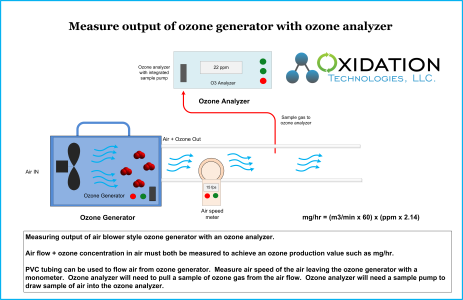
Commercial or air-blower style ozone generators create ozone via corona discharge or UV light and are designed for ambient air applications. These units produce lower concentrations of ozone, but at higher airflow rates.
Key characteristics of commercial generators:
- Large volumes of air pass through the generator, with ozone diluted in the airflow
- Often feature a grill or vent where ozone-laden air exits
- Designed for odor control, air purification, or general sanitation
Testing Considerations:
For commercial generators, performance testing focuses on the ozone concentration within the moving airflow, rather than the total ozone mass produced at a single point. Instruments like portable ozone analyzers or sampling devices that can handle higher airflow rates and lower ozone concentrations are typically used.
Choosing the Right Testing Method
The correct testing procedure depends on the type of ozone generator and the application requirements:
- Industrial O3 generators: Focus on high-concentration, low-flow measurement.
- Commercial air-blower style generators: Focus on low-concentration, high-flow measurement.
Following the appropriate method ensures accurate verification of ozone output, confirming your system is performing as expected.
Conclusion
Testing your ozone generator’s performance is crucial for ensuring safe, effective, and reliable operation. By understanding whether your generator is an industrial corona discharge unit or a commercial air-blower style, you can select the proper testing method and equipment. Accurate measurement allows you to verify output, troubleshoot issues, and maintain confidence in your ozone system’s performance.
You can find more information here: https://www.oxidationtech.com/ozone/ozone-generation/how-to-test-production-from-your-ozone-generator.html