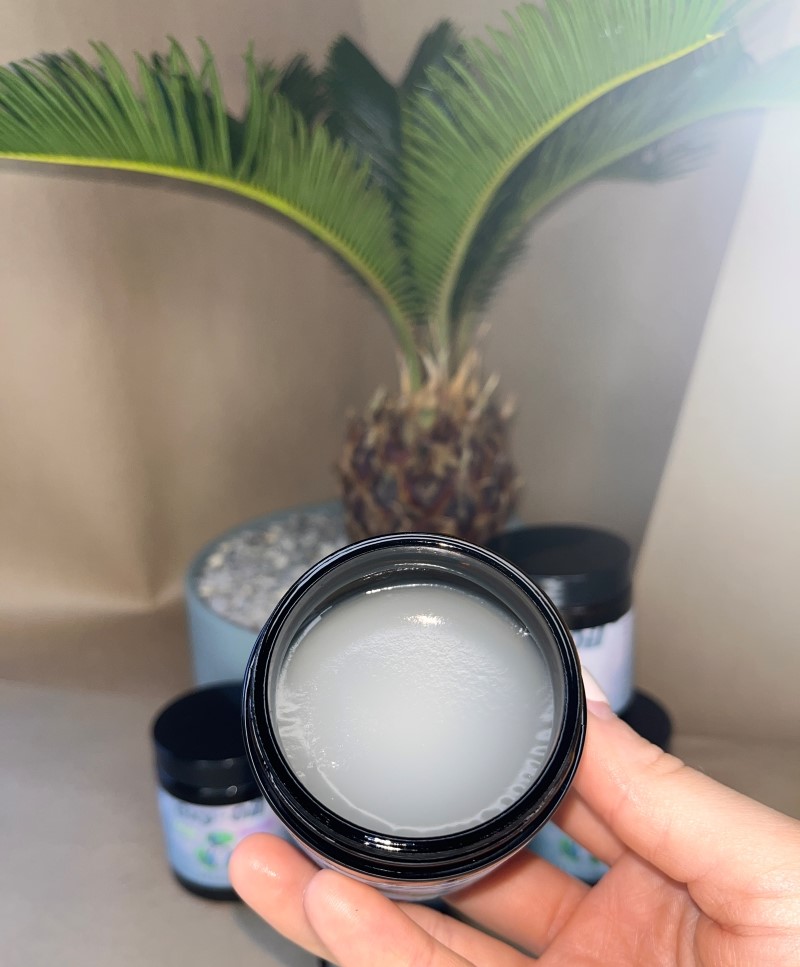
As temperatures begin to rise this time of year – at least for us in the Northern Hemisphere – we are more frequently asked the following question: “My oils arrived in a liquid state! Does this mean my oils are bad?” This is definitely a valid question. While a logical assumption, the purpose of this post is to dispel this common misconception.
Let’s begin with where this misconception is likely rooted: the simple fact that ozone gas (O3) itself has a short half-life at room temperature already, in conjunction with the assumption that ozone gas bubbles are held in suspension when bubbled in oil. Again, while these are logical assumptions, there is actually a different process in play when ozonating an oil. Thankfully, this process makes the oils not only much more stable than ozone gas but also allows them to withstand the higher temperatures we see in the late spring and summer months.
To touch on the stability of ozonated oils, independent research has shown that degradation and loss of efficacy do not occur unless the product is kept in conditions of sustained high temperatures (>130°F) and in the presence of UV light. These two factors must be met to degrade the bonds formed during the reaction, and until these conditions are met the oil’s integrity is maintained.
So fear not! Even if your oils arrive in a liquid state they will be just as effective. While some of our customers prefer them to be liquid, if you prefer them to be more salve-like simply placing them in the refrigerator should do the trick. It is important to note that certain oils, namely sunflower, and hemp, will always be liquid due to their naturally occurring ratio of fatty acids.
Oxy-Oil can be purchased here: https://www.oxidationtech.com/products/oxy-oil-ozonated-oils/oxy-oil.html