Understanding the Challenge of 1,4-Dioxane Contamination
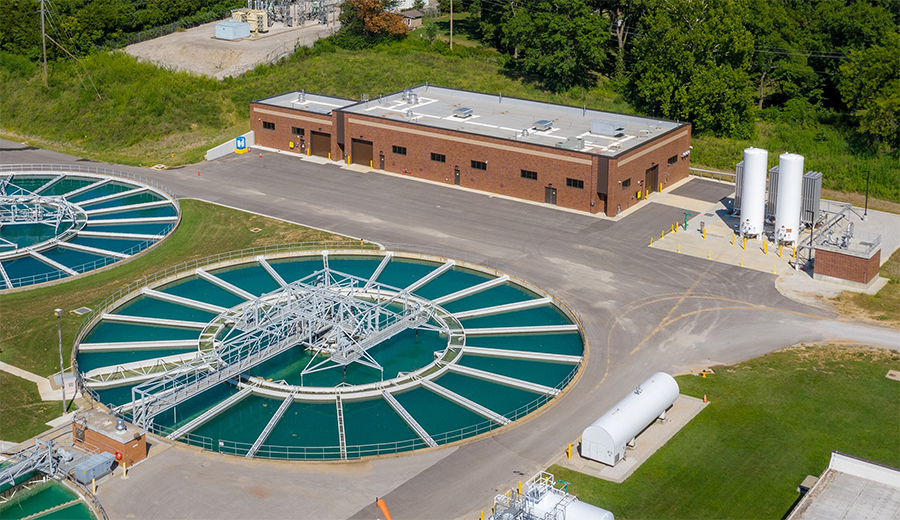
The presence of 1,4-dioxane in water supplies has become a major environmental and health concern due to its classification as a likely human carcinogen. This highly water-soluble compound is resistant to conventional water treatment methods, making its removal a challenge for municipalities and industries alike. Found in groundwater, industrial effluents, and even drinking water, 1,4-dioxane is primarily a byproduct of solvent stabilizers and industrial applications.
Why Conventional Methods Fall Short
Traditional water treatment processes, such as activated carbon adsorption, air stripping, and biological degradation, have proven largely ineffective in removing 1,4-dioxane due to its chemical stability and high solubility. This underscores the need for advanced treatment techniques capable of breaking down this persistent contaminant.
The Power of Ozone in Water Treatment
Ozone (O₃) has long been recognized as a powerful oxidizing agent in water treatment, known for its ability to disinfect, decolorize, and remove organic contaminants. However, the direct application of ozone alone at neutral pH results in slow degradation rates of 1,4-dioxane. To enhance the efficiency of this process, researchers and engineers have developed several Advanced Oxidation Processes (AOPs) involving ozone in combination with hydrogen peroxide (H₂O₂), pH adjustments, electrolysis, catalytic ozonation, and ultrasound.
Advanced Ozone-Based Techniques for 1,4-Dioxane Removal
1. Ozone with pH Adjustment
Adjusting the pH to above 9 significantly enhances the production of hydroxyl radicals (OH•), which are far more reactive than ozone alone. Studies have shown that under these optimized conditions, nearly complete degradation of 1,4-dioxane can be achieved.
2. Ozone Combined with Electrolysis
Electrolysis-assisted ozonation in a two-compartment cell can help mitigate the negative effects of radical scavengers, such as bicarbonate ions, leading to improved degradation efficiency and reduced chemical oxygen demand (COD).
3. Catalytic Ozonation
Using catalysts like cupric oxide and activated carbon alongside ozone enhances the generation of reactive species. This approach accelerates degradation rates while minimizing potential toxic byproducts.
4. Ozone with Ultrasound
Ultrasound-assisted ozonation leverages acoustic cavitation to intensify hydroxyl radical production, further improving the breakdown of 1,4-dioxane in water.
5. Combination with Other Chemicals or Treatments
Integrating ozone with additional methods such as H₂O₂, UV irradiation, or other chemical oxidants has proven successful in reducing 1,4-dioxane concentrations both in situ and ex situ, offering flexible treatment solutions.
A Sustainable Solution for Water Remediation
Ozone-based treatments provide a non-residual, environmentally friendly alternative for the removal of 1,4-dioxane from contaminated water sources. When combined with advanced oxidation techniques, ozone can effectively degrade and mineralize this persistent contaminant, offering a reliable solution for water purification.
To learn more about how ozone technology can be applied for groundwater remediation, visit our 1,4-Dioxane Removal page.