Residents in Philadelphia and surrounding areas are facing a shortage of bottled water due to a recent chemical spill. On March 26, Trinseo, a chemical company based in Berwyn, PA, reported that a spill had occurred at their plant, releasing pollutants into the Schuylkill River.
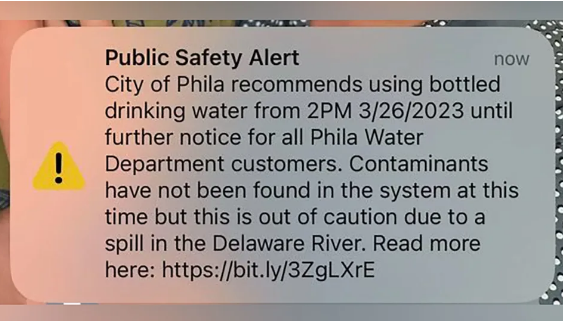
As a result, the Philadelphia Water Department issued a warning advising residents to avoid drinking tap water or using it for cooking until further notice. This caused a surge in demand for bottled water, leading to shortages in local stores and supermarkets.
Many residents have expressed concern about the situation and are struggling to find bottled water to meet their needs. The shortage has also affected businesses that rely on bottled water, such as restaurants and cafes.
The Philadelphia Water Department has assured residents that they are closely monitoring the situation and conducting water quality tests to ensure that the water is safe to drink. However, they have not yet given an estimated timeframe for when the advisory will be lifted.
Meanwhile, Trinseo has released a statement apologizing for the spill and promising to take measures to prevent similar incidents in the future. The company is cooperating with authorities to clean up the spill and minimize its impact on the environment.
The shortage of bottled water in Philadelphia highlights the importance of having a contingency plan in place for emergencies like this. It also underscores the need for companies to prioritize safety and environmental protection in their operations.
Ways that we can help combat this crisis is by continuing our push for companies to use ozone when bottling water.
Ozone is a powerful oxidant that is often used in the bottled water industry to disinfect and purify water. It is effective in destroying a wide range of microorganisms, including bacteria, viruses, and parasites, and can also remove organic and inorganic impurities from water.
Ozone is preferred over other disinfectants, such as chlorine, because it does not leave any harmful residues or byproducts in the water. Additionally, ozone is a gas that breaks down quickly, leaving no residual taste or odor in the water.
Overall, the use of ozone in bottled water ensures that the water is safe, clean, and free from contaminants, making it a popular choice for many consumers.
Another way is ground water remediation.
Ozone can be used in the process of ground water clean up to oxidize and break down contaminants such as volatile organic compounds (VOCs), pesticides, and pharmaceuticals.
The process involves injecting ozone into the contaminated groundwater, which reacts with the contaminants and breaks them down into smaller, less harmful compounds. Ozone can also react with iron and manganese in the water, oxidizing them and allowing them to be filtered out.
Additionally, ozone can be used in combination with other treatment technologies such as activated carbon adsorption or biological treatment to further enhance the removal of contaminants. Overall, the use of ozone in ground water clean up can be an effective method for removing a wide range of contaminants and improving water quality.
Here at Oxidation Technologies we rent trailers for ground water clean up as well as build ozone generators for industrial use. Contact us today to learn more about what we can do to help your reach your goals!
Ozone Trailer Rental: https://www.oxidationtech.com/products/rent-ozone/ozone-water-systems/ozone-trailer-rental-98.html
More information on bottled water can be found here: https://www.oxidationtech.com/applications/bottled-water.html
More information on ground water treatment can be found here: https://www.oxidationtech.com/applications/groundwater-remediation.html