
Ozone Applications

Ozone Leak Detection
How to Find Ozone Leaks Using an Ozone Detector
When ozone is generated or delivered through tubing, fittings, or reaction chambers, leaks can occur.
Detecting and fixing these ozone leaks is essential—both for safety and for ensuring your system performs at peak efficiency.
Finding ozone leaks is straightforward when you combine a quality ozone detector and a simple soapy-water test. Here’s how the process works and why each step matters.
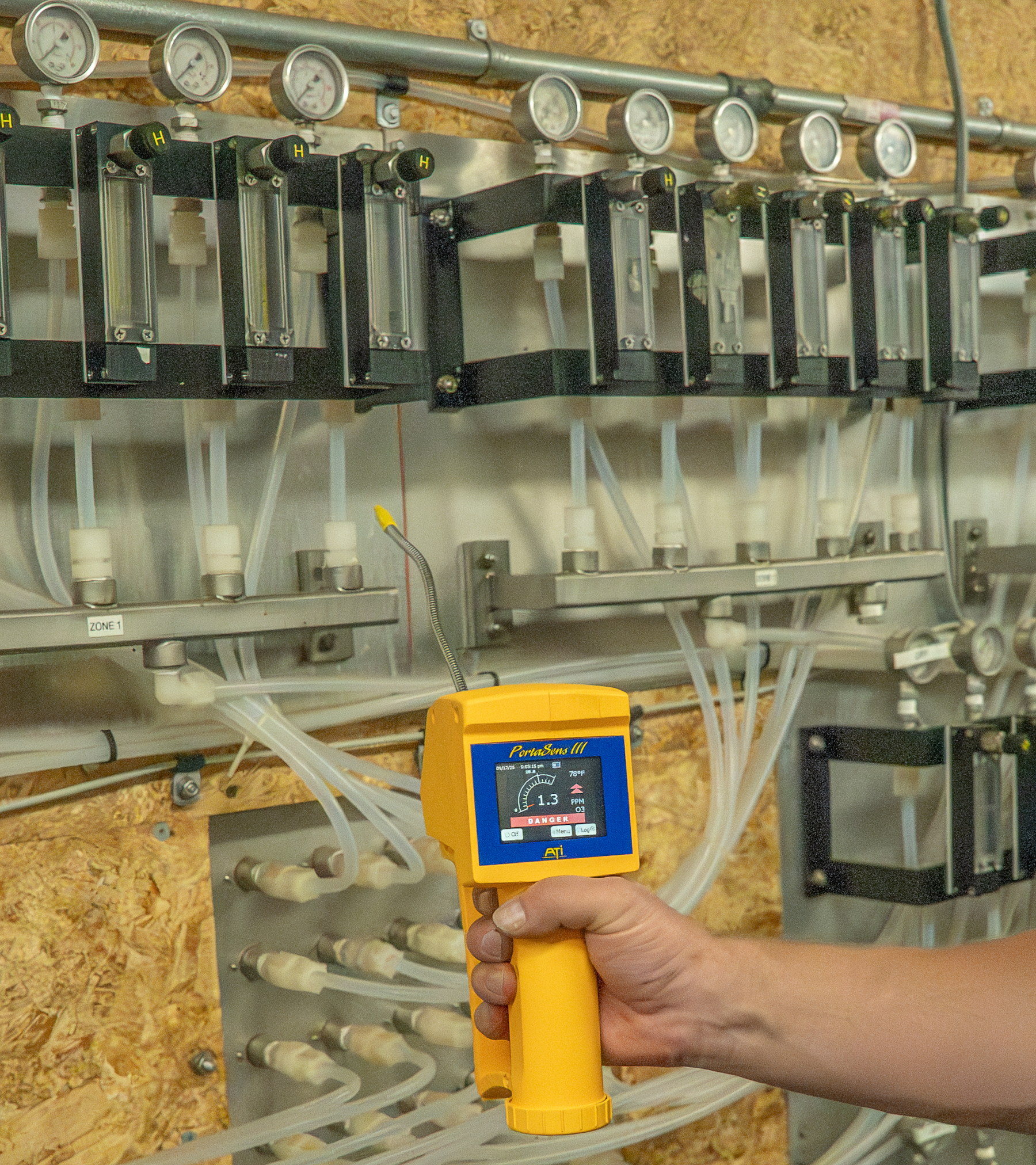
Start with an Ozone Detector for Fast, Accurate Leak Localization
An ozone detector with a built-in sample pump is the most effective tool for locating leaks. Unlike passive sensors, a pumped detector actively draws air from precise locations—around fittings, tubing, valves, and ozone chambers—allowing you to pinpoint areas with elevated ozone levels and potential leak points.
Why a Pumped Ozone Detector Is Ideal
- Precision: Actively samples targeted spots rather than relying on ambient diffusion.
- Speed: Detects increases in ozone concentration quickly, so you can sweep an area and identify “hot spots.”
- Safety: Allows you to check for leaks at a distance without leaning into confined spaces.
- Versatility: Works for checking equipment seams, gasketed joints, destruct units, plumbing connections, and enclosed systems.
As you move the sampling wand slowly along the system, the detector will indicate where ozone levels rise. This tells you the general location of the leak.
Narrow Down the Leak Source with Soapy Water
Once the detector reveals the area where ozone is escaping, it’s time to confirm the exact leak point. The best tool for this is simple soapy water—a time-tested method used in gas systems across industries.
Why Use Soapy Water After the Ozone Detector?
- Detectors find the area; soapy water finds the exact point.
- Bubbles form visibly at the leak site, even when the opening is too small for the detector to resolve precisely.
- Works on tubing, fittings, threaded connectors, and ozone destruct vent lines.
How to Perform the Soapy-Water Test
- Mix a small amount of dish soap with water.
- Apply the solution to suspected joints, threading, or tubing using a spray bottle or brush.
- Look for small, continuous bubbles—this marks the leak.
- Tighten, replace, or reseal the component as needed.
This two-step approach—detector first, then soapy water—gives you the fastest and most reliable results.
Fix the Leak and Re-Test the Area
After tightening fittings or replacing components, always re-check the area:
- Use the soapy-water test again to confirm no more bubbles form.
- Once it’s dry, sweep the area again with your pumped ozone detector to ensure levels are back to normal.
- For systems sensitive to contamination, flush with clean dry air or resume ozone flow and re-verify.
Additional Tips for Effective Leak Detection
- Check all fittings after installation or maintenance. Shrinkage of tubing or vibration can loosen connections over time.
- Turn the Ozone Generator OFF. Large ozone leaks can increase the ambient ozone level in quickly, creating an unsafe area to work in. In this case, turn the ozone generator OFF and work to find an oxygen leak using soapy water or other techniques.
- Inspect ozone destruct systems. A failed catalyst or damaged housing can allow ozone to leak out the exhaust.
- Use ozone-compatible materials. Leaks often start where ozone has degraded plastics, gaskets, or seals.
- Document leak locations and repairs. Helps track recurring issues and guides preventative maintenance.
Conclusion
Finding ozone leaks doesn’t have to be difficult. A quality ozone detector helps you quickly identify where ozone levels are elevated, and a simple soapy-water solution allows you to pinpoint the exact location of the leak. Together, these tools provide a fast, reliable, and cost-effective approach to leak detection, promoting both safety and optimal system performance.
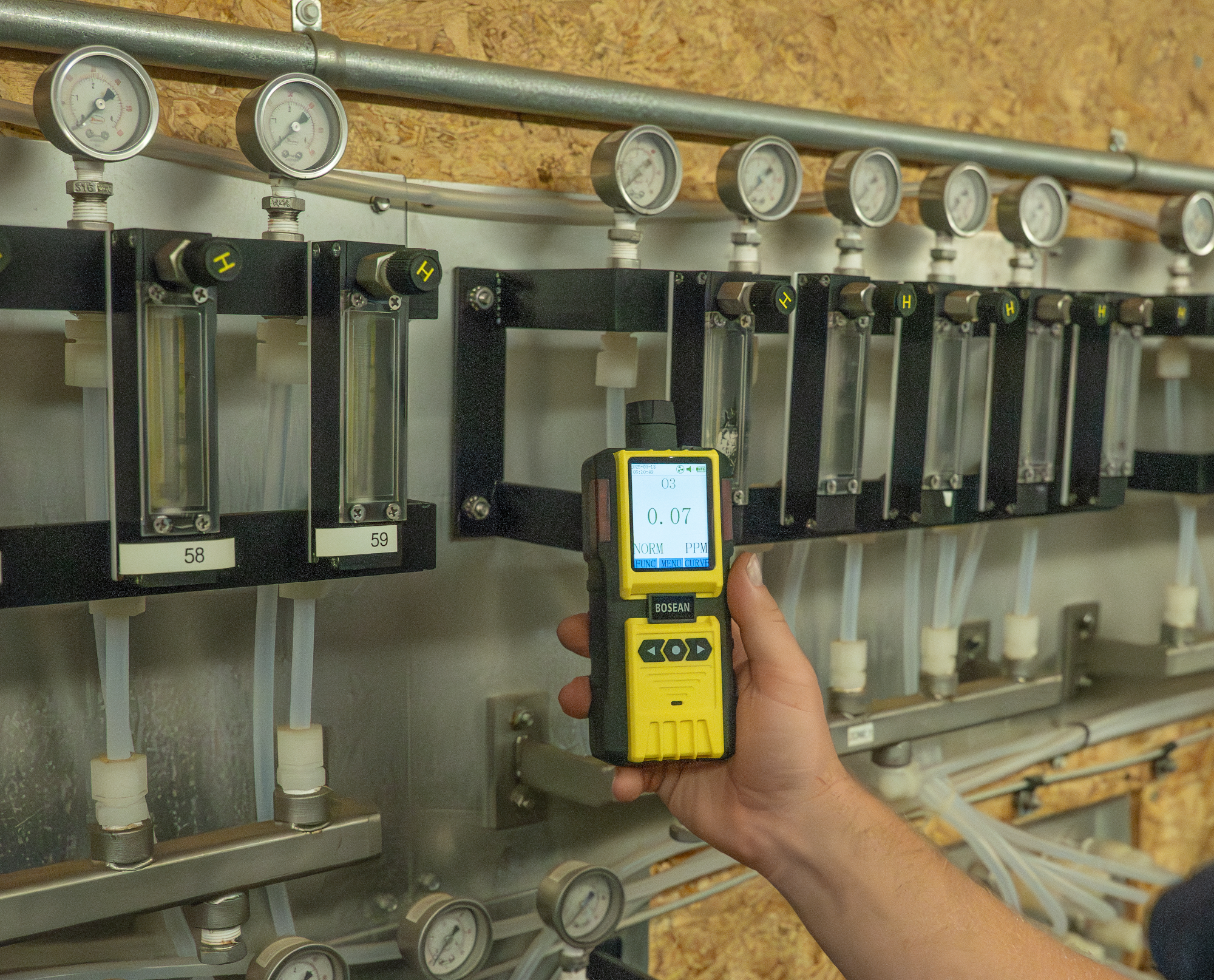
Ozone Monitor Suggestions
Excellent ozone monitor suggestions specifically for finding ozone leaks and for human safety use.
D-16 PortaSens III
The ATI D1-16 PortaSens III is the best choice for ozone leak detection.
The D-16 uses an internal sample pump that flows nearly 1 LPM of sample gas flow past the sensor and an internal filter for reliability.
The included sample wand is Teflon lined and flexible to bend/twist into the exact shape necessary to find leaks behind, under, and obscured by other equipment. The sample wand can also be extended with tubing if needed allowing for more remote ozone detection.
The D-16 uses the interchangeable ATI H10 sensors for ozone detection. Sensors can be swapped in less than 1-minute within the same device allowing for a high-range “leak” sensor to be used and a lower range sensor for human safety. This allows for fast and safe ozone leak detection of both large and small ozone leaks. In addition, up to 30 other gas sensors can be obtained to measure other toxic gasses.

Advantages of the D-16 PortaSens III
- Built-in, high-flow sample pump
- Bendable sample wand
- Includes flow-meter to verify sample pump operation and flow-rate
- Interchangeable ozone sensors (and additional gasses)
- Quickly replaceable batteries for all-day use
- Pistol grip design handle makes handling easy
K-600
The K-600 is a more budget friendly option for ozone leak detection.
The K-600 uses an internal sample pump that will actively draw sample gas past the sensor. Sample gas is drawn into the device at the top of the K-600 from a convenient location.
Tubing can be connected to the inlet fitting of the K-600 to allow for more remote and pin-point ozone detection.
The K-600 Ozone Detector is available with two separate ozone detection ranges.
- 0-1 ppm is ideal of human safety levels of 0.1 ppm and small leak detection. Use care not to overrange this sensor when using for leak detection.
- 0-100 ppm is useful for ozone leak detection with minimal concern for over ranging but will not provide sufficient low-rate detection for human safety.
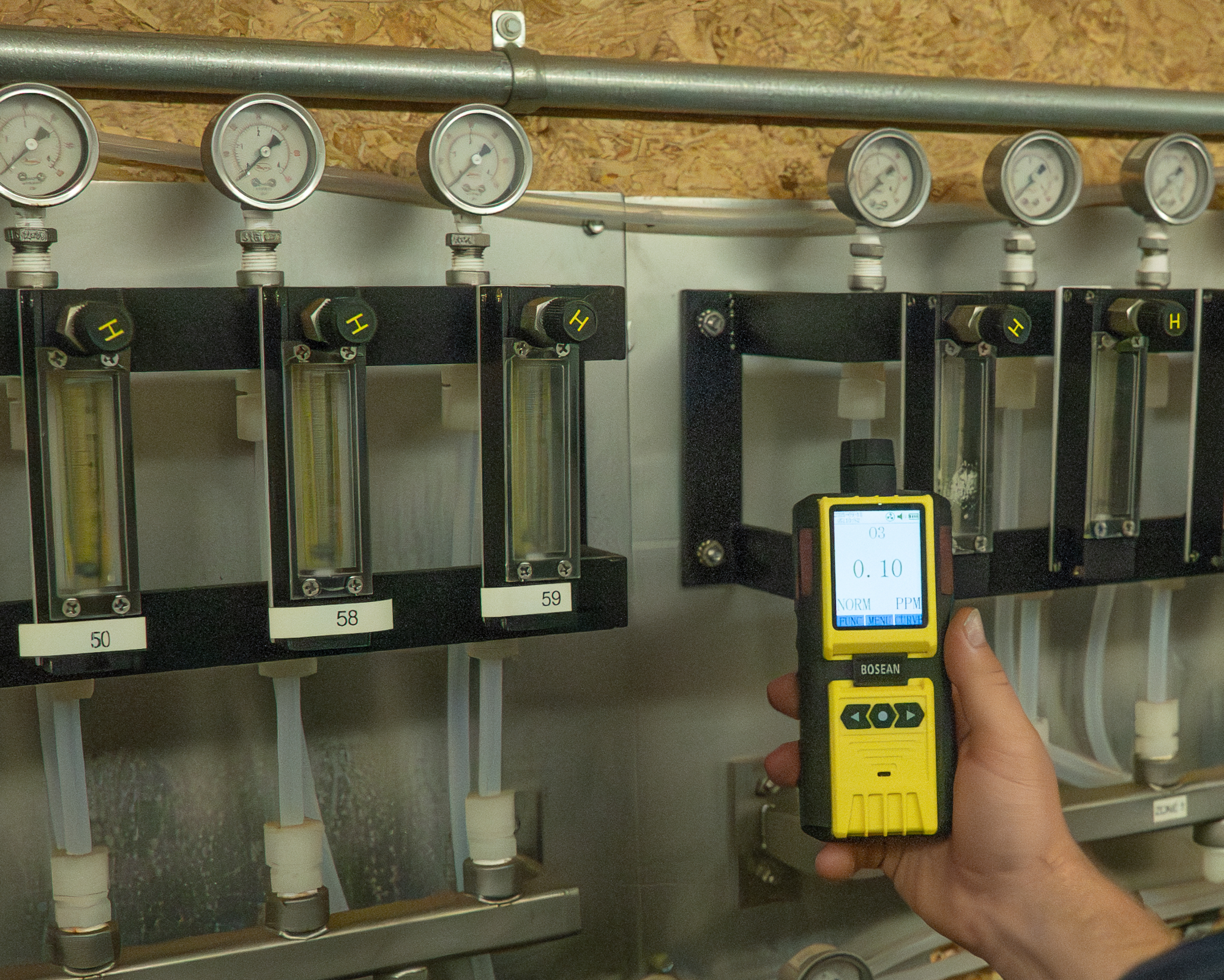
Advantages of the K-600
- More budget friendly option
- Long-life battery, minimal recharging requirements
- Compact design
- Allows for tubing to be connected to sample gas inlet.