
Ozone Applications

Insect Control in Grains
Using ozone as a fumigant in grains has been researched and studied widely. Practical application has been limited mostly due to the unknowns that still exist about this application. Ozone can definitely keep insects from infesting your grain if used all the time. Low levels of ozone gas (0.1 ppm or below) used at all times will keep insects out of your grains, and other produce as well. The use of ozone for food storage and insect control in this manner is proven and successful. In grains ozone gas can be added to already existing airflow through the grain to keep insects from damaging your grain.

Once your grain as been infested with insects it is more difficult to eliminate them. High levels of ozone are required to kill these insects. This is shown in research done by Purdue University and others. The levels of ozone required should be scrutinized to ensure this is a cost effective application, and that all safety precautions are taken.
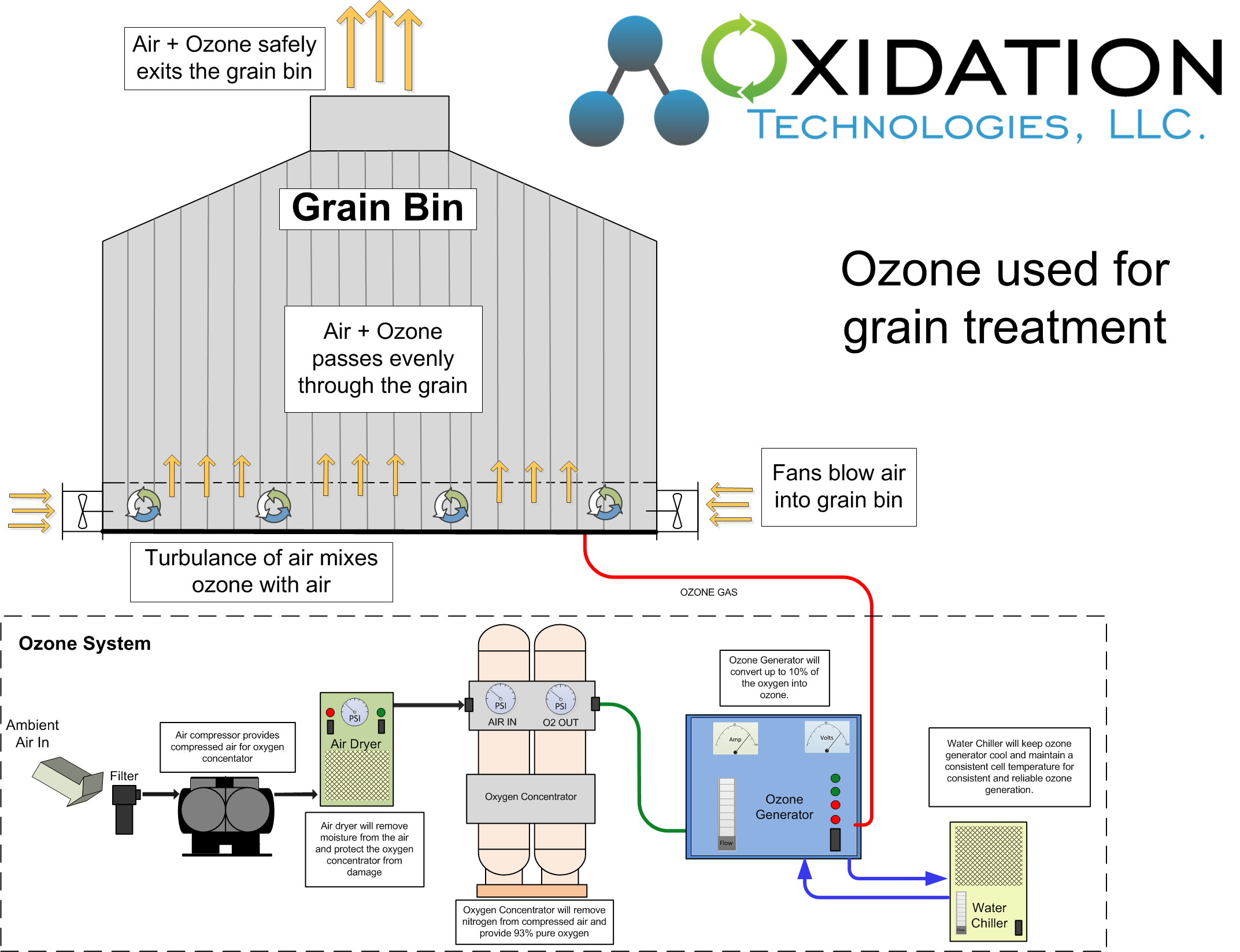
Ozone gas is produced via an ozone generation system. This ozone gas is pumped into the grain bin and diluted with existing air flow to treat the grain. Ozone treatment may be necessary over the course of days or even weeks depending upon your specific application. Ozone equipment is available in trailers that can be set near the grain bin for the duration of the required ozone treatment.
Ozone monitors can measure, and verify ozone levels leaving the grain bin to ensure ozone gas has passed through the entire grain bin and a residual of ozone is present. This will verify operation of the system.
For research and details on ozone use for Insect reduction follow links below to research articles:
-Purdue University Article-Ozone for Pest Control in Stored Grain-Review of Ozone Used in Grain Preservation-Lethal Levels of Ozone for All Stages of Insects For questions on how to implement ozone into your application, please call our ozone application experts.