
When the leaves begin to turn and the fields are no longer green, our local farmers are ready to collect their grain in full force!
One of the many challenges farmers and elevators face is insect control in grain. Insects can significantly impact stored grains, causing economic losses and quality deterioration. They contaminate grains by laying eggs, excreting waste, and introducing pathogens, compromising grain safety. Insects also consume grains, reducing marketable quantities, and leading to yield and financial losses. Their physical damage, such as chewing through kernels or creating entry points, increases susceptibility to mold growth and mycotoxin contamination. Certain insects introduce molds, like the grain weevil, which can produce harmful mycotoxins, posing health risks. Insect infestations result in grain quality reduction, making grains less marketable. Insects can create humid microenvironments within storage facilities, promoting mold growth. Additionally, infested grains can cross-contaminate nearby batches, and addressing infestations incurs economic costs, including pest control measures and grain disposal.
Thankfully, there are ways to combat this, and here is where we come in!
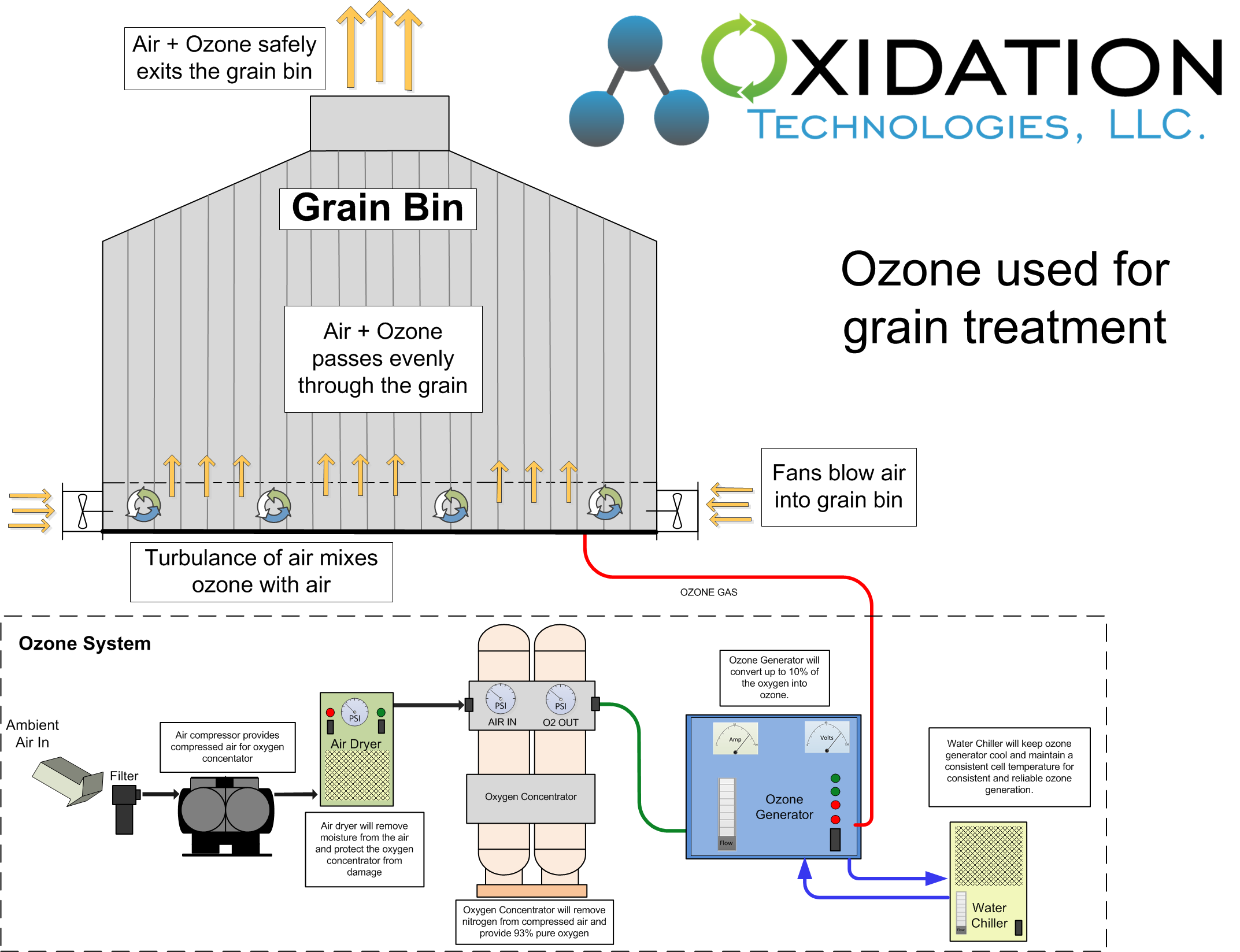
Ozone can be used for insect control in grain storage facilities as a non-chemical and environmentally friendly method to manage and eliminate pests that infest stored grains. Here’s how ozone is employed for insect control in grain:
- Ozone Generation: Ozone is a highly reactive gas consisting of three oxygen atoms (O3). Ozone generators are used to produce ozone gas from ambient air. These generators create ozone by applying electrical discharges or ultraviolet light to oxygen molecules (O2), causing them to temporarily combine into ozone (O3).
- Ozone Application: Ozone is introduced into the grain storage environment, typically inside grain bins, silos, or warehouses. Ozone generators can be strategically placed within or near the storage facility.
- Ozone Penetration: Ozone is a gas that can penetrate grain piles, containers, and even the smallest cracks and crevices within the storage facility. It disperses throughout the grain mass and storage space.
- Insect Exposure: Insects present in the storage area are exposed to the ozone gas. Ozone affects insects primarily through its oxidizing properties, which can damage their respiratory systems, cell membranes, and other vital structures.
- Insect Mortality: Ozone treatment leads to the mortality of insects at various life stages, including eggs, larvae, pupae, and adults. The effectiveness of ozone treatment depends on factors such as ozone concentration, exposure time, and the type of insect species present.
- Reduced Infestation: Continuous or periodic ozone treatments can significantly reduce or eliminate insect infestations in grain storage facilities. This helps protect the quality of stored grains and reduces the need for chemical insecticides.
- Monitoring and Control: Proper monitoring and control of ozone levels are crucial to ensure effective insect control while avoiding potential overexposure, which could harm the grains or the environment. Automated systems may be used to regulate ozone concentration and treatment duration.
Benefits of using ozone for insect control in grain storage include:
- Environmental Friendliness: Ozone is a green technology that does not leave chemical residues in the grain or the environment.
- Reduced Chemical Use: Ozone treatments can reduce or eliminate the need for chemical pesticides, promoting chemical-free grain storage.
- Preservation of Grain Quality: Ozone can help maintain the quality and market value of stored grains by preventing insect damage and mycotoxin contamination.
- Safety: Ozone treatment does not create hazards for workers or contaminate the grains with chemical residues.
However, it’s important to note that the effectiveness of ozone treatment for insect control may vary depending on factors like insect species, grain type, storage conditions, and the design of the storage facility. As such, it’s essential to consult with experts and follow recommended practices when implementing ozone-based insect control in grain storage. Additionally, local regulations and guidelines should be adhered to when using ozone in agricultural applications.
For research and details on ozone use for Insect reduction follow links below to research articles:
–Ozone for Pest Control in Stored Grain
–Review of Ozone Used in Grain Preservation
–Lethal Levels of Ozone for All Stages of Insects
For questions on how to implement ozone into your application, please call our ozone application experts.
More information can also be found HERE