
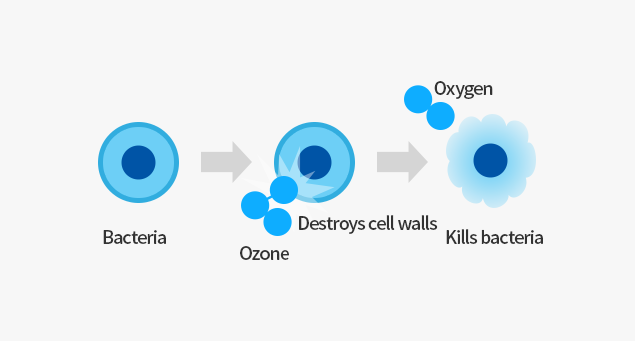
Healthcare-associated infections (HAIs) are a significant challenge in hospital environments, particularly in intensive care units (ICUs), where persistent environmental contamination can undermine patient care despite rigorous disinfection protocols. A recent study, provisionally accepted for publication in Frontiers in Microbiology, sheds light on an innovative solution: using low concentrations of gaseous ozone as an effective and hands-free method to combat multidrug-resistant (MDR) bacteria.
The Study: Key Insights
Conducted by Bob Banerjee, Christine Thompson, Victor Nizet, and Elisabet Bjånes, this research evaluates the bactericidal efficacy of gaseous ozone at low doses (5 ppm). The study tested its effects on clinically significant MDR pathogens, including:
- Escherichia coli (E. coli) and Salmonella Typhimurium: Showed a 3 log10-fold reduction.
- Group A Streptococcus (GAS) and methicillin-resistant Staphylococcus aureus (MRSA): Demonstrated a 1-2 log10-fold reduction.
The findings reveal that gaseous ozone’s effectiveness is dose-dependent, with no substantial differences between single and repeated exposures. Additionally, environmental factors like temperature and humidity had minimal impact, although colder temperatures and higher humidity slightly enhanced efficacy.
The Importance of This Research
MDR pathogens pose a growing threat to global health. Traditional cleaning and disinfection strategies, though effective to a degree, are labor-intensive and often fall short in fully eradicating these resilient bacteria. This study positions low-dose gaseous ozone as an innovative alternative:
- Hands-Free Operation: Eliminates human error and reduces labor demands.
- Broad Efficacy: Effective against a wide range of Gram-positive and Gram-negative bacteria.
- Adaptable to Conditions: Maintains potency across diverse environmental settings.
Potential Applications and Next Steps
The study underscores the promise of gaseous ozone as a practical tool in healthcare and other environments prone to contamination, including:
- Acute care hospitals and ICUs.
- Food processing and storage facilities.
- Public transportation and other high-traffic settings.
However, to ensure safe application, further research is required to establish long-term safety guidelines, particularly for use in occupied spaces. The study also opens avenues to explore synergistic effects with existing disinfection methods, potentially enhancing overall efficacy.
A Promising Future for Gaseous Ozone
This research not only highlights the potential of low-dose gaseous ozone but also aligns with the growing need for sustainable, efficient, and automated disinfection solutions. By embracing such innovative technologies, we can address the challenges posed by MDR pathogens while improving safety in healthcare and beyond.
For a detailed understanding of this study, keep an eye out for its final publication in Frontiers in Microbiology.
You can read more about the effects of ozone on bacteria and pathogens here:
For a detailed understanding of this study, keep an eye out for its final publication in Frontiers in Microbiology.
Sources:
Banerjee, B., Thompson, C., Nizet, V., & Bjånes, E. (2024). Bactericidal efficacy of low-dose gaseous ozone against clinically relevant multidrug-resistant bacteria. Provisionally accepted in Frontiers in Microbiology.