Ozone Applications

Electrochemical O3 Sensors Explained
Electrochemical Ozone Sensors – How It Works and When to Use them
Electrochemical sensors are one of the most common and practical methods for detecting low-level ozone in workplaces, ambient air, and safety applications. They are compact, low-power, and sensitive—making them ideal for portable detectors, fixed safety monitors, and personal exposure devices.
How Electrochemical Ozone Sensors Work
Electrochemical ozone sensors operate using a redox (oxidation–reduction) reaction that generates an electrical signal proportional to the amount of ozone present.
Core Principle
Ozone is a strong oxidizer. When it diffuses into the sensor and contacts the working electrode, it participates in a chemical reaction that produces electrons. These electrons create a measurable electrical current.
The current measured in a voltage change is directly proportional to the ozone concentration, typically displayed in ppm.
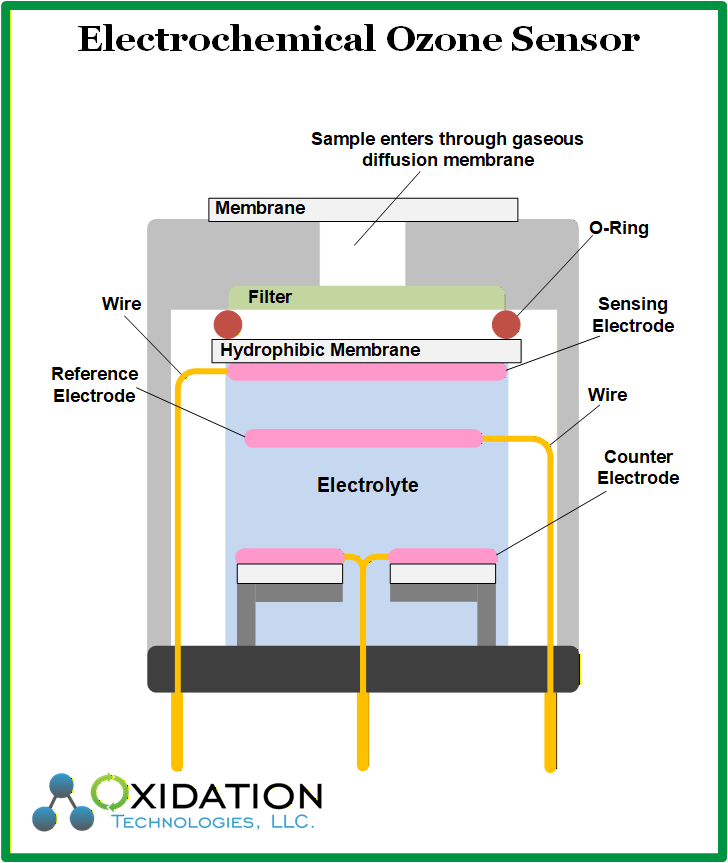
Operating Mechanism of Electrochemical Ozone Sensors
A typical electrochemical sensor contains:
- Gas-Permeable Membrane
- Allows ozone to diffuse in while blocking particles, humidity, and contaminants.
- Electrolyte Layer
- Provides the medium where the redox reaction occurs.
- Three-Electrode Cell
- Working electrode: Ozone is reduced/oxidized here.
- Counter electrode: Balances the reaction.
- Reference electrode: Maintains a stable baseline potential for accurate readings.
- Microcontroller / Signal Circuitry
- Converts the electrical current into ppm or ppb ozone readings.
Reaction Example
A simplified reaction is:
O₃ + 2H⁺ + 2e⁻ → O₂ + H₂O
This reaction liberates electrons, which become the electrical signal the sensor measures.
Advantages of Electrochemical Ozone Sensors
- Highly sensitive—typically detects ppb to low ppm levels.
- Fast response time (seconds).
- Very small and low power, ideal for portable devices.
- Relatively low cost compared to UV analyzers.
- Easy to integrate into wearable or handheld equipment.
Limitations of Electrochemical Ozone Sensors
- Finite lifespan (6–36 months depending on use).
- Ozone reactions consume the electrolyte used to create the redox reactions. Therefore, the sensor is slowly decaying as it measures ozone. Higher ozone levels, will decrease the sensor life.
- Drift over time, requiring periodic calibration.
- As the electrolyte within the sensor is consumed the voltage signal decreases. This change in reaction requires calibration to align the measured voltage with the corresponding ppm.
- Possible cross-sensitivity to certain gases (e.g., NO₂, Cl₂) depending on sensor design.
- Any gas that creates a redox reaction with the electrolyte will measure as ozone. Oxidant gasses are most common reactions. Different electrolyte compositions will create less cross-sensitivity in some gasses while creating new cross-sensitivity from others.
- Temperature and humidity will create performance changes
-Environmental conditions will affect the response and accuracy.
For many applications, these limitations are acceptable—especially when paired with routine calibration and good instrument design.
Where Electrochemical Ozone Sensors Are Used
Electrochemical sensors are ideal anywhere low-level ozone monitoring is needed for safety, compliance, or portable detection.
Worker and Personnel Safety
- Human safety monitors – small, portable, compact
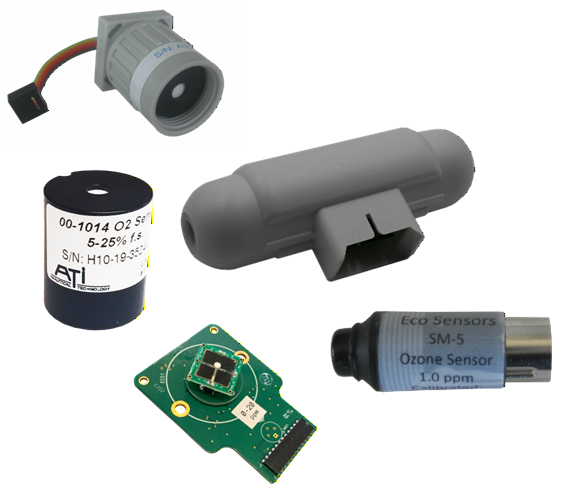
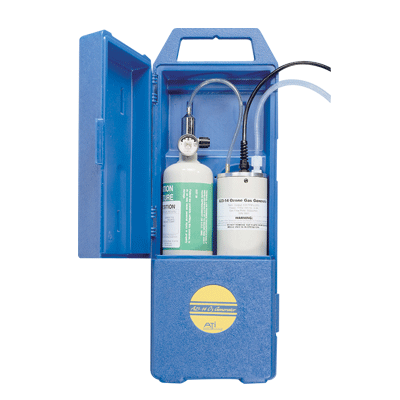
- Portable safety meters (like Aeroqual, EcoSensors, D-16 with O₃ sensors, etc.)
- Fixed monitors in labs, food processing rooms, or generator rooms
They excel at detecting ozone near OSHA/NIOSH exposure limits (0.08–0.3 ppm).
Ozone Leak Detection
When paired with a handheld meter, these sensors can help identify small leaks.
- Fast response allows for ozone leak detection
- High range sensors allow for leak detection without over ranging
- Low range sensors can be used for human safety during leak detection
Environments with mixed gasses
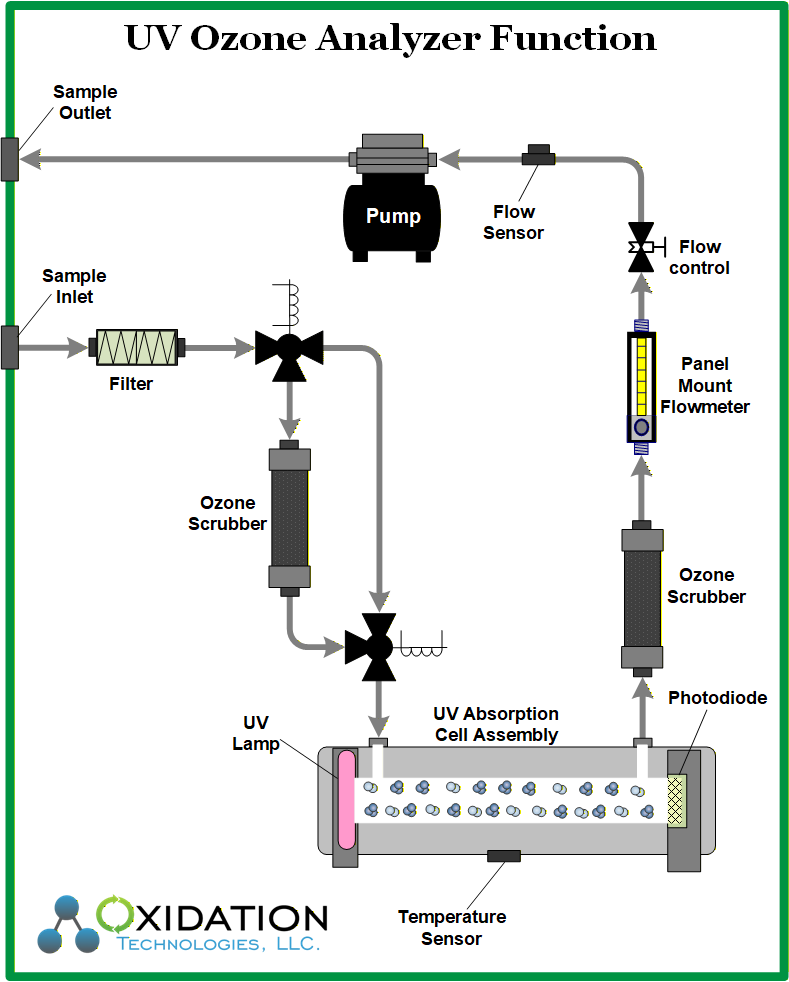
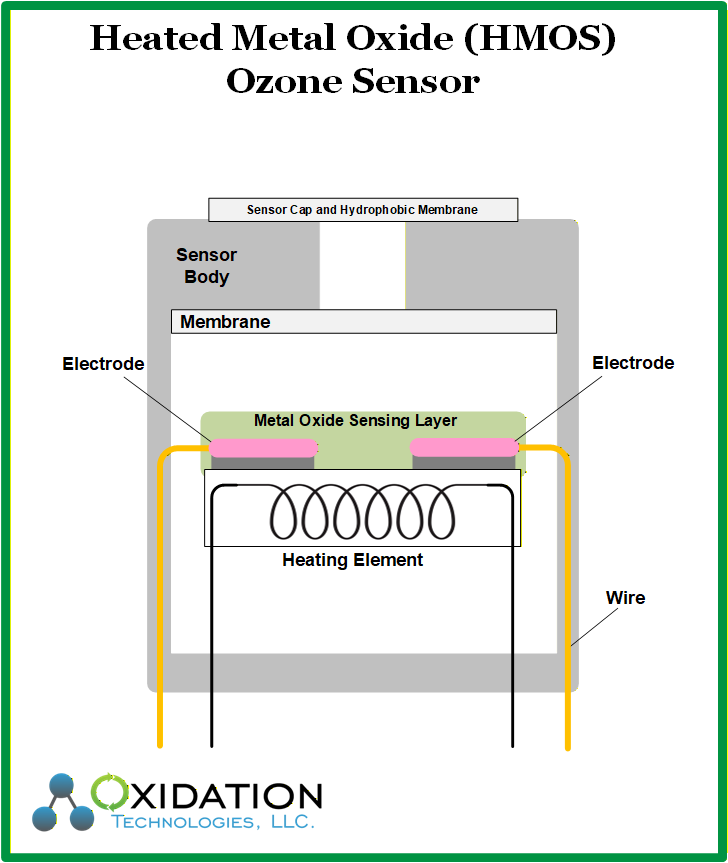
Electrochemical sensors have minimal cross-sensitivities to VOC’s and other gasses vs Heated Metal Oxide sensors.
- Low sensitivity to VOC’s
- Low sensitivity to Hydrogen Sulfide (H2S)
- Low sensitivity to CO, CO2, NO2
Portable, Battery-Powered Instruments
Because electrochemical sensors draw almost no power, they are ideal for:
- Handheld ozone monitors
- Wearable clip-on devices
- Long-battery-life area monitors
This is why most compact commercial ozone detectors use electrochemical sensing.
Why Choose an Electrochemical Ozone Sensor
Choose this technology when your application requires:
- Low-level (ppb to <1 ppm) ozone detection
- Worker and human safety monitoring
- Portable or wearable detection
- Battery-powered operation
- Low-cost continuous monitoring
Electrochemical sensors offer an excellent balance of accuracy, affordability, and practicality, making them the most common ozone sensing method for everyday safety and indoor monitoring applications.
Ozone Monitor Information:
|
|
|
|
|
We offer additional gas detection products in partnership with our subsidiary, Gas Sensing. For gasses other than ozone view the Gas Sensing website. |
|
|
|