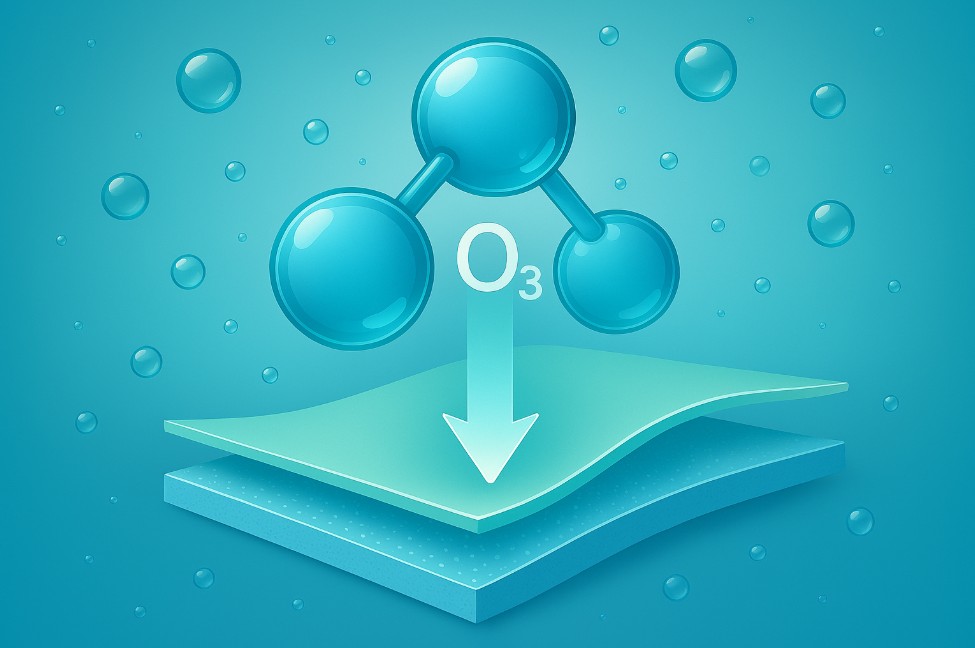
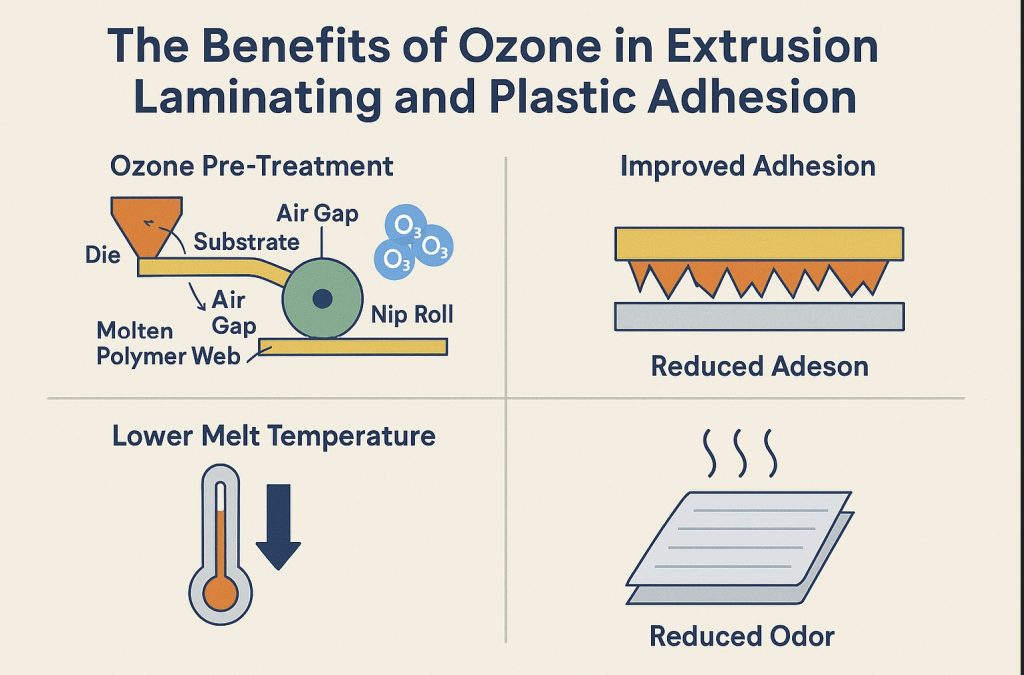
The Benefits of Ozone in Extrusion Laminating and Plastic Adhesion:
For more than two decades, ozone has quietly improved adhesion and process performance in plastic extrusion coating and laminating lines. Yet many converters, laminators, and packaging manufacturers remain unaware of this powerful technology—or unsure of its safety and effectiveness.
At Oxidation Tech, we’ve developed ozone systems that make it easy to integrate this proven surface treatment into new or existing extrusion and converting processes.
A Proven Technology—Still Overlooked
The use of ozone in extrusion laminating first appeared in technical literature in the mid-1990s.
Phil Sherman of Sherman Treaters documented the method in the TAPPI Extrusion Coating Manual (4th Edition), describing ozone’s ability to oxidize the molten polymer web before it contacts the substrate. Around the same time, Erkki Laiho and colleagues at Borealis Polymers compared flame, corona, and ozone pre-treatments, showing when each—or all three—offer optimum adhesion performance.
Despite this strong technical foundation, ozone pre-treatment has remained underutilized. Many converters still rely solely on high melt temperatures or corona alone to achieve bond strength.
How Ozone Improves Adhesion
When introduced into the air gap between the die and nip roll, ozone reacts with the molten polymer surface, creating oxygen-containing functional groups that dramatically increase surface energy.
This oxidation allows the polymer to bond more effectively to substrates such as paper, foil, or films.
Independent technical papers—by authors such as Rory Wolf, Cheney & Markgraf, and Stuart Greig (“Ozone for Improved Adhesion in Extrusion Coating”, 2011)—confirm the benefits:
- Higher adhesion strength between layers
- Lower required melt temperature (e.g., 330 °C → 285 °C) while maintaining or improving bond performance
- Reduced organoleptic issues (odor and taste) critical for food packaging
- Lower energy consumption and less polymer degradation
More details on the underlying chemistry and surface mechanisms can be found in our Ozone for Plastic Adhesion resource page.
Synergy with Corona Treatment
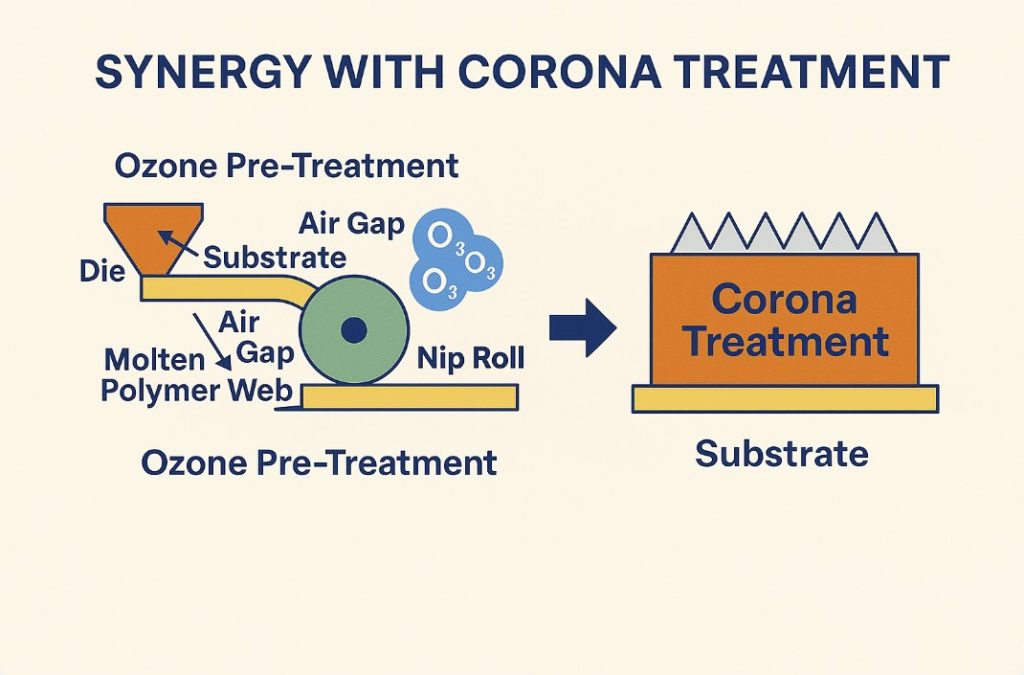
According to Laiho’s TAPPI paper (“Flame, Corona, and Ozone—Do We Need All Pre-Treatments in Extrusion Coating?”), combining ozone pre-treatment with corona discharge provides a synergistic effect on adhesion.
Ozone activates the molten polymer, while corona further increases surface polarity on the substrate—together allowing strong adhesion at significantly lower extrusion temperatures.
Improved Product Quality and Process Efficiency
Traditional approaches to increase adhesion often rely on raising melt temperature through valve adapters or higher shear. While this does improve oxidation, it also leads to:
- Polymer degradation and formation of aldehydes
- Off-odor or taste in finished laminates
- Increased shrinkage in thin substrates
- Higher energy costs
By contrast, ozone treatment achieves the desired oxidation without thermal damage. The result is a cleaner, stronger, more efficient bond.
Addressing Concerns About Ozone
Two misconceptions still hold back adoption:
1. Fear of ozone in the process
Modern ozone systems are completely contained and monitored. Properly designed installations keep ozone levels well below detection at operator positions. Even directly beside the die, ozone concentration is typically undetectable when the system is balanced and ventilated.
2. Lack of awareness
Many processors, especially outside North America and Europe, simply do not know this technology exists or how easily it can be integrated into an extrusion line. Oxidation Tech’s turnkey ozone systems provide a reliable, low-maintenance solution for new and retrofit applications.
Visit our detailed overview of Ozone Surface Treatment for Plastic Adhesion to see how the process works, including applications for rotationally molded insulated boxes and foam adhesion.
Proven Results—Backed by Research
- Sherman, P. Extrusion Coating Manual, TAPPI, Ch. 10 (1995).
- Laiho, E. et al. Flame, Corona, and Ozone—Do We Need All Pre-Treatments in Extrusion Coating? TAPPI (1997).
- Wolf, R., Cheney & Markgraf, R. Papers presented at TAPPI PLACE Conference (2007, 2010).
- Greig, S. “Ozone for Improved Adhesion in Extrusion Coating,” Corona Supplies Ltd., 2011.
All of these studies demonstrate that ozone pre-treatment is effective, energy-saving, and environmentally safe when properly applied.
Conclusion
Ozone has been proven for decades to enhance adhesion in extrusion coating and laminating—yet it remains one of the industry’s best-kept secrets.
By using ozone pre-treatment, converters can achieve stronger bonds, reduce energy use, and improve product quality—all while maintaining safe operating conditions.
To learn how to integrate ozone into your extrusion or molding line, visit: Ozone for Plastic Adhesion