From Weak to Wow – Foam Adhesion with Ozone
Inside Surface Treatment for Rotationally Molded Insulated Boxes and Containers
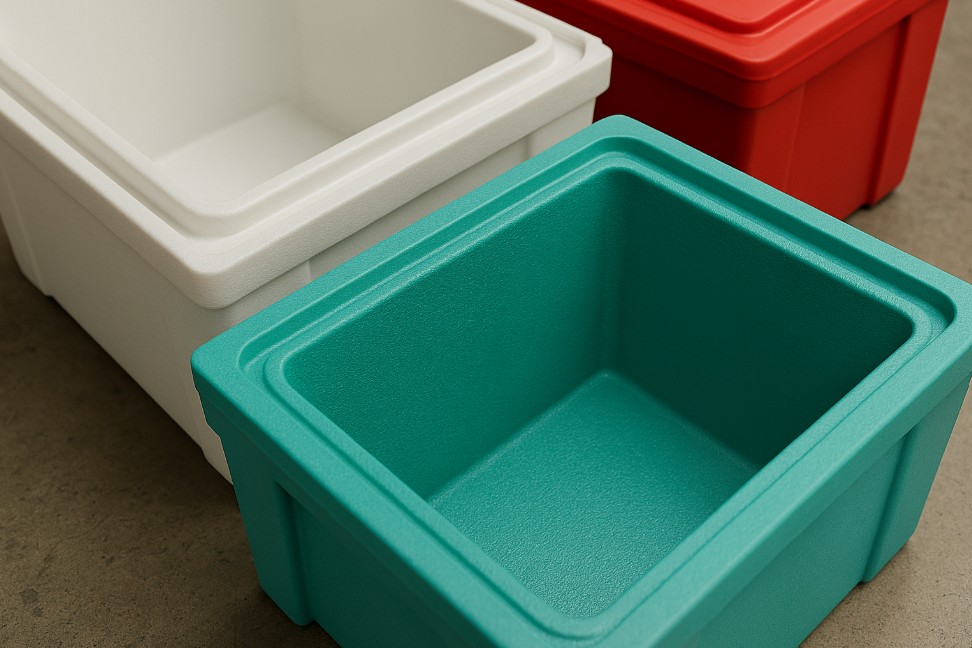
If you manufacture rotationally molded coolers, insulated containers, or composite tubs, you already know that achieving strong adhesion between the plastic shell and polyurethane (PU) foam can be one of the biggest production challenges.
At Oxidation Tech, we specialize in ozone systems designed for surface activation — including solutions specifically developed for foam-to-plastic adhesion in rotomolded products.
Learn more here: Ozone for Plastic and Foam Adhesion
The Adhesion Problem in Rotomolding
Most rotomolded coolers and insulated boxes use a sandwich construction:
- A durable polyethylene (PE) or polypropylene outer shell, and
- Injected polyurethane foam for insulation and structural rigidity.
The challenge?
PU foam does not naturally bond to non-polar plastics like PE or PP. Without surface activation, the foam tends to pull away from the wall, causing:
- Air gaps that reduce insulation performance
- Uneven foam density
- Structural weakness or delamination
- Increased use of chemical primers or mechanical roughening
Traditional chemical or flame-based adhesion methods can help—but they add cost, complexity, and safety concerns.
The Ozone Gas Solution
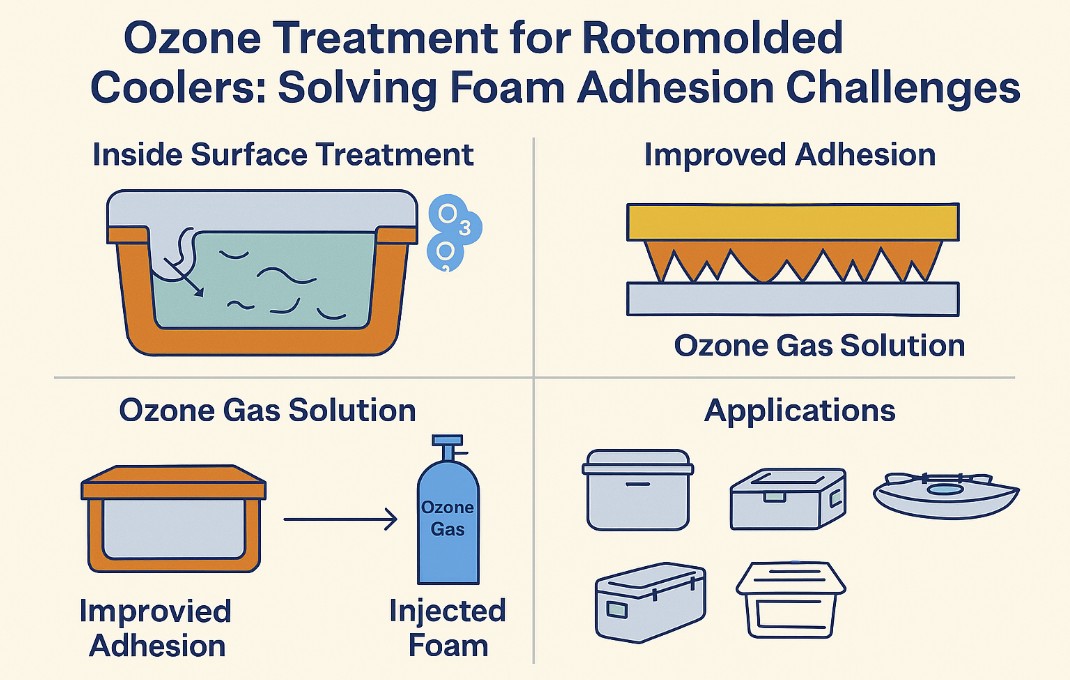
Ozone offers a clean, reliable way to activate the inner surface of a closed rotomolded shell before foam filling.
How It Works
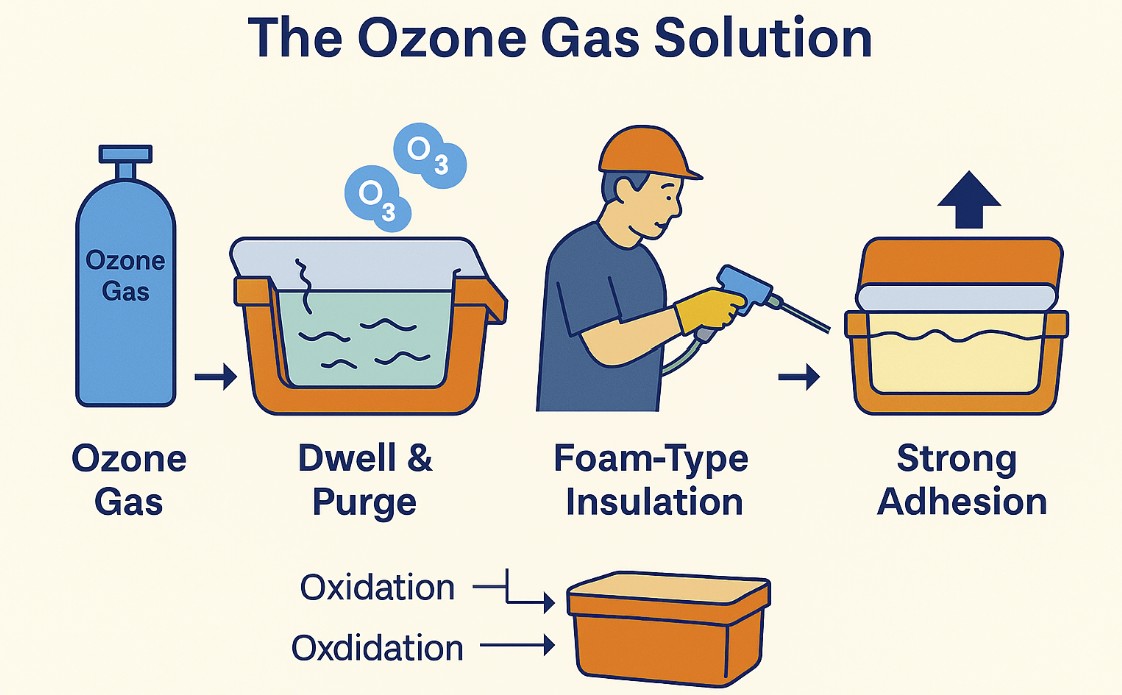
- Ozone gas (usually ~5% concentration) is introduced into the hollow plastic shell.
- The gas is allowed to dwell for a controlled period, oxidizing the interior surface.
- The shell is then flushed to remove residual ozone, leaving a high-energy, reactive surface.
- Polyurethane foam is injected into the cavity, where it chemically bonds to the treated surface.
This process enhances adhesion without solvents, primers, or flame treatment.
Why Ozone Works
Ozone reacts with the surface of the polymer, creating oxygen-containing functional groups (such as carbonyls and hydroxyls).
These new chemical sites improve wettability and molecular compatibility with the polyurethane foam, leading to:
- Strong, uniform bonding between foam and plastic
- Improved insulation quality (no voids or air gaps)
- Reduced chemical costs and simplified process steps
- Longer product life with less delamination
Learn more about the science behind this process on our detailed page:
Ozone Surface Treatment for Plastic Adhesion
Applications
Ozone inside-surface treatment is now used successfully in:
- Rotomolded coolers and ice chests
- Fish boxes and insulated marine tubs
- Portable refrigeration containers
- Kayaks, surfboats, and rescue craft with sandwich construction
- Industrial insulated tanks and housings
If your products include a PU foam core and a rotomolded polymer shell, ozone treatment can dramatically improve foam adhesion and reduce rejects.
Proven and Safe
Modern ozone systems are fully enclosed and automated, making them easy to integrate into existing rotomolding or foaming lines.
With proper dwell control and exhaust, ozone levels remain below detection when operated correctly.
Systems like those supplied by Oxidation Tech are designed for consistent treatment results and operator safety, using oxygen-fed generators, contact time control, and automatic purging.
In Summary, You get a Cleaner, More Effective Process
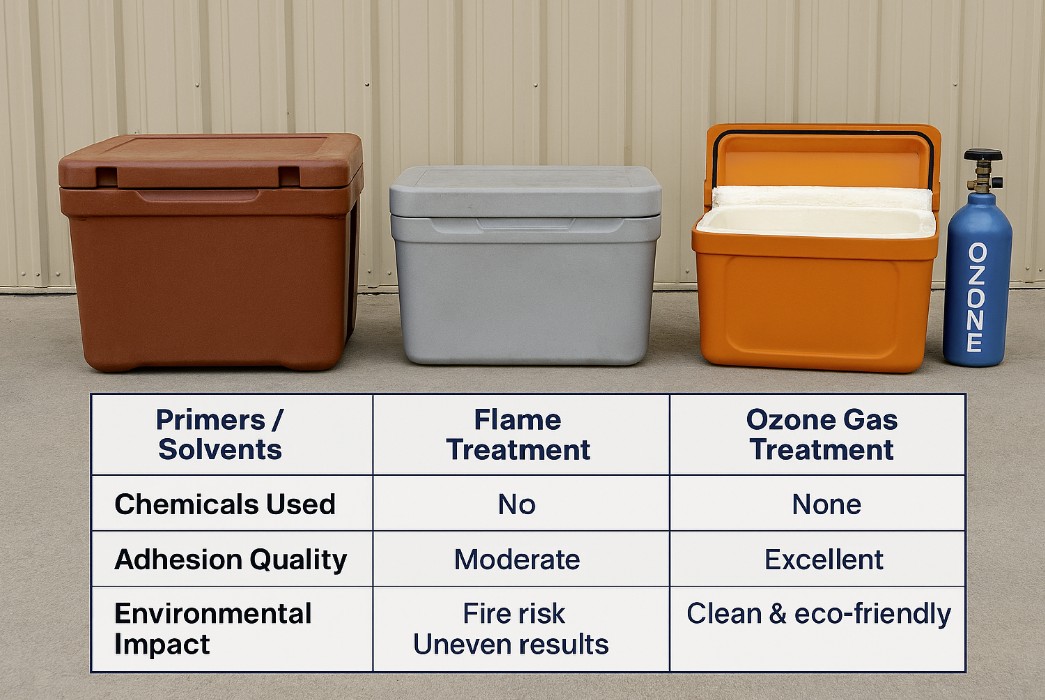
Compared to traditional methods, ozone offers clear advantages:
| Treatment Method | Chemicals Used | Adhesion Quality | Environmental Impact |
|---|---|---|---|
| Primers / Solvents | Yes | Moderate | VOCs, hazardous waste |
| Flame Treatment | No | Variable | Fire risk, uneven results |
| Ozone Gas Treatment | None | Excellent | Clean & eco-friendly |