
Clean, Dry Air Requirements for Oxygen Concentrators
High concentration ozone generators rely on oxygen concentrators. For technicians and customers operating oxygen concentrators (oxygen generators), one of the most common causes of failure is improper supply air. Many users either don’t realize they must provide clean, dry compressed air, or they are unsure what that actually means.
This guide defines the requirements and explains why they are critical to long-term performance.
Minimum Air Requirements
Oxygen concentrators using external or plant compressed air should meet the following:
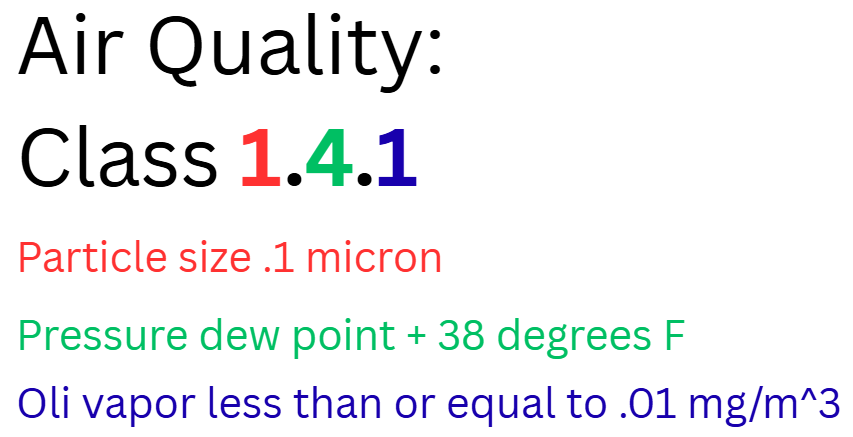
Air Quality: ISO8573.1 Class 1.4.1
Air Pressure: Minimum 90 PSI
Air Temperature: Maximum 100°F (38°C)
These specifications should be included in quotes, manuals, and installation documentation.
Why Clean, Dry Air is Critical
The molecular sieve material is the core component inside oxygen concentrators. Under proper conditions, it can last 3–7 years while producing high-purity oxygen.
However, moisture and oil contamination quickly destroy the sieve material, and lead to more problems:
- Oxygen purity drops
- Production output decreases
- Ozone generator cells may be damaged
- Costly repairs and downtime occur
Leading causes of sieve failure
- Moisture in supply air (most common)
- Oil contamination
- High temperature air
- Dust and particulate contamination
Even moderate contamination can destroy sieve beds within days.
Plant Air–Fed Units
Air quality requirements for filtered air:
- Dry – dew point of 38 degrees F or lower
- Clean – particle size of .1 micron or less
- Oil-free – less than or equal to 0.01 mg/m^3
Hot, humid, dirty, or oily air rapidly degrades molecular sieve performance.
Pressure Requirement
Incoming air pressure must be at least 90 PSI (6.2 bar).
- Ensures low dew point
- Ensures adequate air flow through suitable pressure regulator
Temperature Requirement
Compressed air must be 100°F (38°C) or lower. Hot air holds significantly more water vapor than cool air and contributes to the following problems:
- Reduce efficiency
- Increase moisture content
- Damage sieve material over time
Recommended Air System Components
Most installations require the following components:
- Aftercooler
- Refrigerated air dryer
- Air storage/surge tank
- Filtration system
These components remove moisture before the air reaches the oxygen generator.
Built-In Air Inlet Filter
All oxygen concentrators include a secondary filter at the Air-IN connection with a clear bowl.
This filter is:
- NOT the primary air treatment
- Only a backup safeguard
- Should remain clean and dry
Check daily.
If moisture or contamination appears, the upstream air system requires immediate attention.
Compressor Maintenance Requirements
To maintain proper air quality, perform these maintenance steps:
- Drain condensation from air tanks regularly
- Blow out air distribution lines
- Replace internal filter element every 6 months
- Maintain compressor per manufacturer instructions
Pipe scale, oil carryover, and water vapor must be minimized for long-term operation.
Units With Built-In Compressors
The location for the installation of oxygen concentrator equipment with built-in compressors is critical.
- Air-conditioned space (recommended)
- Temperature range: 40°F – 100°F (5°C – 38°C)
- Clean air environment
- Low humidity area
Environments containing the following contaminants must be avoided:
- Oil vapor
- Ammonia
- Hydrocarbons
- Carbon monoxide
- High humidity
Ammonia exposure will cause immediate, irreversible sieve damage.
Automatic Condensate Drain
Units with onboard compressors include the following components:
- Filter system
- Automatic condensate drain
- Timer (every 10–15 minutes)
These should be checked daily to confirm proper operation and verify bowls remain dry.
Understanding Dew Point and Moisture
Air drying works by cooling air until moisture condenses and drains away.
The dew point indicates how much water vapor is present.
Example moisture content:
| Dew Point | Water per m³ |
|---|---|
| 0°F | 1.08 g |
| 40°F | 6.55 g |
| 80°F | 25.22 g |
Higher dew point = more moisture = faster sieve damage.
Related article:
https://www.oxidationtech.com/blog/clean-dry-air/
How Much Water Enters a Concentrator?
A small 10 LPM oxygen concentrator processes 5,760 cubic feet of air per day.
At an 80°F dew point, this equals approximately one gallon of water entering the sieve material every 24 hours.
Impact of this moisture:
- Reduces oxygen output
- Degrades zeolite material
- Causes early failure
Dew Point vs. Sieve Life
30–50°F dew point
Comfortable room air
Expected life: 15,000–20,000 hours (~2 years)
50–65°F dew point
Humid/sticky conditions
Expected life: 10,000–12,000 hours (~1 year)
Above 65°F dew point
Tropical/muggy conditions
Sieve failure within weeks
Recommended target:
≤ 50°F dew point
Pressure Dew Point (PDP)
When air is compressed, water condenses at a higher temperature. This is called Pressure Dew Point (PDP).
Example:
Ambient air
80°F temperature
65°F dew point
Compressed to ~40 PSI then cooled back to 80°F:
New dew point ≈ 50°F
(Borderline acceptable)
Proper cooling inside the concentrator is critical to achieving this.
Best Installation Practices
Best option: Install concentrator in air-conditioned room
Next best option: Use refrigerated air dryer (20–40°F dew point)
This significantly extends sieve material life.
External Refrigerated Air Dryer Option
Our TOX concentrators support external refrigerant air dryers for high dew-point environments: https://www.oxidationtech.com/tox-20.html
These units can also accept clean, dry plant air from an existing compressed air system.
Additional Resources
Industrial High-Pressure Molecular Sieve
https://www.oxidationtech.com/xp-molecular-sieve.html
Low Pressure Sieve Beds
https://www.oxidationtech.com/oxo10-module.html
Dry Air Feed Gas for Ozone Generators
https://www.oxidationtech.com/ozone/ozone-generation/o3-feed-gas.html