The Challenge of High BOD in Water Treatment
High Biological Oxygen Demand (BOD) presents a persistent challenge in water and wastewater treatment. Excess organic material increases oxygen consumption, strains biological systems, and can lead to compliance issues if not effectively managed.
While biological treatment remains the backbone of BOD removal, pairing it with advanced oxidation—specifically ozone—can significantly enhance overall performance.
Why Ozone Is Effective for BOD Reduction
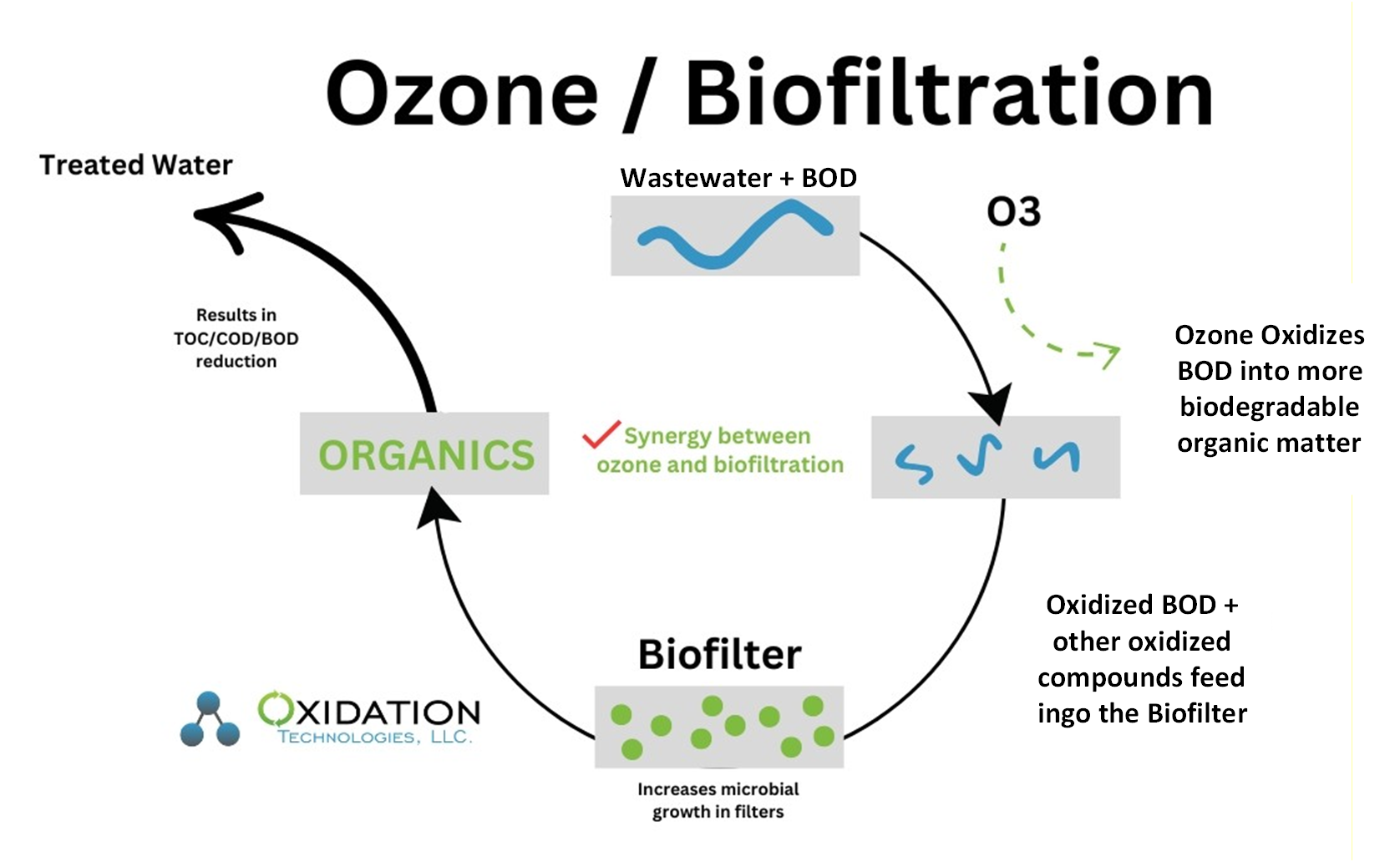
Ozone is a powerful oxidant that rapidly breaks down complex organic compounds into simpler, more biodegradable forms. When applied upstream of biological treatment, ozone:
- Reduces organic load
- Improves biodegradability
- Increases dissolved oxygen levels
- Reduces odors and color
- Enhances microbial activity
Rather than replacing biological treatment, ozone supports and strengthens it.
The Role of Biofiltration
Biofiltration uses microorganisms attached to filter media to biologically degrade organic matter. When influent water is pre-treated with ozone, biofilters operate more efficiently because:
- Organics are easier for microbes to consume
- Oxygen availability is improved
- Biofilm activity becomes more stable
- Hydraulic retention times can be reduced
This synergy leads to faster, more consistent BOD removal.
Ozone + Biofiltration: A Powerful Combination
When ozone oxidation is combined with biofiltration, the result is a highly effective, integrated treatment process:
- Ozone pre-oxidizes organic compounds, reducing complexity
- Biofilters complete biological degradation, removing remaining BOD
- Overall system efficiency increases, even during load fluctuations
This approach is particularly beneficial for:
- Industrial wastewater
- Municipal treatment upgrades
- Facilities facing stricter discharge limits
- Systems seeking footprint or energy optimization
A Smarter Solution for Modern Water Treatment
Ozone-assisted biofiltration provides a flexible, scalable solution for BOD removal. By enhancing biological processes rather than replacing them, this combined approach delivers improved performance, operational stability, and regulatory confidence.
As water treatment challenges continue to evolve, integrated solutions like ozone and biofiltration are helping facilities meet today’s demands and prepare for tomorrow’s.