Any time ozone is generated or transported through tubing, fittings, or reaction chambers, leaks are possible. Even a small leak can create safety hazards, reduce system performance, and compromise process reliability. That’s why regular leak checks are essential for anyone working with ozone equipment.
The good news: ozone leak detection is simple when you use the right tools. A pumped ozone detector paired with a basic soapy-water test gives you fast, accurate, and repeatable results. Here’s how the process works—and why a professional-grade pumped detector is the solution.
Step 1: Start with a Pumped Ozone Detector
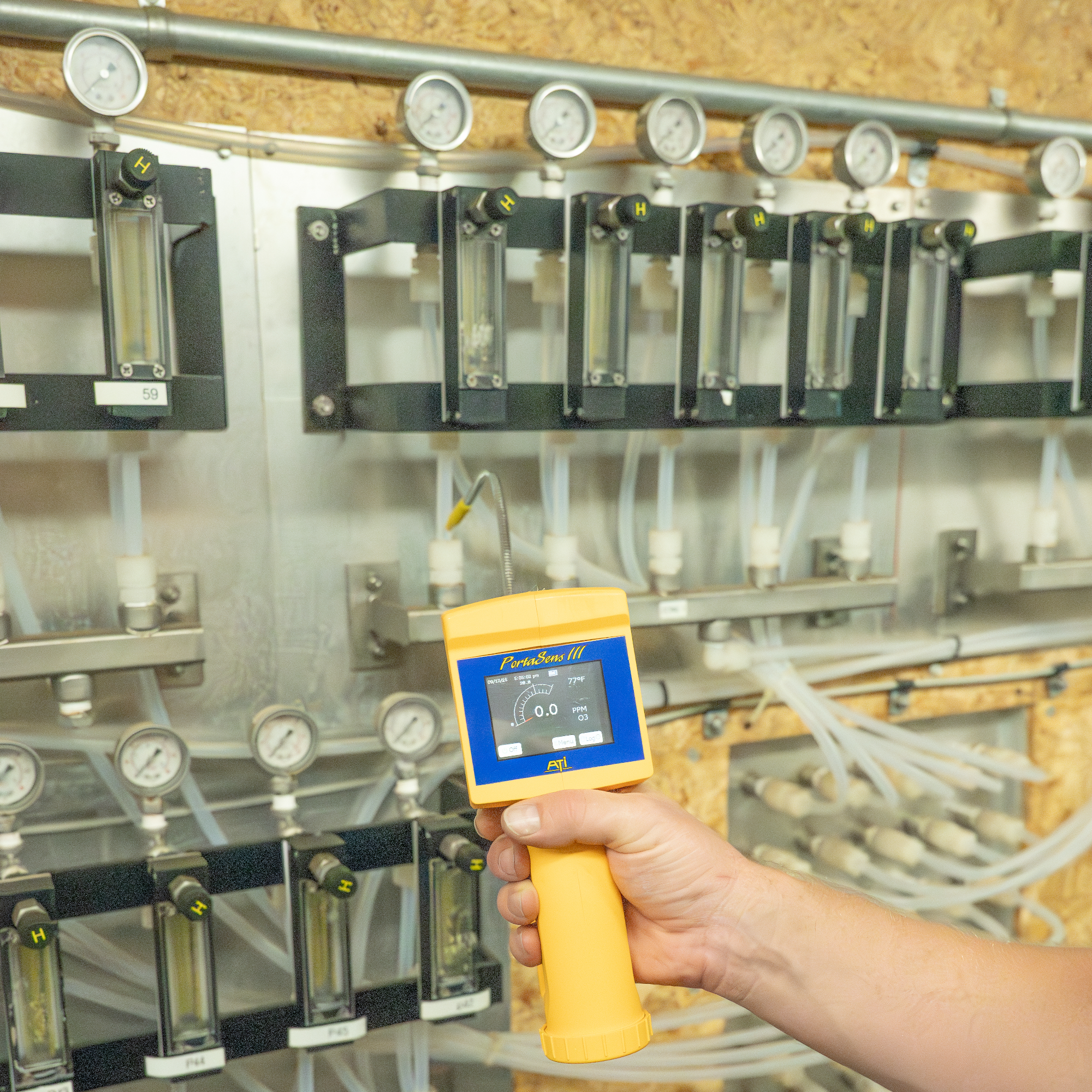
A pumped ozone detector is the most effective way to find ozone leaks. Unlike passive monitors that wait for ozone to drift into the sensor, a pumped detector actively draws air from specific spots, allowing you to sweep the system and pinpoint elevated ozone levels.
Why a Pumped Detector Is Essential
- Precision: Pulls samples directly from fittings, tubing, valves, and seams.
- Speed: Quickly reveals “hot spots” where ozone levels rise.
- Safety: Allows testing from a distance—no need to lean into confined areas.
- Versatility: Ideal for ozone chambers, gasketed joints, plumbing connections, and destruct systems.
By slowly moving the sampling wand around the system, you’ll see exactly where ozone levels spike, giving you the general location of the leak.
Step 2: Confirm the Exact Leak Location with Soapy Water
Once your detector identifies the leak area, the simplest way to find the exact point is the classic soapy-water test.
Why Soapy Water Works
- Detectors show the zone; soap shows the exact spot.
- Even tiny leaks produce visible bubbles.
- Works on threaded fittings, tubing, connectors, and destruct vent lines.
How to Perform the Test
- Mix dish soap with water.
- Spray or brush it onto the suspected fittings.
- Look for steady bubbling—that’s your leak.
- Tighten, reseal, or replace the component.
Using the detector first (to locate the area) and soapy water second (to pinpoint the source) gives you the fastest and most accurate results.
Step 3: Fix the Leak and Re-Test
After tightening or replacing the leaking part:
- Reapply the soapy water to ensure no more bubbles appear.
- Once dry, re-scan the area with your pumped detector to confirm ozone levels are normal.
- If required, purge the system or resume ozone flow and verify stability.
Additional Leak Detection Tips
- Check all fittings after maintenance—tubing can shrink, and vibration can loosen connections.
- Turn the ozone generator OFF when large leaks are suspected to avoid unsafe ozone accumulation.
- Inspect ozone destruct systems regularly; catalyst degradation can release ozone from the exhaust.
- Use ozone-compatible materials to prevent gasket or tubing breakdown.
- Document leak locations to identify recurring issues over time.
Recommended Ozone Monitors for Leak Detection
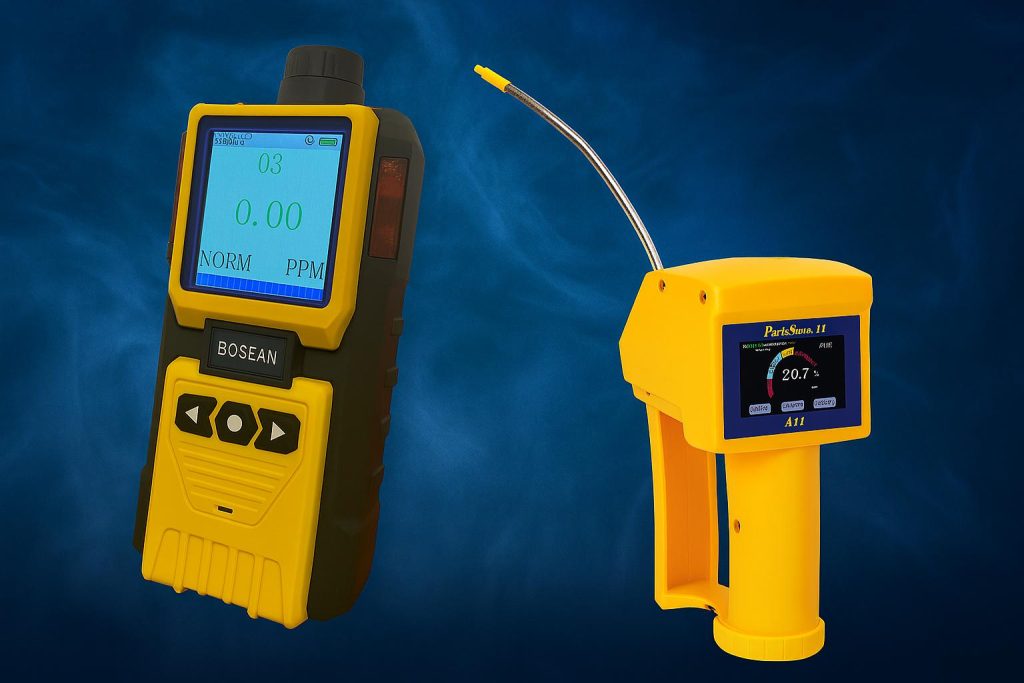
Below are two excellent options for leak detection and safety monitoring—however, one stands above the rest for performance, accuracy, and flexibility.
D-16 PortaSens III: The Top Choice for Ozone Leak Detection
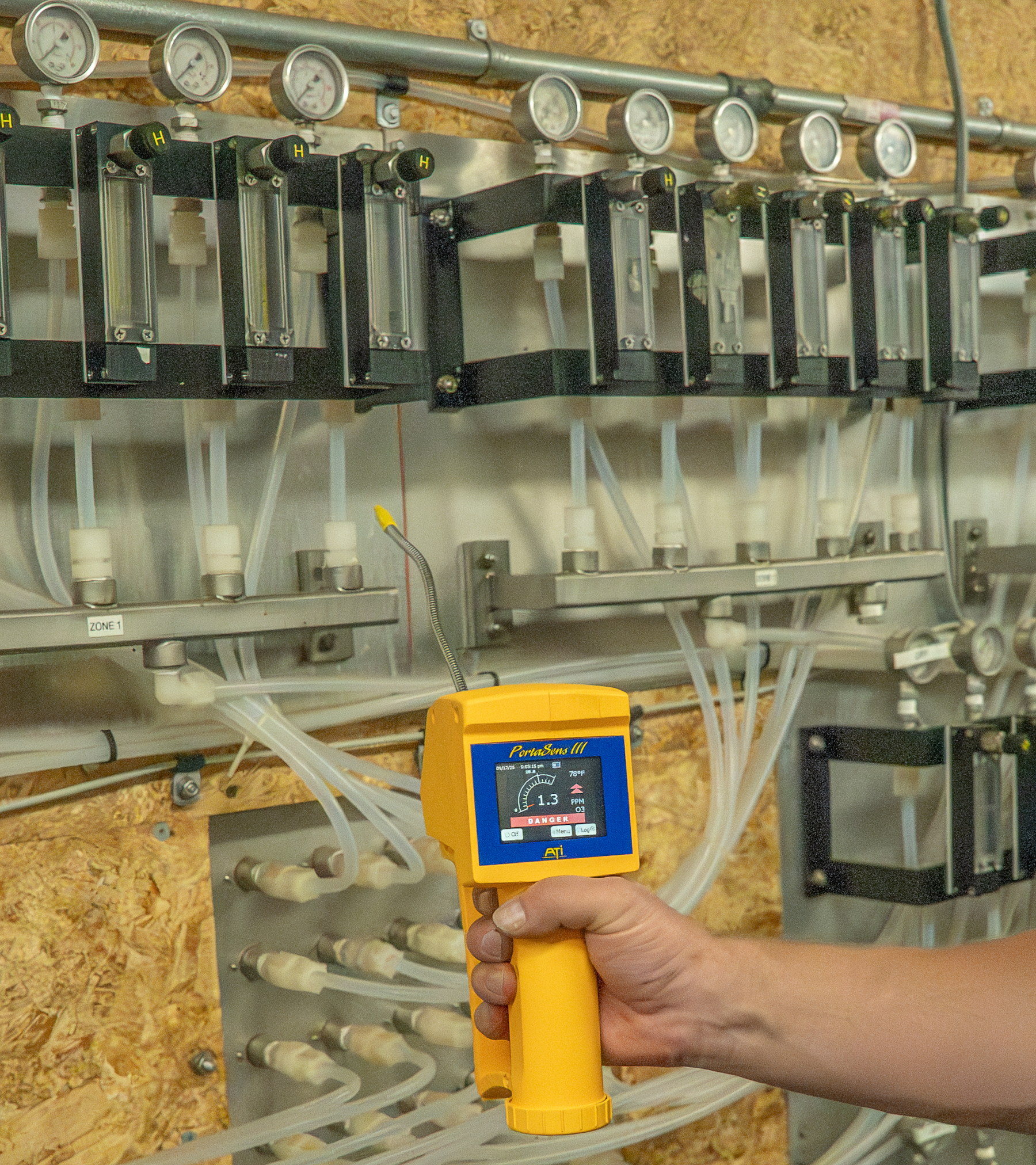
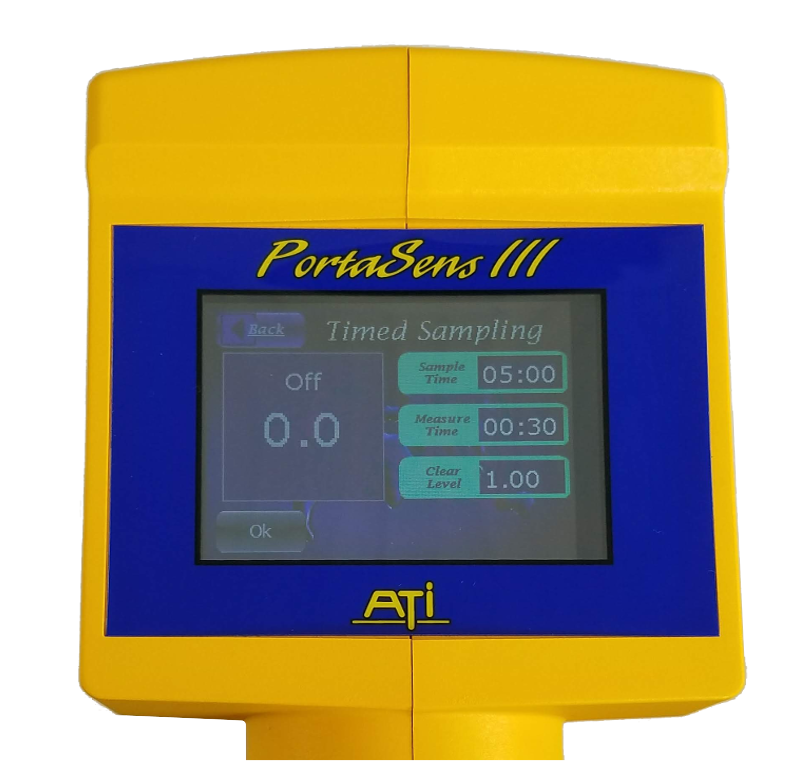
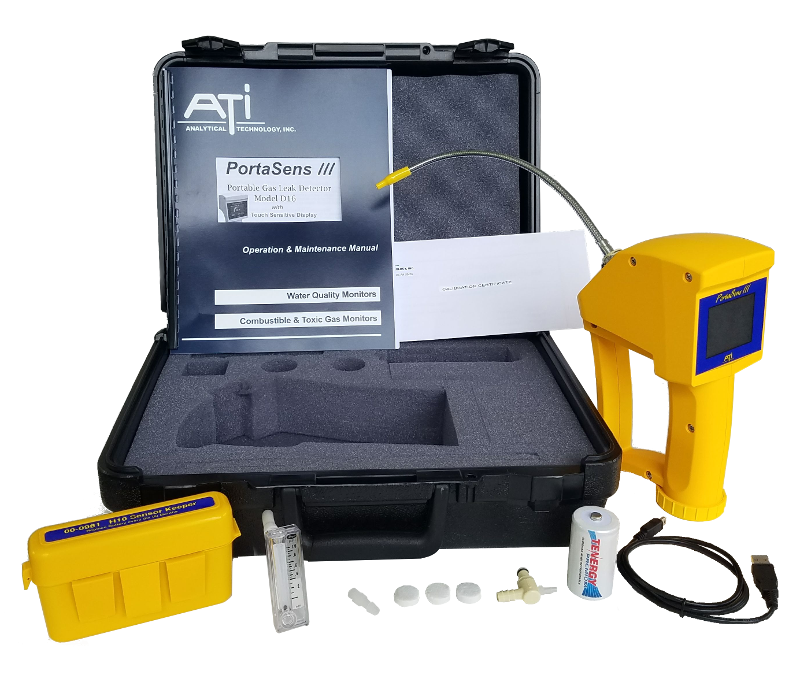
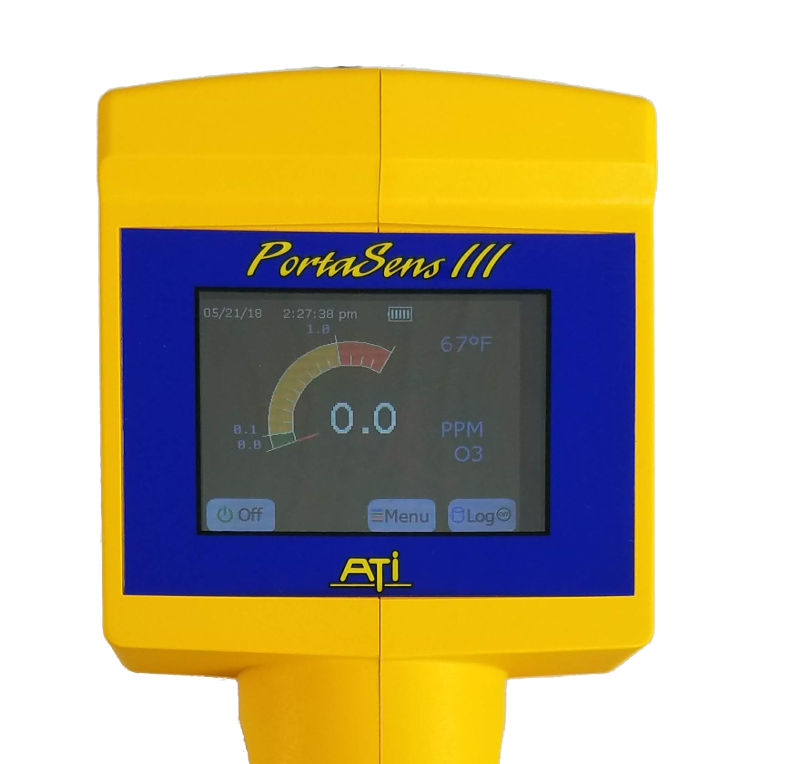
The ATI D-16 PortaSens III is widely recognized as the industry’s best handheld instrument for ozone leak detection. Its built-in pump, flexible sampling wand, and interchangeable sensors make it the most capable and reliable tool for locating both small and large ozone leaks.
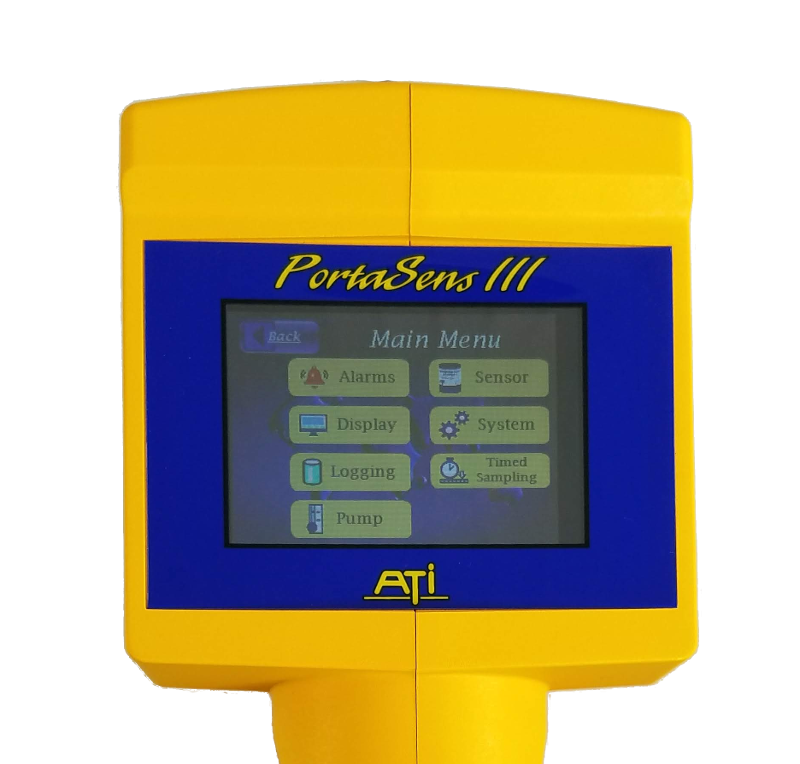
Why Professionals Prefer the D-16
- High-flow internal sample pump (nearly 1 LPM) ensures rapid response time.
- Bendable, Teflon-lined sampling wand reaches behind equipment, under piping, and into tight spaces.
- Interchangeable ATI H10 sensors allow you to swap between high-range leak sensors and low-range safety sensors in under a minute.
- Multi-gas capability — up to 30 additional sensors available.
- Built-in flow meter to verify pump operation.
- Replaceable batteries for all-day field use.
- Ergonomic pistol-grip design that’s easy to hold and maneuver.
For users who require reliable leak detection, high accuracy, and professional-grade performance, the D-16 is the clear choice.
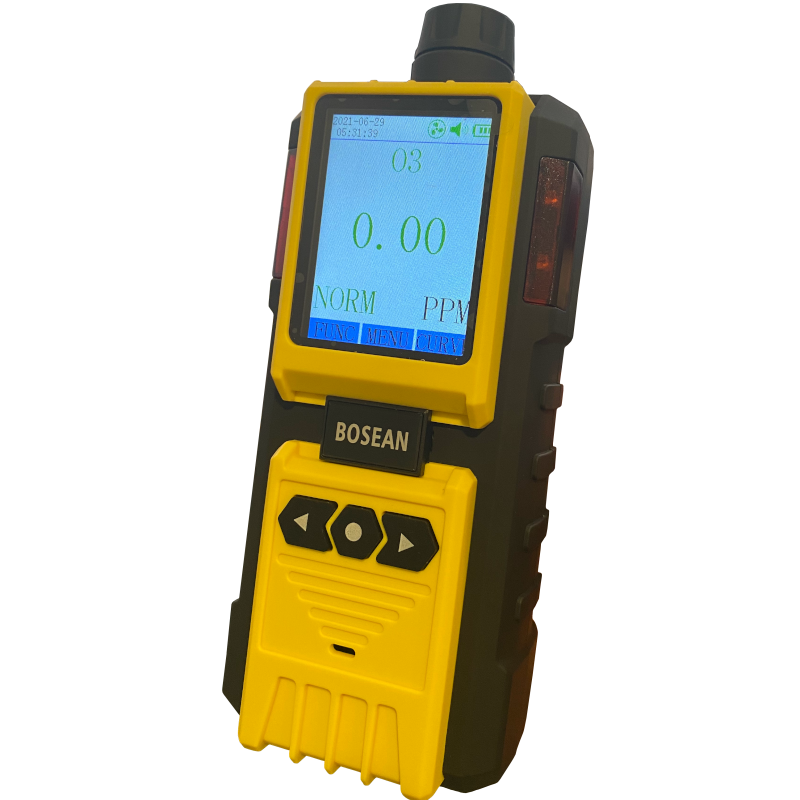
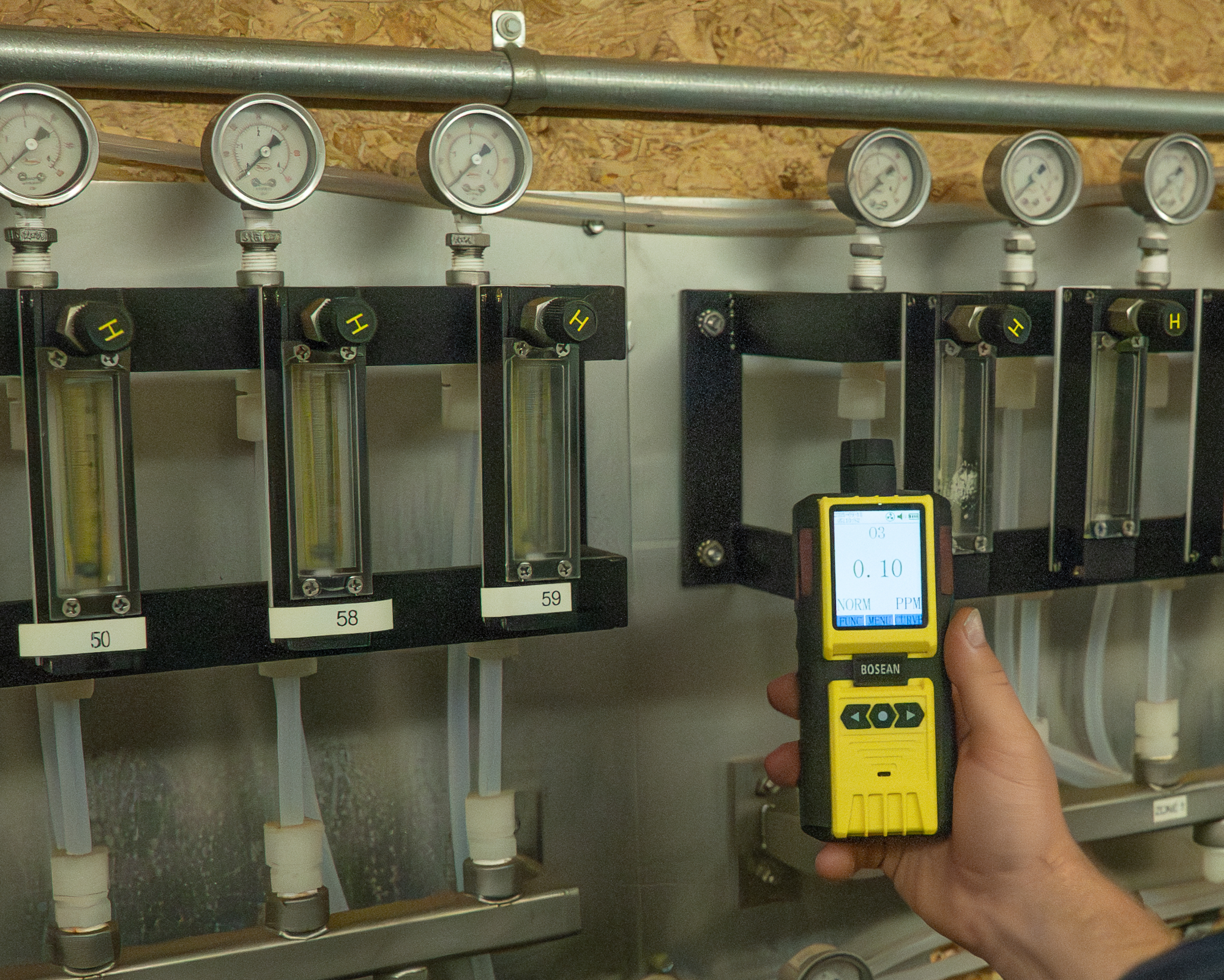
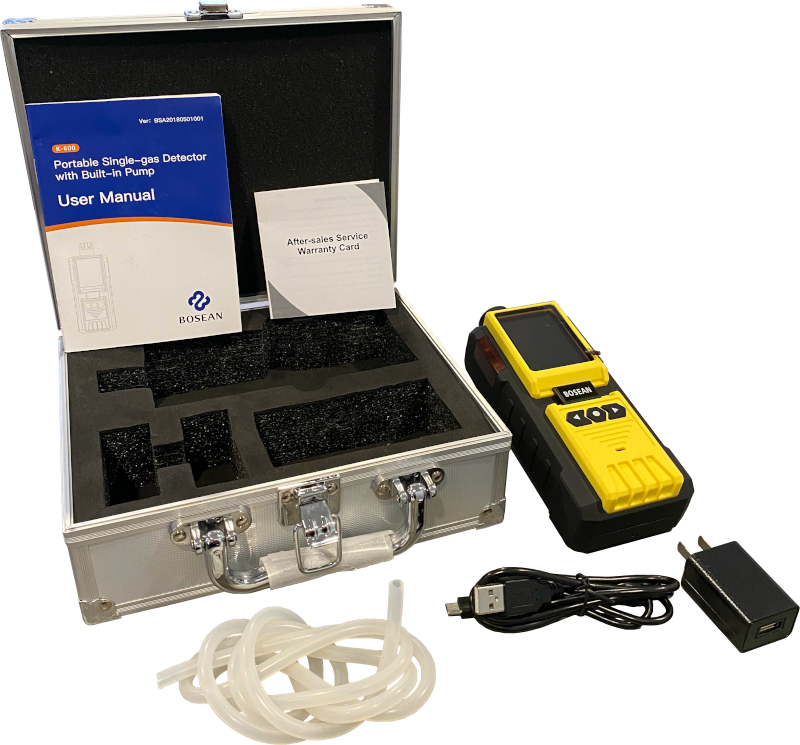
K-600: A Budget-Friendly Alternative
The K-600 offers good performance for its price and includes an internal pump for active sampling. It’s available in two ranges (0–1 ppm and 0–100 ppm) and allows tubing to be connected to the inlet for more targeted sampling.
It’s a cost-effective option, but it does not offer the flexibility, precision sampling tools, or sensor interchangeability of the D-16.
Conclusion
Ozone leak detection is straightforward when you follow a proven method:
- Use a pumped ozone detector to locate the leak area.
- Apply a soapy-water solution to identify the exact leak point.
- Repair and re-test to ensure a safe, airtight system.
For the most efficient, accurate, and reliable leak detection, the D-16 PortaSens III is the top-recommended instrument. Its high-flow pump, flexible sampling wand, and interchangeable sensors make it the preferred choice for technicians and facilities that demand dependable performance.
If your goal is finding ozone leaks quickly, safely, and with confidence—the D-16 is the best tool for the job.