
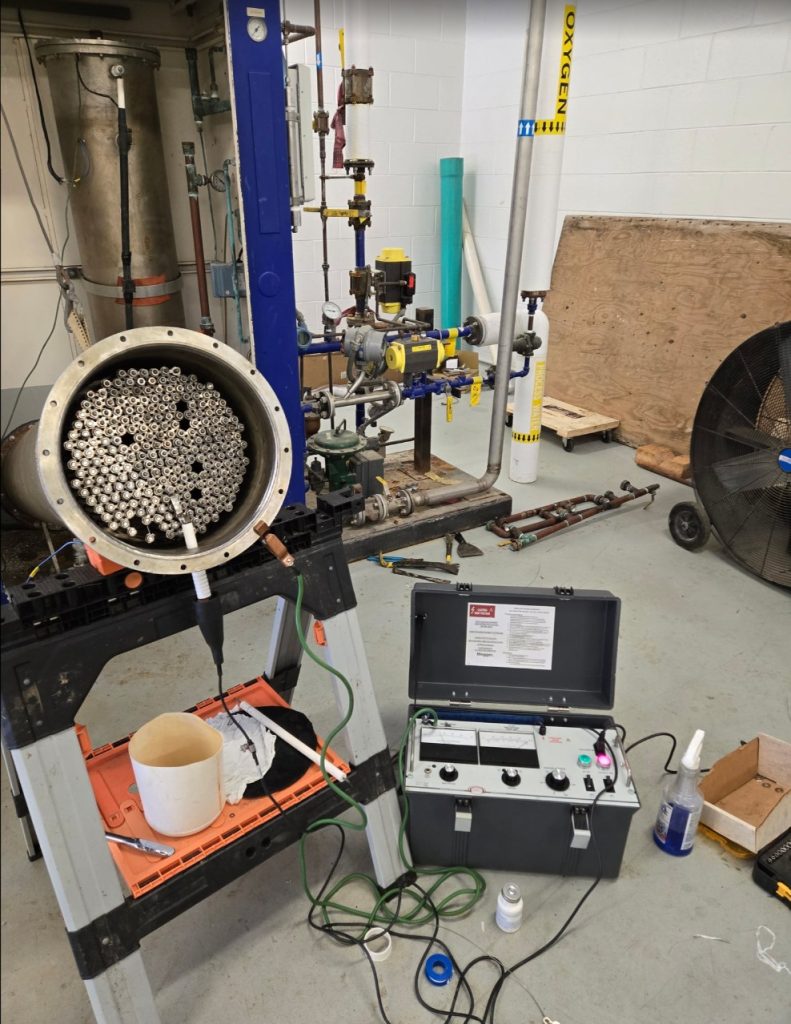
Monroe Water Treatment Plant
Summary of Operations and Service Work
The City of Monroe Water Treatment Plant, located at 915 E. Front Street, Monroe, Michigan, has been providing safe drinking water to the community for over a century. (see link to article).
The facility draws water from Lake Erie, sharing an intake with the Frenchtown plant. Due to the lake’s shallow depth and seasonal algae blooms, the plant faces ongoing challenges with algae toxins and organic contaminants during the summer months. We were able to help the nearby Frenchtown Water Treatment plant this summer with ozone leak problems. When Monroe learned about us from Frenchtown, they were eager to have us help them as well.
To ensure reliable disinfection and oxidation, the plant pre-treats all incoming water with ozone year-round—a process they adopted roughly 30 years ago with the installation of a Wedeco GS-200 ozone generator. Monroe has upgraded its ozone capability with a new Ozonia 250 lb/day ozone generator, which currently serves as the primary system. But, the Ozonia system has proven incompatible with the plant’s backup power generators, which supply power with too much electrical noise. A second 250 lb/day Ozonia unit is on order for installation in about a year, with hopes that the manufacturer will resolve the power compatibility issues before commissioning. In the meantime, they asked us to help rebuild their old Wedeco GS 200 ozone generator and provide information and training for all their ozone related equipment.
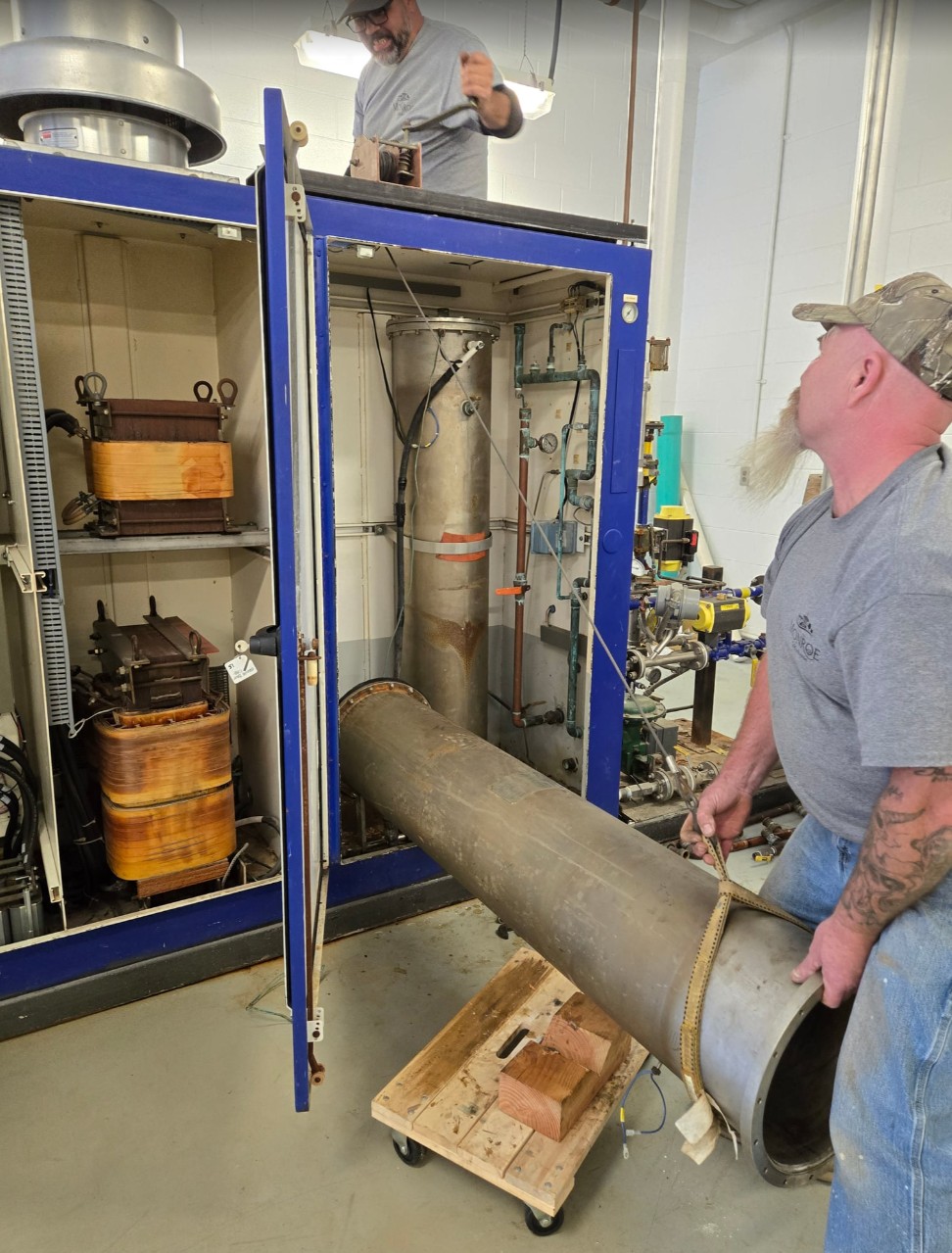
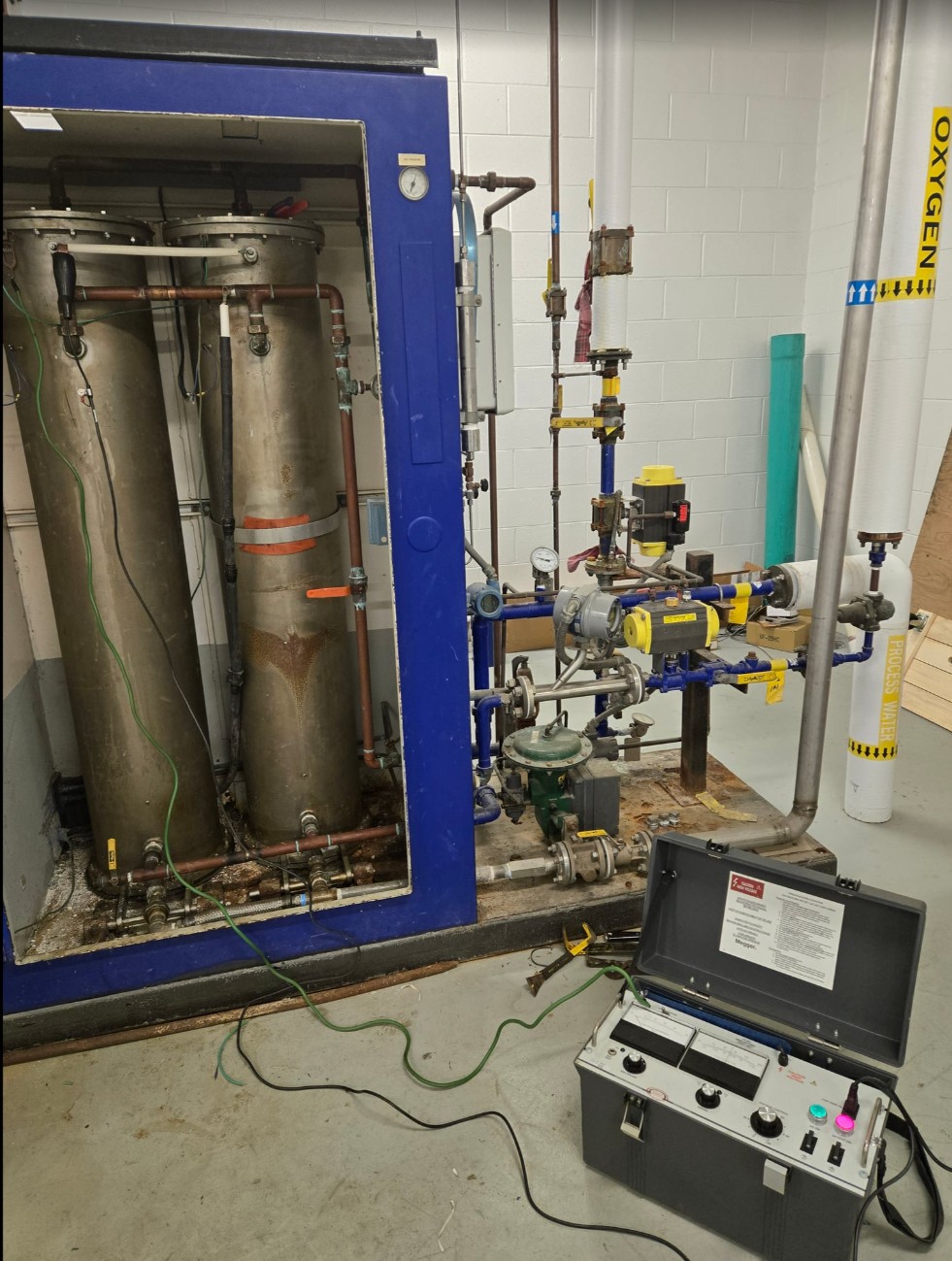
Oxidation Technologies was on site to inspect, rebuild, and restore the Wedeco GS-200 ozone generator for supplemental use, as well as to evaluate and maintain ozone monitoring and oxygen supply systems throughout the plant.
After getting the cell rebuilt and turned it back on, a “High Voltage DC Failure” warning came on. That’s when we learned that this was the error from the start when they first had problems. We still needed to find the heart of the problem.
Eventually the heart of the problem was exposed as a failed resistor. The electrician was able to order a new one and we were able to leave with some confidence that they would be able to get the generator up and running.
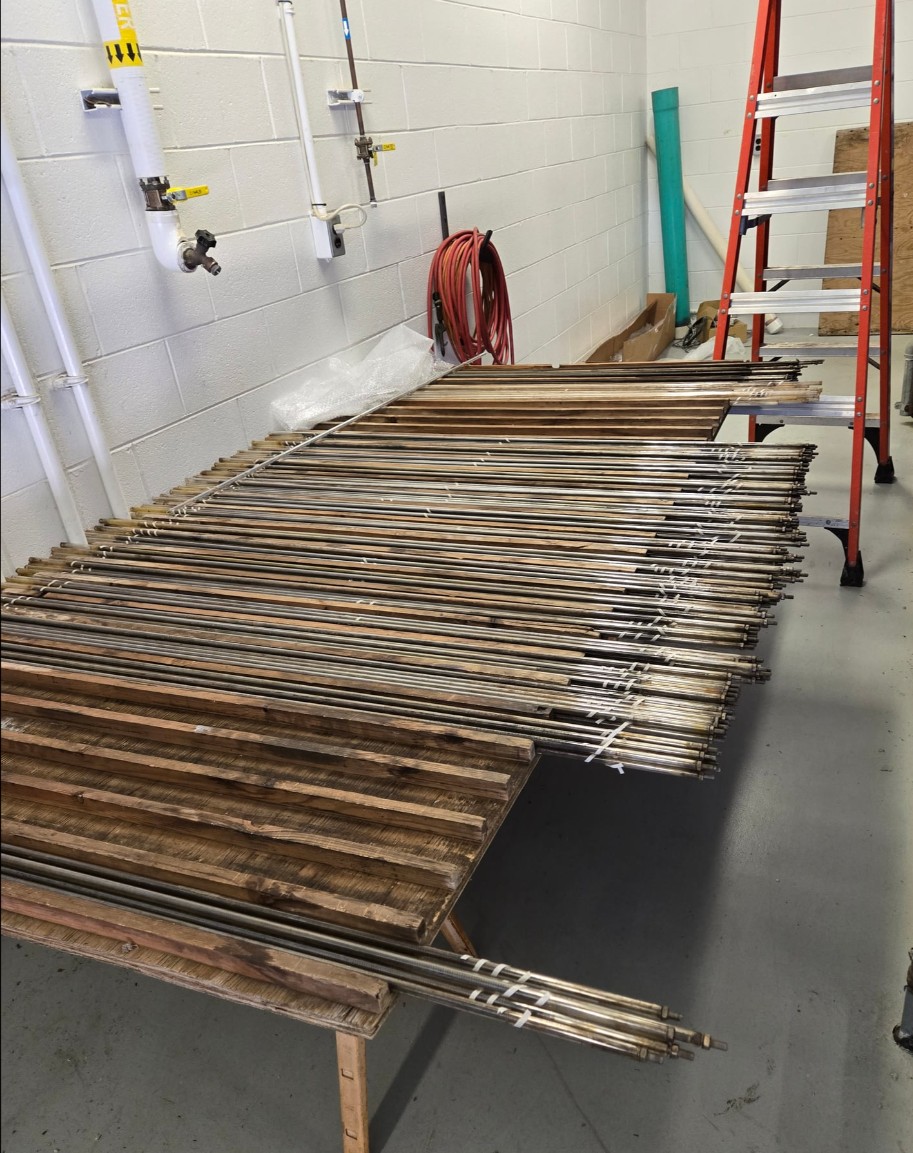
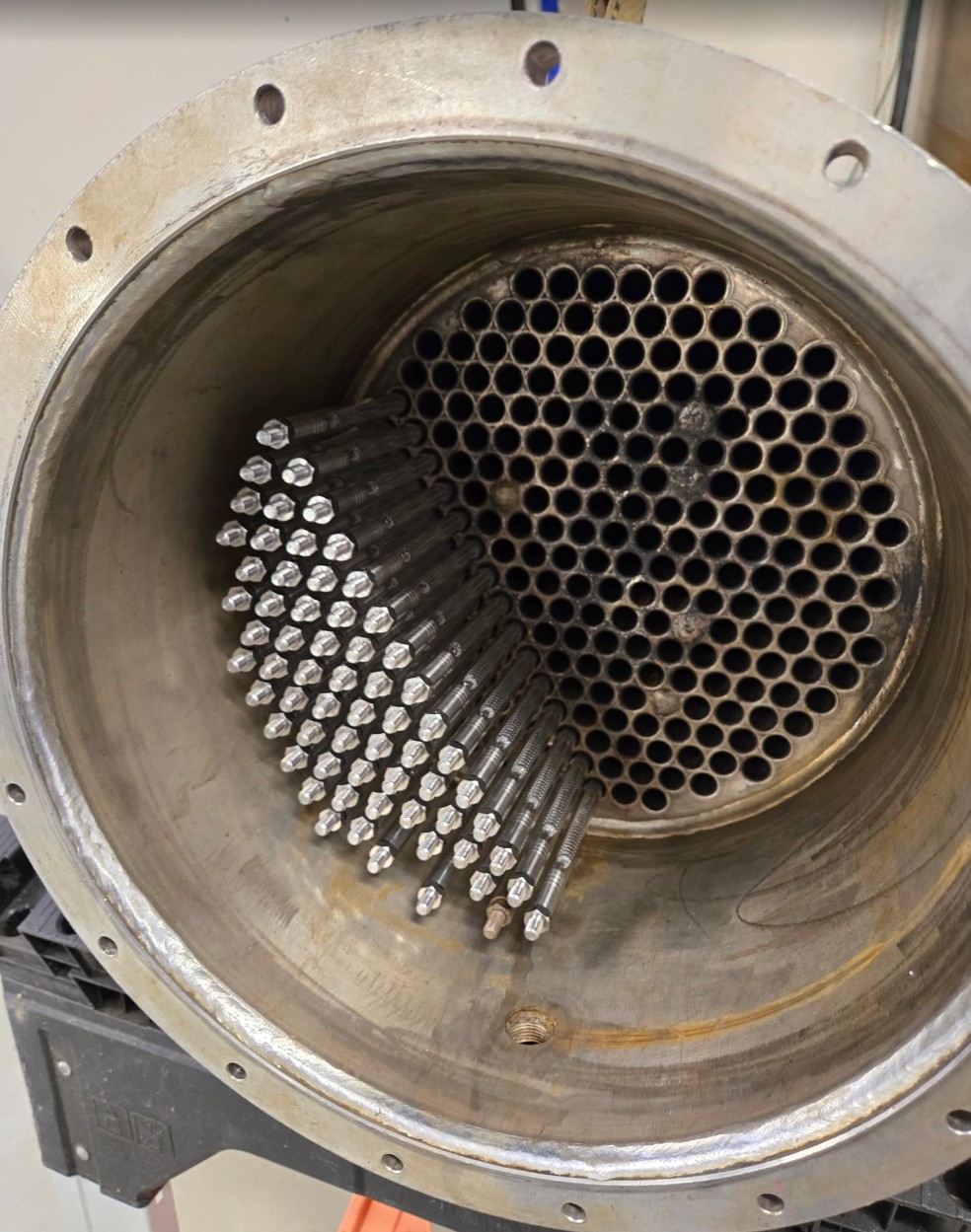
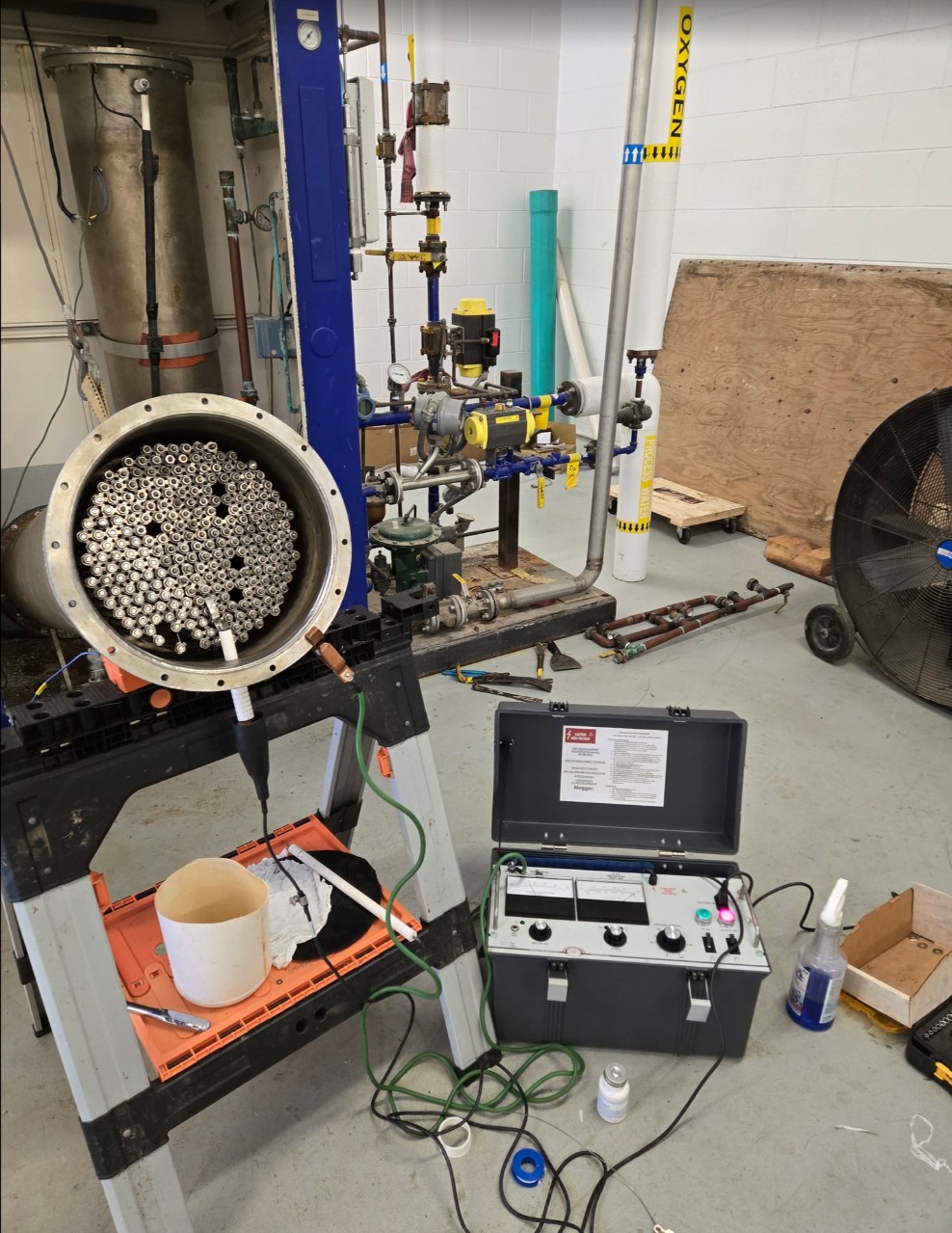
Key Work Included
- Rebuilding Ozone Cell #1 of the GS-200 with 250 new and verified dielectric tubes, followed by controlled oxygen purging and high-voltage testing.
- Identifying and replacing failed components in the DC high voltage sensing circuit, to restore generator functionality.
- Inspecting and testing ambient, destruct, and high-concentration ozone monitors, diagnosing pneumatic, optical, and sensor-related issues, and recommending replacements or repairs as appropriate.
- Assessing the dissolved ozone instrumentation (Rosemount 1056 analyzers) and recommending annual membrane/electrolyte maintenance and monthly calibrations.
- Testing the nitrogen generator and air dryer system, identifying exhausted desiccant media in the Atlas Copco CD 7+ dryer, and recommending desiccant replacement to maintain optimal oxygen dryness and ozone production efficiency.
Recommendations and Next Steps
- Replace the failed 60K resistor and restart the GS-200 after extended oxygen purging.
- Install an ATI F12 ambient ozone monitor to replace the aging Teledyne units.
- Rotate and service Teledyne 465 series ozone analyzers to maintain accuracy and reliability.
- Replace desiccant in the CD 7+ air dryer and verify dewpoint performance.
- Evaluate long-term on-site PSA oxygen generation as a cost-effective alternative to delivered liquid oxygen.
Service and Repair
Whatever your need, we have the tools, experience, and ability to help you keep your current ozone system running at peak performance. We have experience with most ozone generators manufactured and have the tools necessary to keep you running or get you back up and running fast.
Oxidation Technologies can repair, service, and maintain most any Ozone Generator and offers the same services for the ancillary ozone equipment. Our services include, but are not limited to:
On-Site System service and repair
Ozone System preventative maintenance
In-house repair of Industrial Ozone Generators and associated equipment
In-house repair of Commercial (air blower style) Ozone Generators