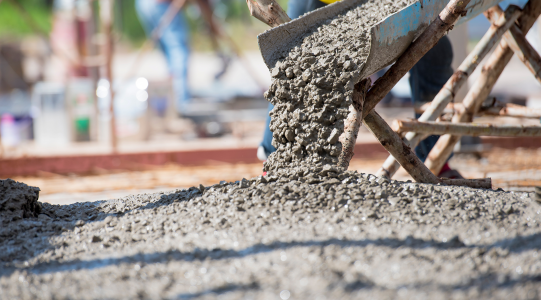
Concrete has been the backbone of civilization for centuries, shaping our roads, bridges, buildings, and infrastructure. But traditional concrete faces a stubborn challenge—durability. Exposure to freezing temperatures, salts, moisture, and chemical attack gradually breaks it down, shortening service life and driving up maintenance costs.
Now, two cutting-edge research efforts are showing how ozone technology and micro-nano bubbles (MNBs) can make concrete stronger, longer-lasting, and more sustainable.
Part 1: Oxygen and Ozone Micro-Nano Bubbles in Concrete
Based on research by Małgorzata Grzegorczyk-Fra´nczak, Danuta Barnat-Hunek, Kalina Materak, and Grzegorz Łagód
What Are Micro-Nano Bubbles?
Micro-nano bubbles are ultra-small gas bubbles, just nanometers to micrometers in size. Unlike ordinary bubbles, they are:
- Stable – remain suspended in liquid far longer.
- Reactive – capable of generating free radicals.
- Negatively charged – improving interaction with cement particles.
While already popular in water treatment and medicine, researchers have now applied MNBs to concrete mixing water—with remarkable results.
The Experiment
Three concrete types were prepared:
- REF: Standard mix with tap water.
- O₂ Concrete: Mixed with oxygen-enriched MNB water.
- O₃ Concrete: Mixed with ozone-enriched MNB water.
Each had the same water-to-cement ratio (0.35), using Portland cement CEM I 42.5R, sand, and gravel.
Key Findings
- Water absorption: Reduced by 52.3% with ozone MNBs and 42.7% with oxygen MNBs.
- Porosity: Both O₂ and O₃ mixes produced denser, less porous concrete.
- Compressive strength: O₃ concrete showed a 61% strength increase, upgrading it from C20/25 to C35/45.
- Freeze-thaw durability: O₃ concrete resisted 2.4× more cycles, losing only 7.8% strength (vs. 18.5% in REF).
- Salt resistance: O₃ concrete had the lowest weight change (2.11%) under salt crystallization.
Why it works:
MNBs refine the cement microstructure, enhance hydration reactions, and reduce large pores. The result is denser, stronger, and more resilient concrete.
Applications:
- Cold-climate roads and bridges
- Marine structures exposed to saltwater
- Green building projects seeking eco-friendly alternatives to chemical additives
Part 2: Ozone-Treated Carbon Nanotubes in Ultra-High Performance Concrete
Based on research by Myungjun Jung, Sung-gul Hong, and Juhyuk Moon
Carbon nanotubes (CNTs) have long been viewed as a game-changer for ultra-high performance concrete (UHPC). With their exceptional strength and electrical properties, CNTs can dramatically improve concrete—if they disperse properly. Unfortunately, CNTs tend to clump together, creating weak spots.
The Ozone Solution
Researchers discovered that ozone treatment functionalizes CNTs by attaching oxygenic and carboxylic groups to their surfaces. This improves dispersion by:
- Enhancing chemical bonding with cement.
- Increasing suspension stability in water.
- Creating steric repulsion that prevents CNTs from clumping.
The Results
- Dispersion: Ozone-treated CNTs reduced particle size by 77.1%, achieving uniform distribution.
- Flowability: Improved UHPC workability thanks to “double steric repulsion.”
- Hydration: Accelerated hydration reactions, boosting early strength.
- Compressive strength: Increased by 30.6% after one day and 9.8% after 28 days.
- Microstructure: Produced a denser, stronger cement matrix.
Applications:
- Ultra-durable infrastructure in extreme climates
- Lightweight aerospace and automotive components
- Smart concretes with sensing or electromagnetic shielding capabilities
Why This Matters
Together, these studies highlight a new frontier in construction materials:
- Sustainability: Ozone and MNB technologies reduce the need for chemical admixtures.
- Durability: Stronger, denser concretes last longer, saving on maintenance and replacement.
- Innovation: Nanotechnology and gas-based treatments open new possibilities for smart, high-performance infrastructure.
Concrete has carried humanity forward for millennia. With innovations like micro-nano bubbles and ozone-treated nanomaterials, it is poised to become stronger, smarter, and greener than ever before.
You can find more information here: https://www.oxidationtech.com/applications/water-treatment/water-with-oxygen-and-ozone-micro-nano-bubbles-on-concrete.html