Metalworking machines depend on coolant fluids to lubricate and cool the machining process. While these coolants are essential, they also create an environment where bacteria and fungus thrive—leading to foul odors, slimy biofilms, and costly maintenance.
The good news? Ozone offers a clean, chemical-free solution to extend coolant life, reduce odors, and lower operating costs.
The Problem with Coolant Tanks
Coolant is stored in large tanks and continuously circulated through machining systems. Over time, bacteria from the air, tooling, and machined products find their way into the coolant. This microbial buildup creates several challenges:
- Foul odors from bacterial and fungal growth
- Biofilm (slime) that clogs filters, screens, and pumps
- Frequent coolant changes required for sanitation rather than performance
- High operating costs due to labor, disposal, and replacement coolant
In many cases, coolant is still chemically effective as a lubricant and coolant but must be replaced solely because of bacterial contamination.
The Ozone Solution
Ozone (O₃) is a powerful oxidizer and natural disinfectant. Generated on-site from oxygen in the air, ozone can be bubbled into coolant tanks via fine-pore diffusers.
Once introduced, ozone:
- Dissolves into the coolant and inactivates bacteria and fungi
- Breaks down biofilms that cause clogging
- Neutralizes odors caused by microbial growth
- Extends coolant life, reducing disposal and replacement costs
Because ozone is generated on demand and quickly reverts back to oxygen, it leaves no harmful residues and has minimal impact on the coolant itself.
Equipment Setup
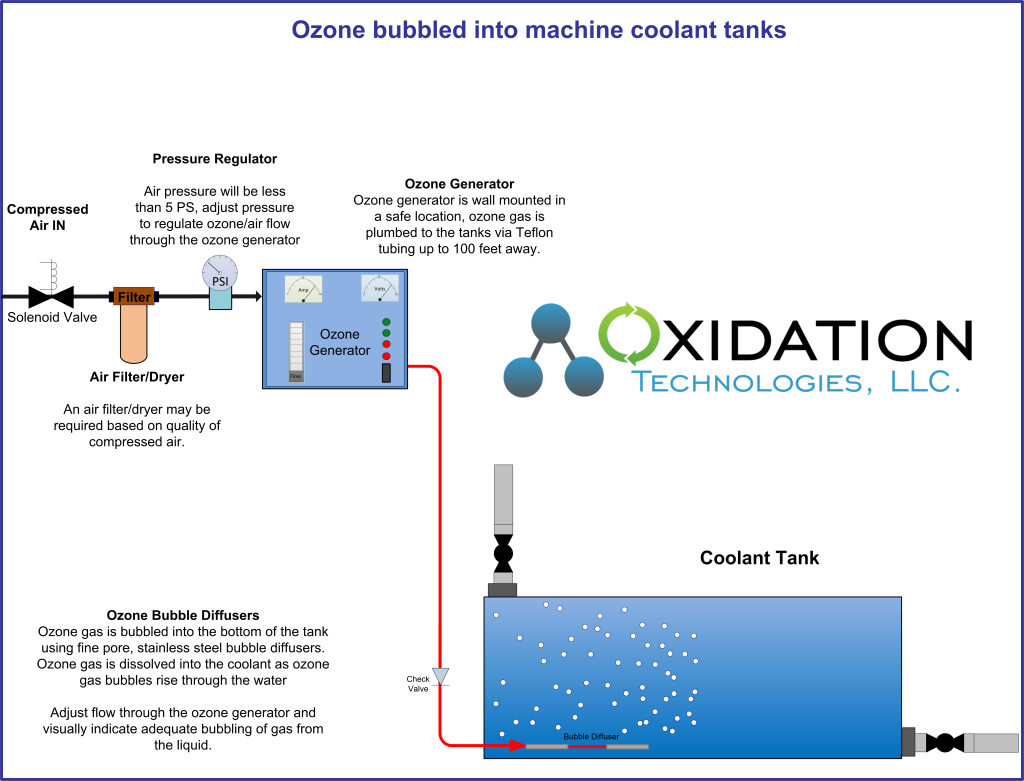
A typical ozone system for coolant tanks includes:
- Compressed Air – Supplied from on-site compressors
- Air Filter/Dryer – Ensures dry, clean air for ozone generation
- Pressure Regulator – Maintains low air pressure (<5 PSI) for diffusion
- Ozone Generator – Produces ozone from oxygen in compressed air
- Ozone Tubing – FEP or stainless steel tubing to safely transport ozone
- Check Valve – Prevents coolant backflow into the generator
- Diffusers – Create fine bubbles to dissolve ozone efficiently into the coolant
Operators can visually monitor air bubbles in the tank to confirm proper operation. Multiple diffusers may be required for larger tanks.
Equipment Sizing Guidelines
Ozone system requirements vary by tank size. Below are general recommendations:
500 gallons and smaller
500–2,000 gallons
2,000–5,000 gallons
Use one diffuser for every 12 square feet of tank surface area. For multiple diffusers, connect using Tee fittings.
The Bottom Line
By incorporating ozone into machine coolant systems, manufacturers can:
- Eliminate odors and slime
- Extend coolant service life
- Reduce maintenance downtime
- Lower operating and disposal costs
Ozone is a safe, effective, and sustainable solution for keeping coolant tanks clean and efficient.
You can find more information here: https://www.oxidationtech.com/applications/water-treatment/machine-coolant-tanks.html