
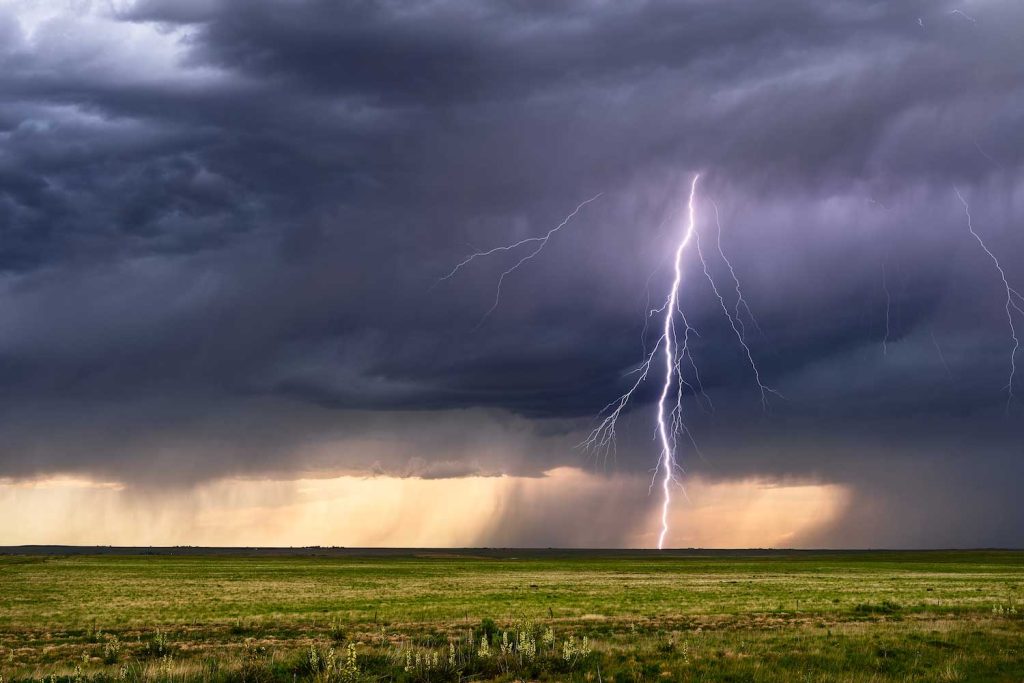
For many, the “fresh” smell after a spring thunderstorm is a cherished experience. This invigorating scent, often associated with ozone, has long been thought to result from lightning creating ozone directly in the atmosphere. While this remains true, groundbreaking research shows that thunderstorms bring ozone to ground level in another surprising way—by transporting it from the stratosphere to the troposphere, without the need for lightning at all.
This discovery not only changes how we understand thunderstorms but also has significant implications for climate change and air quality.
Not Just Rain: Thunderstorms Pour Down Ozone Too
A study published in Geophysical Research Letters by a team led by NCAR scientist Laura Pan provides compelling evidence that large thunderstorms can move substantial amounts of ozone from the stratosphere into the troposphere, the lowest layer of the atmosphere. This finding challenges existing climate models, which have traditionally overlooked thunderstorms as a significant mechanism for ozone transport.
The research builds on data from the 2012 Deep Convective Clouds and Chemistry Experiment (DC3) in the Great Plains, where instruments aboard research aircraft detected a striking phenomenon during a severe storm over Kansas. A “curtain” of ozone-rich air descended from the stratosphere into the troposphere, resembling a “ram’s horn” on a graph. This ozone-laden air extended approximately 4 kilometers (2.5 miles) into the troposphere, with ozone levels far exceeding those found in nearby undisturbed areas.
What This Means for Climate and Air Quality
Tropospheric ozone is a powerful greenhouse gas and pollutant, affecting both the environment and human health. Its presence at ground level contributes to smog formation and respiratory problems, making its regulation a priority for air quality management.
This study suggests that thunderstorms play a more significant role in ozone distribution than previously understood. Since hundreds of such storms occur over the United States each summer, their collective impact on tropospheric ozone levels could be considerable.
As storm patterns evolve with climate change, understanding this process becomes even more critical. The findings underscore the need to update global chemistry-climate models to account for the role of thunderstorms in ozone transport.
A New Perspective on Thunderstorms
For those of us who enjoy the aftermath of a good thunderstorm, this research provides a deeper appreciation for the intricate workings of our atmosphere. Thunderstorms are not just dramatic displays of nature’s power; they are also key players in the Earth’s chemical and climatic processes.
This newfound knowledge is a step toward better understanding the interplay between natural weather events, pollution, and climate change. It’s a reminder that even familiar phenomena like thunderstorms hold secrets that can reshape our view of the world and our role in protecting it.
So, the next time you breathe in that “fresh” post-storm air, take a moment to marvel at the complex chemistry at play—and the vital role thunderstorms have in shaping the environment we call home.