
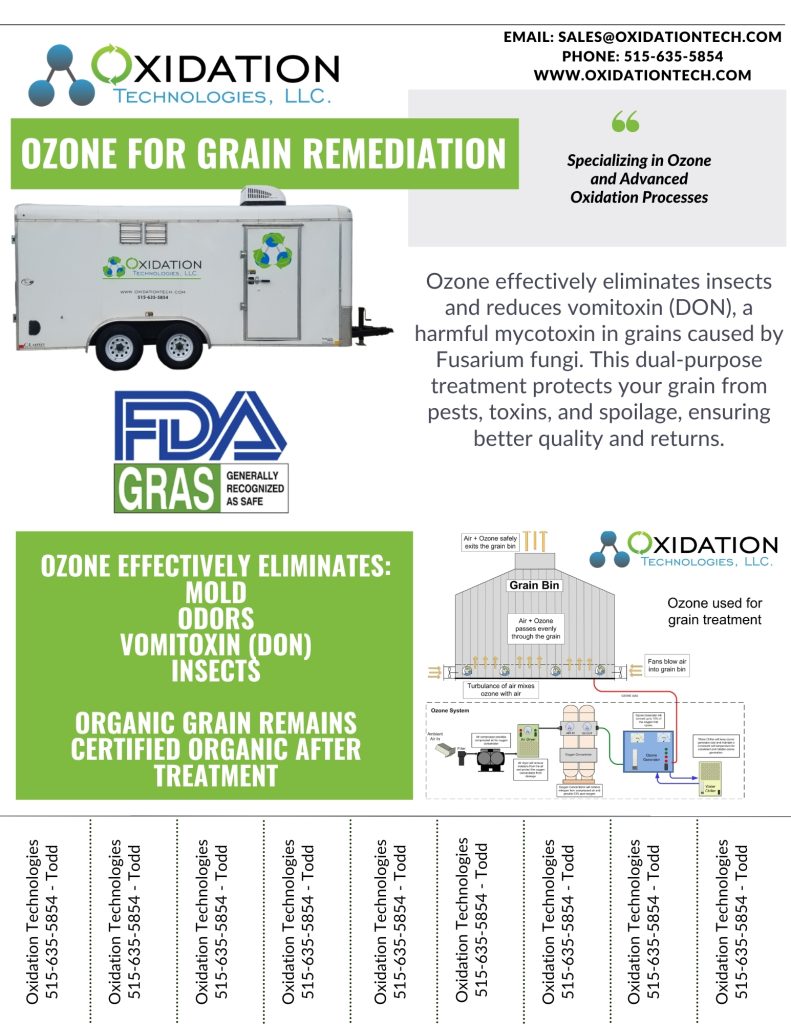
When the harvest is brought in, the battle to protect it begins. Stored grains like cereals, maize, rice, and other dried plant products face the relentless threat of insects that can cause significant damage. Conventional insecticides have long been the go-to solution, but the rise of resistant pests and growing concerns over chemical use have spurred the search for alternatives. Enter ozone (O₃): a highly oxidizing gas that offers a promising, eco-friendly method to control pests in stored grain.
The Problem: Pests in Stored Grain
- In Industrialized Nations: Up to 9% of stored grain can be lost to pests.
- In Developing Nations: Losses may reach 20% or even total devastation in some cases.
Beyond economic losses, infested grain can lead to health risks when consumed. Conventional insecticides, while effective to some extent, struggle with limitations:
- Insects inside grain kernels are shielded from chemical sprays.
- Long-lasting effectiveness is required to target emerging pests.
- Resistance to active ingredients and regulatory restrictions further limit options.
Ozone as a Natural Alternative
Scientists from Aarhus University, in collaboration with Crop-Protector KS, have been exploring the use of ozone as a sustainable pest control solution. Ozone, already used for disinfection in other industries, offers key advantages:
- High Oxidizing Power: Ozone effectively targets microorganisms and pests.
- Eco-Friendly Breakdown: Ozone quickly converts back to oxygen (O₂), leaving no harmful residues.
- On-Site Production: Ozone can be generated electrically in grain silos, reducing logistical challenges.
Research Findings: Ozone’s Effectiveness Against Pests
The study investigated ozone’s ability to target pests in various stages of development, including those hidden inside grain kernels. Here’s what the research revealed:
- Freely Exposed Insects: A dose of 35 ppm for six days was enough to eliminate pests living among the grain.
- Internal Stages (Eggs, Larvae, Pupae): Higher concentrations (135 ppm for eight days) were required to kill insects concealed within kernels.
- Sensitivity Differences: Adult insects were generally more susceptible, dying after 25 ppm for five days.
The findings emphasize the importance of tailoring ozone treatments to specific pest types and stages for maximum effectiveness.
A Step Toward Sustainable Grain Storage
This research highlights the potential of ozone to replace chemical insecticides in stored grain management. By eliminating pests without leaving harmful residues, ozone aligns with global efforts to reduce chemical dependency in agriculture.
The project, supported by the Danish AgriFish Agency, Crop-Protector KS, and Aarhus University, marks a significant advancement in sustainable pest control solutions. As the technology evolves, ozone treatments could become a standard practice, ensuring safer, more sustainable grain storage worldwide.