Day 2 of the IOA Show!
The IOA (International Ozone Association) brings together experts from around the U.S. and the world each year to share knowledge and advancements in ozone technology.
Today is from John’s POV:
Today was nanobubble day. I attended a session dedicated to “Intro to Nanobubbles”, followed by a second session on nanobubbles. This second session was divided into three different presenters. Between sessions, I joined an interesting conversation between Angelo Mazzei, a representative from Xylem, and a water treatment plant engineer.
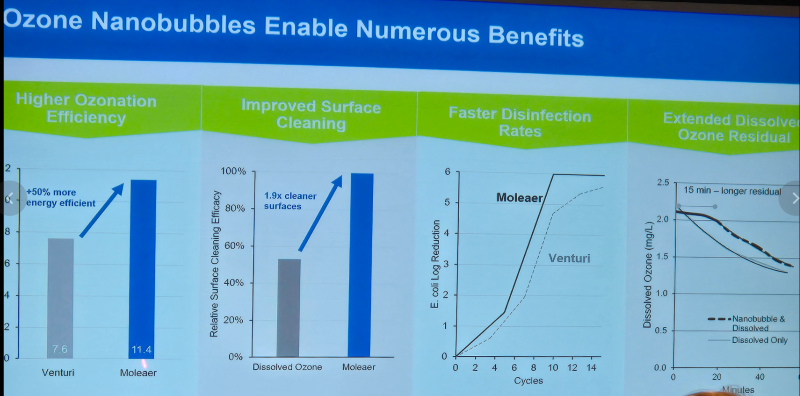
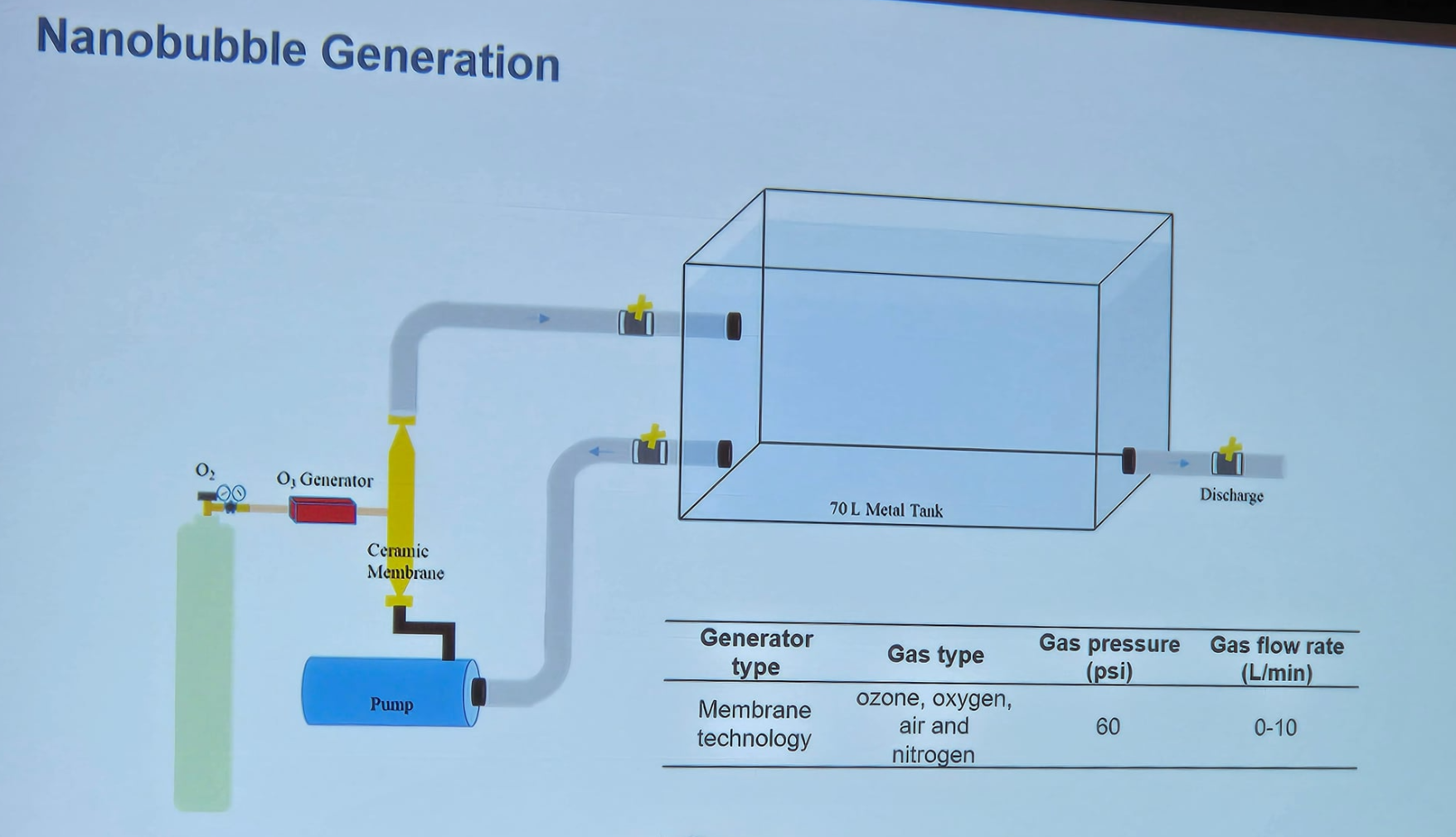
The introductory session was led by Sohail Akher, who is the Vice President of Research and Development for Moleaer, a nanobubble technology company. He gave a very enthusiastic presentation with cool graphics to explain the wonders of nanobubbles and expounded on the growing list of applications where nanobubbles make everything better. I learned that nanobubbles behave both as a gas and as a particle and serve as a functional additive to water.
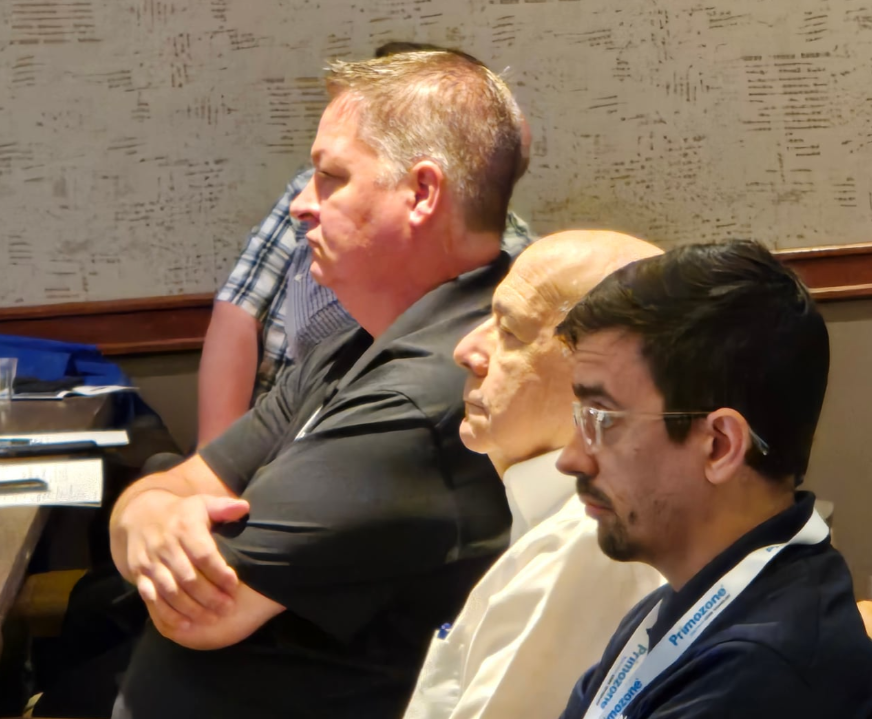
It was clear from my conversation after this session with industry leaders that they are not entirely convinced. The general consensus is that nanobubbles are a fascinating new world to explore, but it remains shrouded in a multitude of questions and apparent contradictions.
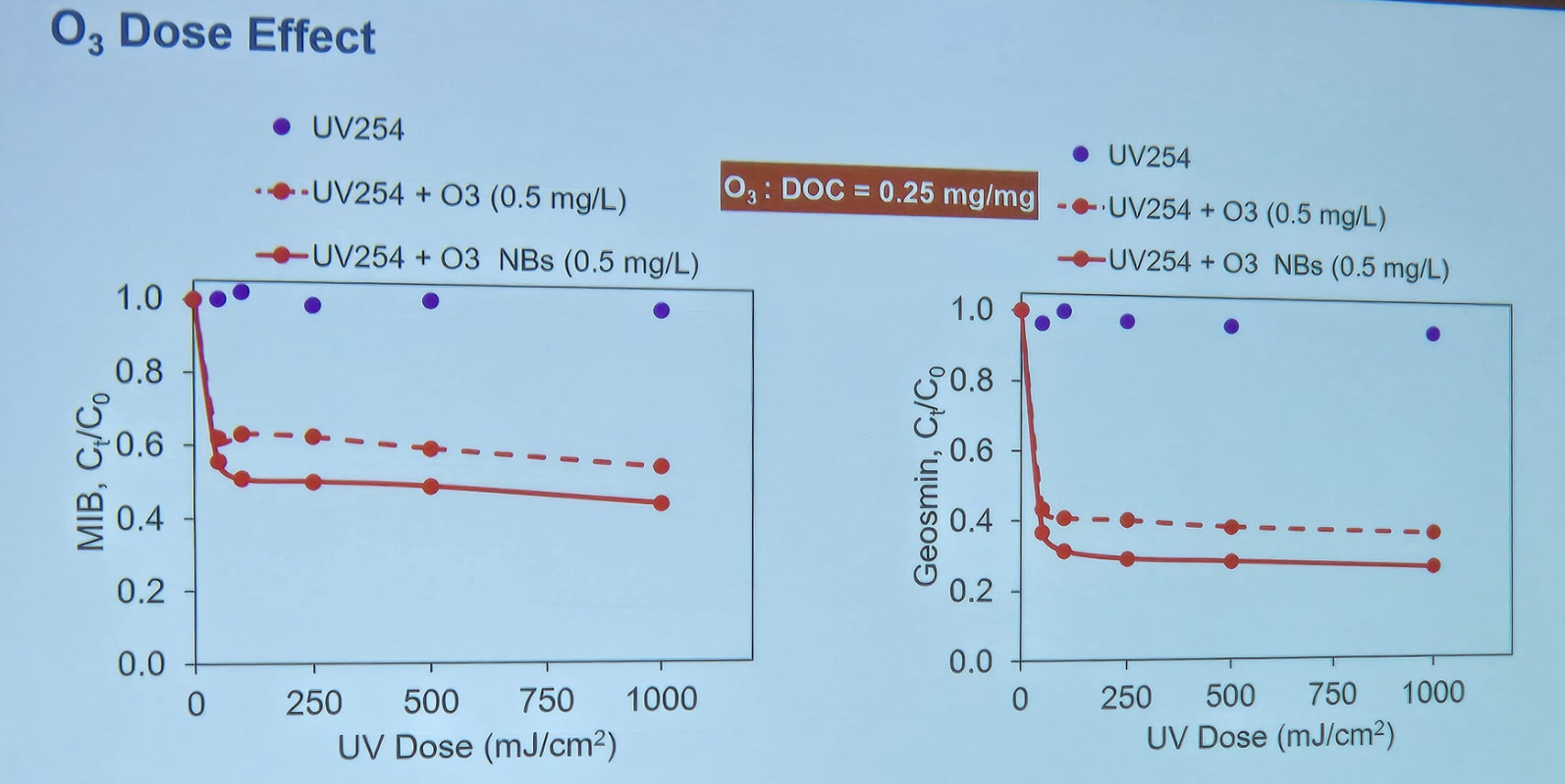
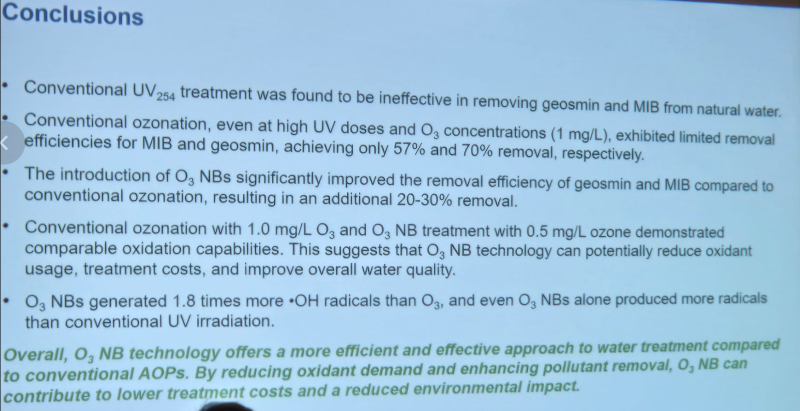
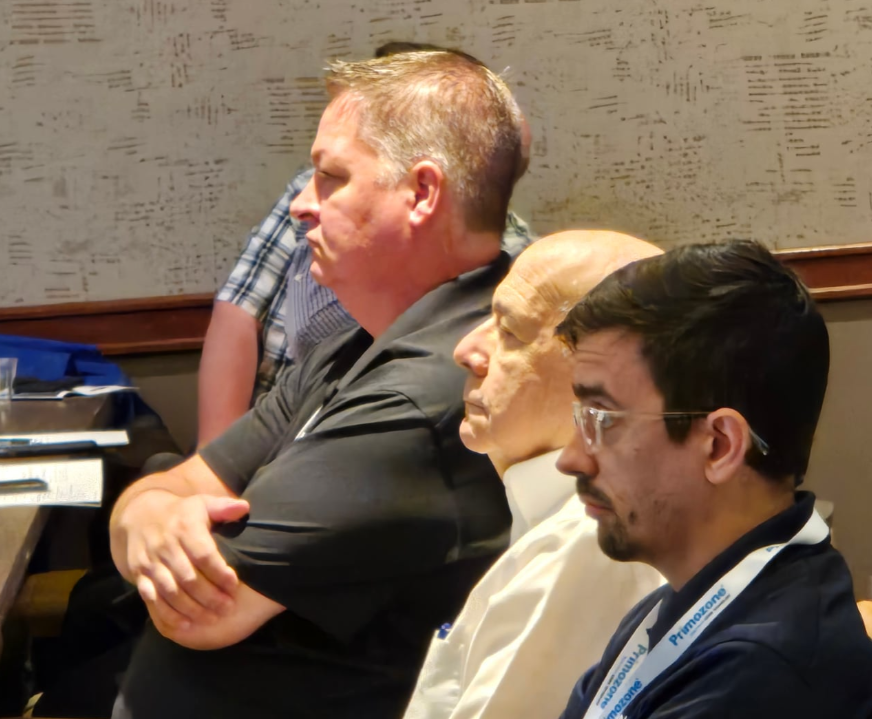
Chris and Josh joined Angelo Mazzei in listening to the Moleaer presentation on nanobubbles. The next session began with a presentation by Christian Ference, also from Moleaer, reviewing the positive impact that their nanobubble equipment has had on Lake Elsinore in Southern California. This was followed by a presentation of research conducted by Meryem Soyluoglu, a researcher from Hazen and Sawyer, an environmental engineering firm. She presented scientific research supporting the claim that nanobubbles enhance the removal of the odor-causing geosmin from water. Geosmin is a particularly difficult odor issue that varies greatly with the seasons and, at very high levels, can be difficult to remove even with ozone.
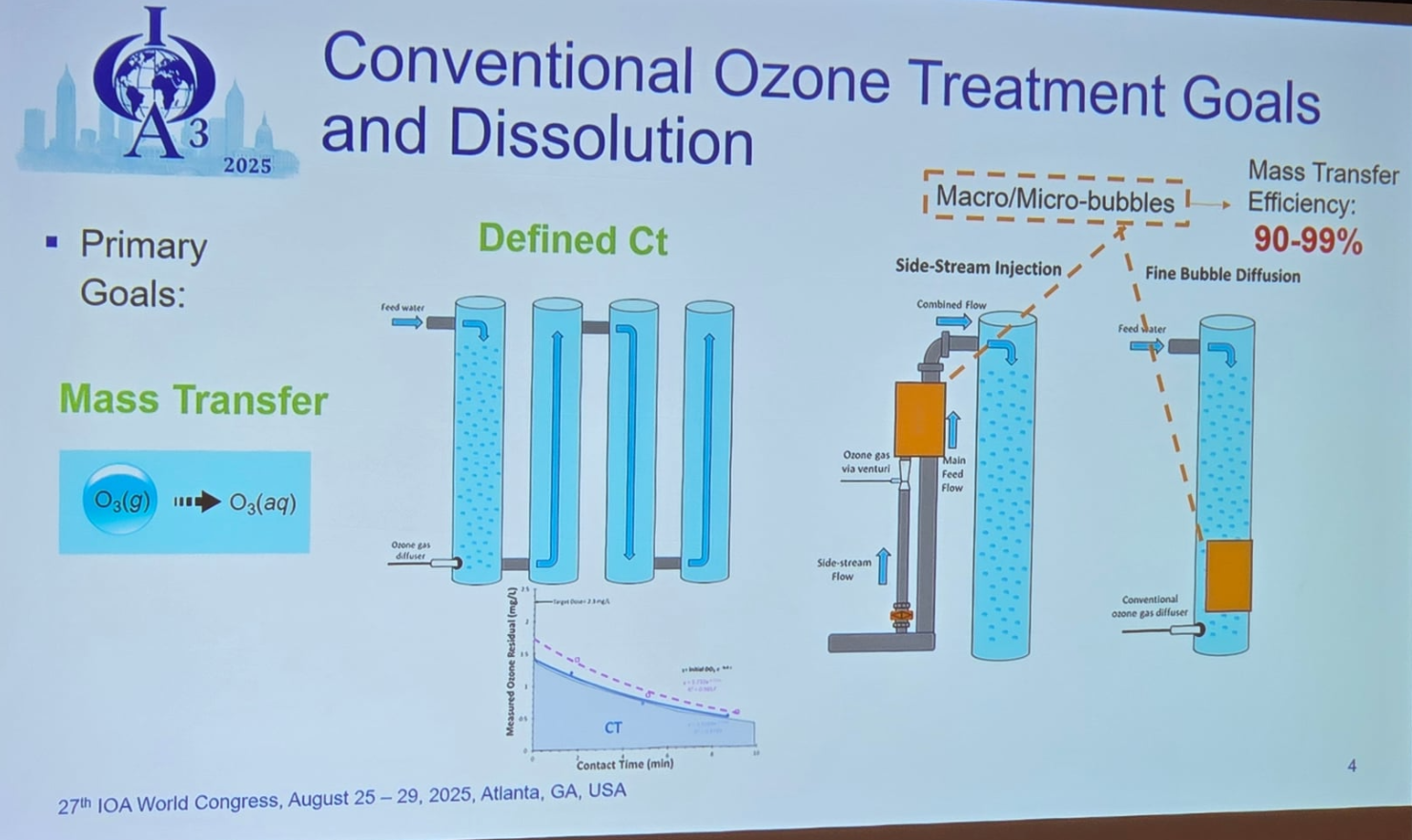
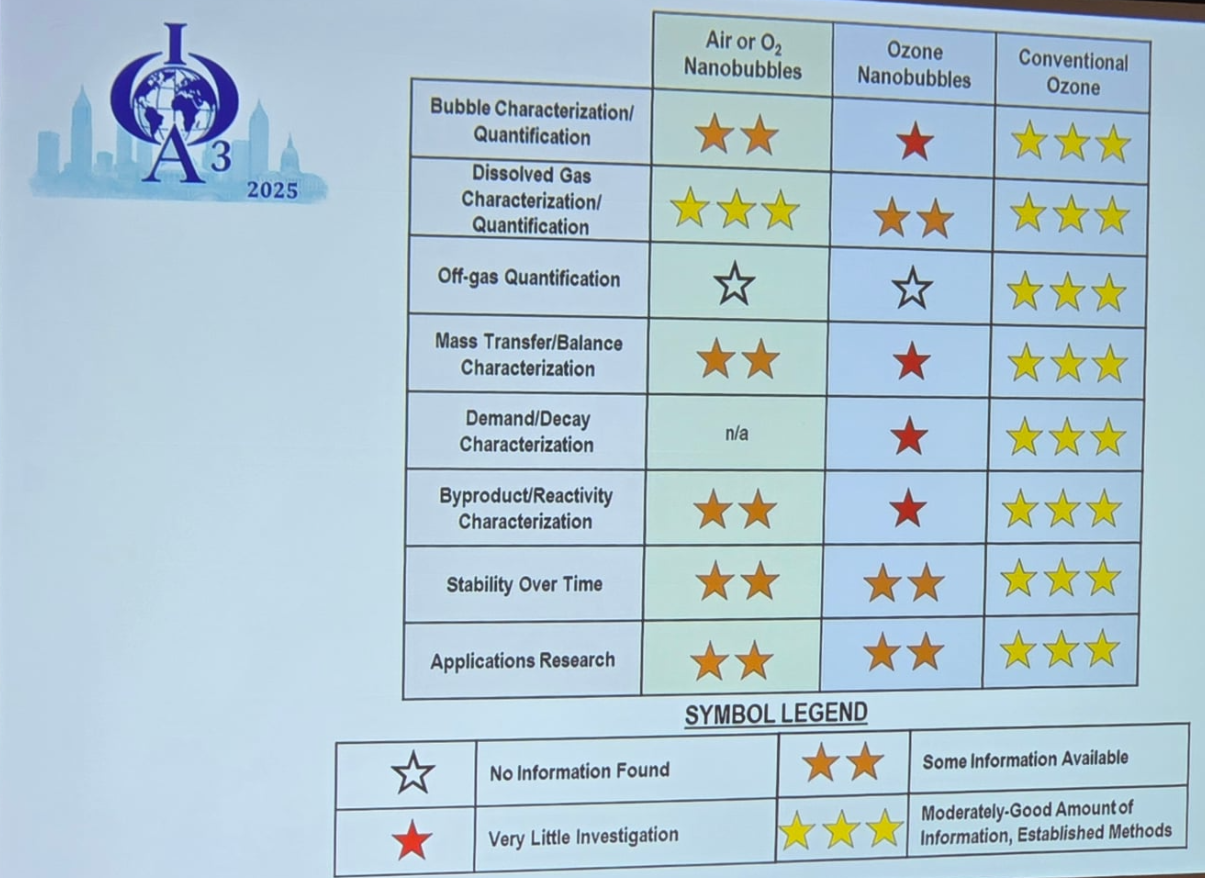
The final presentation, by Ariel Atkinson from the Southern Nevada Water Authority, provided input from an expert in the water treatment industry. She wasted no time explaining that the primary goal is to dissolve ozone in water, and that conventional methods already achieve a mass transfer efficiency of 90–99%. She then provided a graphic to help gain perspective on what we actually know about applications for nanobubbles compared to conventional ozone methods. Her conclusion was that the benefits of nanobubbles for conventional ozonation applications are questionable because the goals are largely already achieved. Applications that may benefit from the unique qualities of nanobubbles appear to be in areas such as lake remediation or applications with specific, unique requirements.
There is still very little concrete data demonstrating the creation of nanobubbles using a venturi. Ariel has found the methods to determine the presence and quantity of nanobubbles to be challenging and not 100% clear. I did learn that a couple of freeze/thaw cycles on a water sample with nanobubbles will clear them out and help determine if the green laser is detecting nanobubbles or some other nanoparticles in the water. I look forward to adding this technique to my study of nanobubbles produced by our equipment.