Recent reports of Cyclospora infections across the United States have renewed interest in food safety and produce sanitation. This article explores what Cyclospora is, how it spreads, and what research says about the use of ozonated water as an additional produce washing step.
Cyclosporiasis cases in the U.S.
Infections contracted in the U.S. since May 1, according to CDC and state data
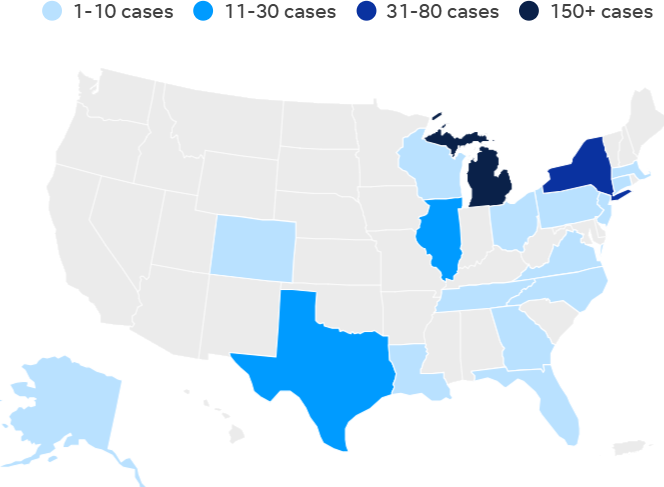
According to a July 2, 2026, USA Today report, cases of cyclosporiasis have been reported across multiple U.S. states.
A surge of cyclosporiasis, a parasite‑caused diarrheal illness, has affected over 17 U.S. states since May, with a notable spike in Michigan, prompting health officials to urge strict food‑safety precautions ahead of the Fourth of July (Dorell, 2026, para. 1).
What is cyclosporiasis? What are the symptoms?
Cyclosporiasis is a parasitic infection that causes unpleasant gastrointestinal symptoms often associated with food poisoning, such as diarrhea, nausea and vomiting. It is caused by the parasite Cyclospora cayetanensis, also known simply as Cyclospora, and is usually contracted through contaminated food (Dorell, 2026, para. 6).
How to avoid catching the parasite
Because Cyclospora is commonly associated with contaminated fresh produce, proper food handling and produce washing are important steps in reducing risk. This parasite enters your body through the consumption of small particles of feces. It is crucial to protect you and your family’s home from this parasite.
Using ozone in water reduces the ability of the parasite to spread infection. Ozone damages the parasite and prevents it from reaching maturity, where infectious spores would further spread.
Ozonated water may reduce the ability of Cyclospora to mature and become infectious. The parasite has a protective outer shell that can make it resistant to some common disinfectants and washing methods. Aqueous ozone may help reduce the parasite’s ability to develop into its infectious form (National Library of Medicine).

Equipment for Home
Wash Produce with the Power of Ozone
Fresh fruits and vegetables can sometimes carry unwanted microorganisms, including bacteria, viruses, and parasites that may cause foodborne illness. The OZO-Pod makes it easy to create ozonated water at home, providing a chemical-free way to wash produce before eating or cooking. Ozone is recognized by the FDA and USDA as an antimicrobial agent for food processing and quickly reverts back to oxygen, leaving no chemical residue behind.
Simply place the OZO-Pod in up to five gallons of water, and within minutes it produces ozonated water that can be used to rinse fruits, vegetables, kitchen utensils, cutting boards, and other food contact surfaces. It’s a convenient solution for anyone looking to improve food safety and reduce exposure to harmful microorganisms as part of their daily routine.
While no produce washing method can guarantee complete removal of every contaminant, using ozonated water is an effective additional step to help improve produce sanitation when combined with proper food handling practices.
Add an Extra Layer of Produce Protection
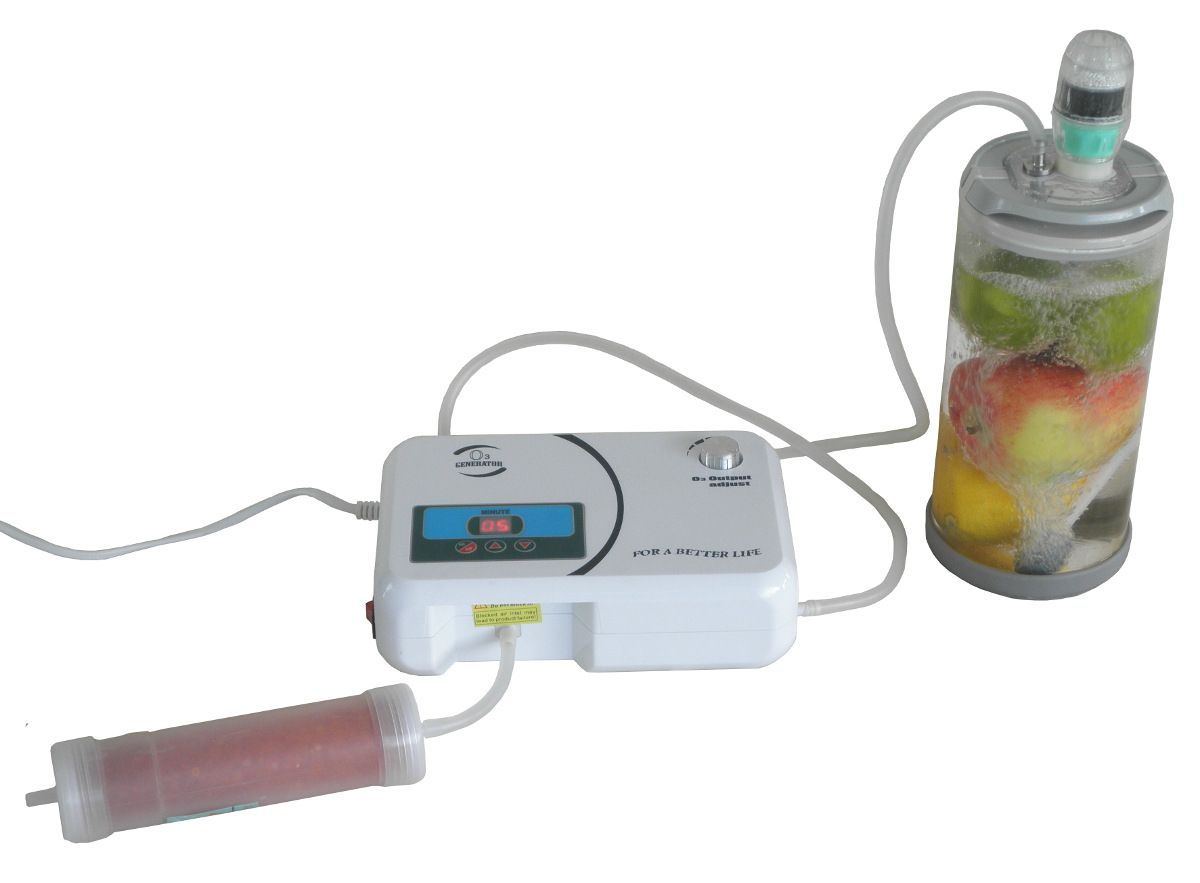
When foodborne parasites and other contaminants are a concern, the OZX-300 Ozone Generator offers a simple way to create ozonated water for washing fruits and vegetables. Producing up to 500 mg/hr of ozone, the OZX-300 includes everything needed to bubble ozone into water for produce washing and other household applications.
Ozonated water is commonly used to help reduce bacteria and other microorganisms on fresh produce without leaving chemical residues behind. While no washing method can guarantee complete removal of every contaminant, the OZX-300 provides an easy, chemical-free way to enhance your produce cleaning routine.
Use the OZX-300 to wash fruit, vegetables, or water in a glass container or the Ozone Chamber we provide. With the internal air pump and timer, the OZX-300 is a useful tool for enhancing produce washing and helping reduce bacteria and other microorganisms on fruits and vegetables.
Final Thoughts
While proper food handling remains the first line of defense against Cyclospora and other foodborne contaminants, research suggests that ozonated water can serve as an additional sanitation step for fresh produce. Products such as the OZO-Pod and OZX-300 make it easy to incorporate ozone technology into your produce washing routine at home.
Supporting Articles
Baumann AA, Myers AK, Khajeh-Kazerooni N, Rosenthal B, Jenkins M, O’Brien C, Fuller L, Morgan M, Lenaghan SC. Aqueous Ozone Exposure Inhibits Sporulation in the Cyclospora cayetanensis Surrogate Eimeria acervulina. J Food Prot. 2024 May;87(5):100260. doi: 10.1016/j.jfp.2024.100260. Epub 2024 Mar 8. PMID: 38460785. https://pubmed.ncbi.nlm.nih.gov/38460785
Baumann, Aaron A., et al. “Aqueous Ozone Exposure Inhibits Sporulation in the Cyclospora cayetanensis Surrogate Eimeria acervulina.” Journal of Food Protection, vol. 87, no. 5, 2024, article 100260. https://doi.org/10.1016/j.jfp.2024.100260