At Oxidation Technologies, we have witnessed how integrating ozone into wet scrubber systems can shift the paradigm for industrial air treatment. If you’re looking for ways to boost oxidation, reduce chemical costs, and handle challenging contaminants—then our solution detailed on this page is for you: Ozone Use in Wet Scrubbers
What Is a Wet Scrubber — and What Happens When You Add Ozone?
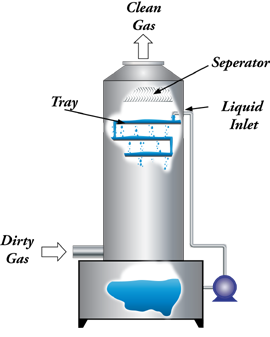
A wet scrubber is an established mechanism for removing airborne pollutants and odors by dissolving them into a liquid stream. As explained on our application page:
“In a wet scrubber, water is sprayed or misted into the air stream to mix with the polluted air. The soluble pollutants in the air will dissolve into the water and be discharged safely in a wastewater stream where they can be safely removed or converted to safe compounds.”
When you introduce ozone into this process, you unlock several advantages:
- The powerful oxidizing nature of ozone enables the breakdown of VOCs, reduced sulfur compounds (e.g., H₂S, mercaptans), odors, and other difficult contaminants.
- Ozone either dissolves into the scrubbing liquid or reacts in the air/gas phase, offering flexibility in system design.
- After use, ozone naturally decomposes into oxygen — meaning minimal residuals and low secondary waste.
Why Choose Ozone for Wet Scrubber Enhancement?
Here’s a breakdown of the key benefits and how they translate into operational and environmental value:
| Benefit | How it Plays Out in the Field |
|---|
| Powerful oxidizer | Ozone attacks compounds traditional scrubbers may struggle with — such as tough VOCs or offensive odors. |
| On-site generation = no chemical storage | Instead of handling large volumes of sodium hypochlorite, hydrogen peroxide, or chlorine dioxide, ozone can be generated on demand. |
| Lower operating cost & simplified waste stream | Fewer ongoing chemical purchases, fewer byproducts, and simpler disposal. |
| Enhanced scrubber performance | Ozone can help keep the scrubber internals clean (reducing biofouling / slime formation) and improve the absorbent’s effectiveness. |
| Effective for difficult contaminants | For exhaust streams with a mix of VOCs, odorous sulfur compounds, ammonia, or other hard-to-treat gases, ozone provides an additional mechanism of removal. |
How the Process Works – Step by Step
- Ozone Generation – On-site using an ozone generator, typically sized to the specific exhaust stream and contaminant load.
- Contact & Reaction – Ozone is injected and either:
- dissolves into the scrubbing liquid and reacts with contaminants, or
- mixes with the gas stream upstream of the liquid and oxidizes contaminants before absorption.
- Contaminant Breakdown – Target compounds such as H₂S, mercaptans, ammonia, VOCs are oxidized to less harmful (or more water-soluble) forms.
- Clean Air Discharge – The treated air exits the scrubber with significantly reduced contaminant levels.
- Residual Ozone Decomposition – Any surplus ozone safely reverts to oxygen, minimizing environmental impact.
Typical Applications Where Ozone-Enhanced Wet Scrubbers Excel
- Wastewater treatment facilities where H₂S and odorous sulfur compounds are present.
- Industrial exhaust streams with mixed contaminant loads (e.g., rendering plants, organic waste handling).
- Composting operations, landfill gas treatment, and leachate off-gassing systems.
- VOC treatment scrubbers – for example ethanol plants or chemical processing where VOC removal is required.
How Ozone-Enhanced Scrubbing Compares to Traditional Chemical Scrubbing
Traditional chemical scrubbers rely on dosing oxidants or absorbents (such as hypochlorite, hydrogen peroxide, or automated lime/alkali dosing) and have limitations. In contrast, ozone-enhanced systems bring these advantages:
- No chemical storage or handling risks — ozone is generated in situ.
- Reduced and simpler residual waste streams — ozone decays to oxygen rather than leaving hazardous by-products.
- Higher oxidation potential — ozone’s strong oxidizing capability enables it to tackle compounds more aggressively.
- Potentially improved down-time / maintenance profile — less fouling and buildup inside the scrubber.

Leading References and Case Studies
Supporting data for ozone use in wet scrubbers exists in credible reports and peer-reviewed research:
- A report by the South Coast Air Quality Management District lists ozone injection upstream of a scrubber as a commercially-available Best Available Retrofit Control Technology for NOₓ control — emphasizing integration with existing scrubbers, low-temperature operation, and ammoniafree process. Oxidation Technologies
- Research titled “Marine Emission Pollution Abatement Using Ozone Oxidation by a Wet Scrubbing Method” shows simultaneous removal of NOₓ and SO₂ via ozone oxidation + alkaline counter-current packed scrubber — with >93% NOₓ and near-100% SO₂ removal in bench-scale tests. Oxidation Technologies
These references substantiate the technical and operational viability of ozone-enhanced wet scrubber systems.
Getting Started: How We Can Help
At Oxidation Technologies, we’re not just equipment vendors—we’re system integrators with deep ozone expertise. We offer:
- Application design and feasibility studies tailored to your contaminant stream
- Ozone generator sizing and selection
- Retrofit solutions for existing wet scrubbers to upgrade performance
- Turn-key ozone-scrubber installations and ongoing service/maintenance support Oxidation Technologies
If you’re ready to explore how ozone can elevate your wet scrubbing system, let’s connect. Explore the full details on our Ozone Use in Wet Scrubbers page and get in touch for a tailored review.
Final Thoughts
Integrating ozone into wet scrubbers is more than an upgrade—it’s a transformation. You unlock stronger oxidation power, simplify chemical logistics, handle tougher contaminants, and improve system performance. Whether you’re dealing with H₂S, VOCs, odors, or complex gas streams, this approach is both technically sound and operationally smart.
Visit our page again to dive deeper: Ozone Use in Wet Scrubbers