
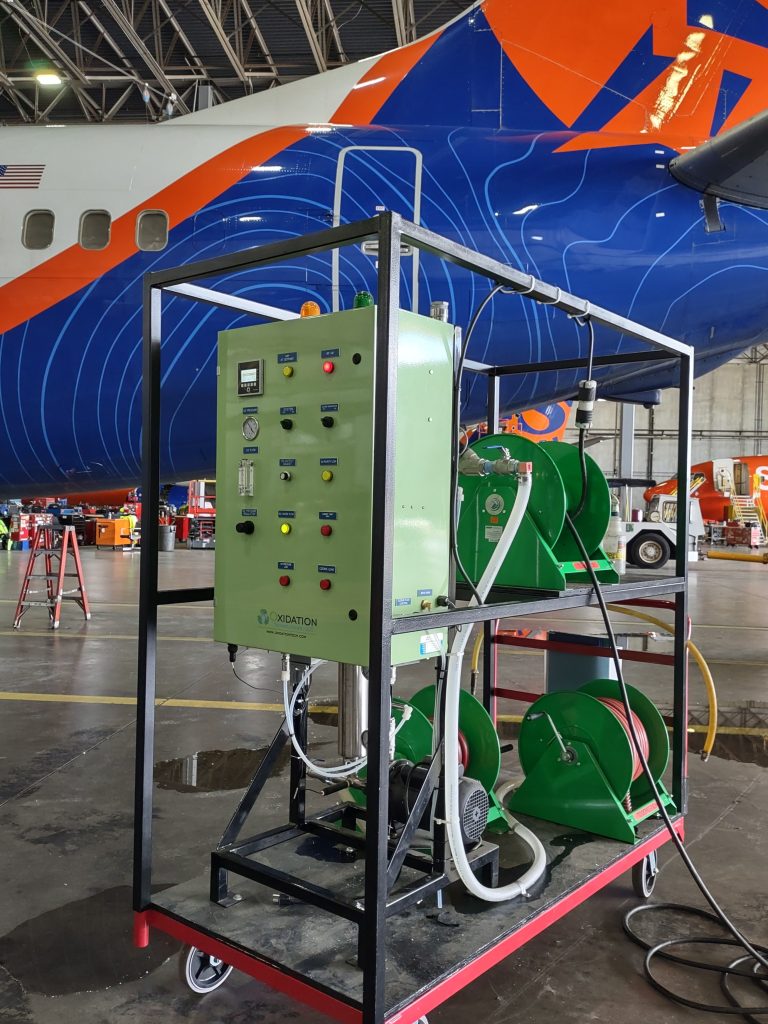
In the aviation industry, ensuring the safety and quality of onboard potable water is paramount. Traditional chemical disinfection methods, such as chlorine-based treatments, often involve time-consuming processes, extensive rinsing, and the generation of hazardous wastewater. Recognizing these challenges, a major U.S. airline sought a more efficient, sustainable, and compliant solution to maintain water quality across its fleet.
The Challenge: Enhancing Water Disinfection Efficiency
Commercial aircraft rely on potable water storage tanks to supply water for drinking, food preparation, handwashing, and toilet flushing. Maintaining the cleanliness of these tanks is critical to ensure passenger and crew safety and to comply with the U.S. Environmental Protection Agency’s Aircraft Drinking Water Rule (ADWR). Traditional disinfection methods posed several drawbacks:
- Time-Consuming Processes: Chemical treatments required extensive downtime for application and rinsing.
- Hazardous Wastewater: The use of chemicals led to the generation of hazardous waste that needed careful disposal.
- Operational Inefficiencies: The labor-intensive nature of chemical disinfection increased operational costs and reduced aircraft availability.
The Solution: A Custom Trailer-Based Ozone Disinfection System
To address these challenges, Oxidation Technologies engineered a self-contained, mobile ozone water disinfection system integrated into a custom-designed trailer. This innovative solution featured:
- On-Site Ozone Generation: A corona discharge ozone generator produced ozone gas on-site, eliminating the need for chemical storage and handling.
- Efficient Ozone Injection: The system utilized a venturi injector to dissolve ozone into water efficiently, creating ozonated water ready for disinfection tasks.
- Mobile and Self-Sufficient Design: Equipped with a gas generator, water holding tank, and ozone system, the trailer enabled mobile, self-sufficient disinfection directly on the tarmac.
The Impact: Improved Safety and Operational Efficiency
The implementation of the ozone disinfection system brought significant benefits:
- Enhanced Safety: Ozone effectively eliminated biofilms and pathogens without leaving harmful residues, ensuring compliance with ADWR standards.
- Operational Efficiency: The mobile system reduced aircraft downtime by streamlining the disinfection process, allowing for quicker turnaround times.
- Environmental Sustainability: By eliminating the use of hazardous chemicals, the system minimized environmental impact and reduced the need for hazardous waste disposal.
Conclusion
Oxidation Technologies’ custom ozone water disinfection system exemplifies how innovative engineering can address industry-specific challenges. By providing a mobile, efficient, and environmentally friendly solution, the company has set a new standard for aircraft water safety and operational excellence.
For more details on this case study, visit https://www.oxidationtech.com/applications/water-treatment/revolutionizing-aircraft-water-disinfection-with-ozone.html