In the seafood industry, freshness directly impacts flavor, safety, and market value. Traditional ice helps, but it can’t fully stop the microbial activity that causes fish to spoil. That’s why more processors, fish farms, and commercial vessels are turning to ozonated ice — a powerful, natural solution for extending the shelf life of seafood.
What Is Ozonated Ice?
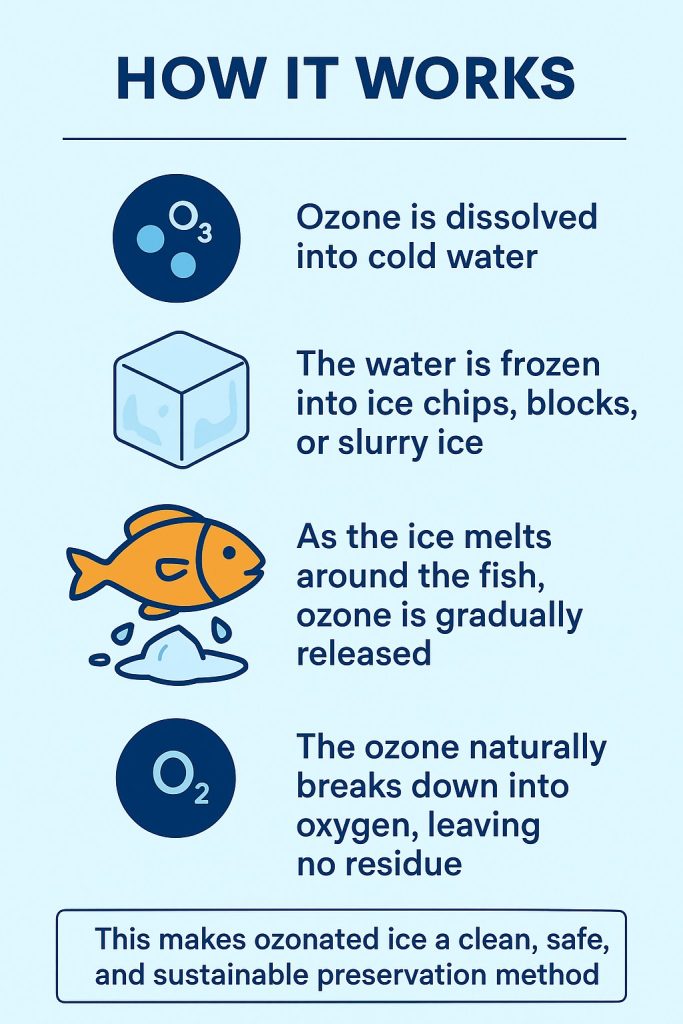
Ozonated ice is created by dissolving ozone gas into water before freezing. As the ice melts, it slowly releases ozone into the meltwater, delivering continuous antimicrobial protection around the fish without chemicals or additives.
This simple difference leads to major improvements in freshness and quality.
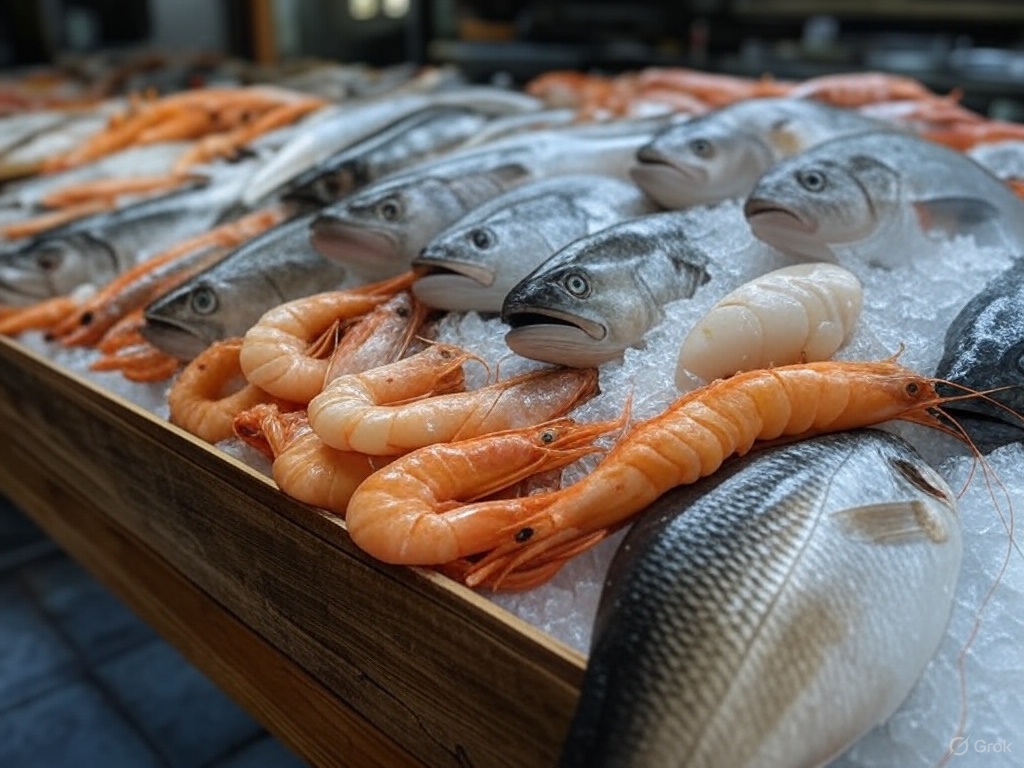
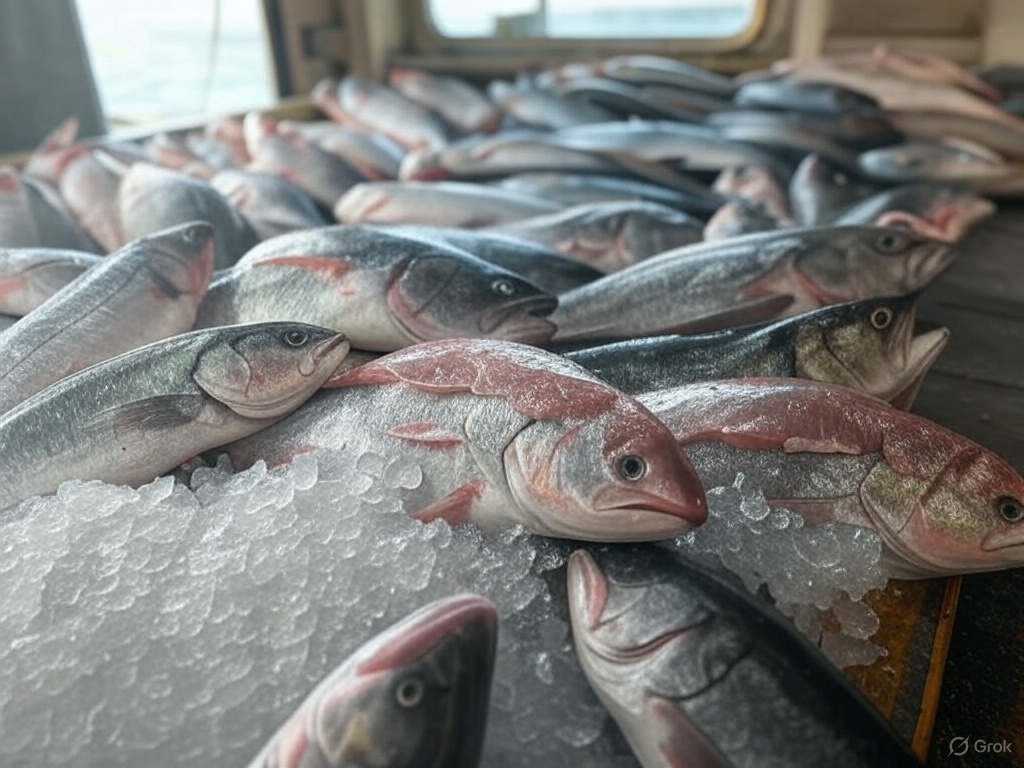
A Proven Technology with Modern Advantages
The benefits of ozonated ice were first documented in 1936, when French studies showed fish stored on ozonated ice stayed fresh 33% longer than fish stored on standard ice.
Today’s ozone technology is more advanced and efficient, making ozonated ice a valuable tool across:
- Fishing vessels
- Aquaculture and fish farms
- Seafood processors
- Transportation and cold-chain systems
Why Use Ozonated Ice?
Longer Shelf Life
Research consistently shows significant improvements:
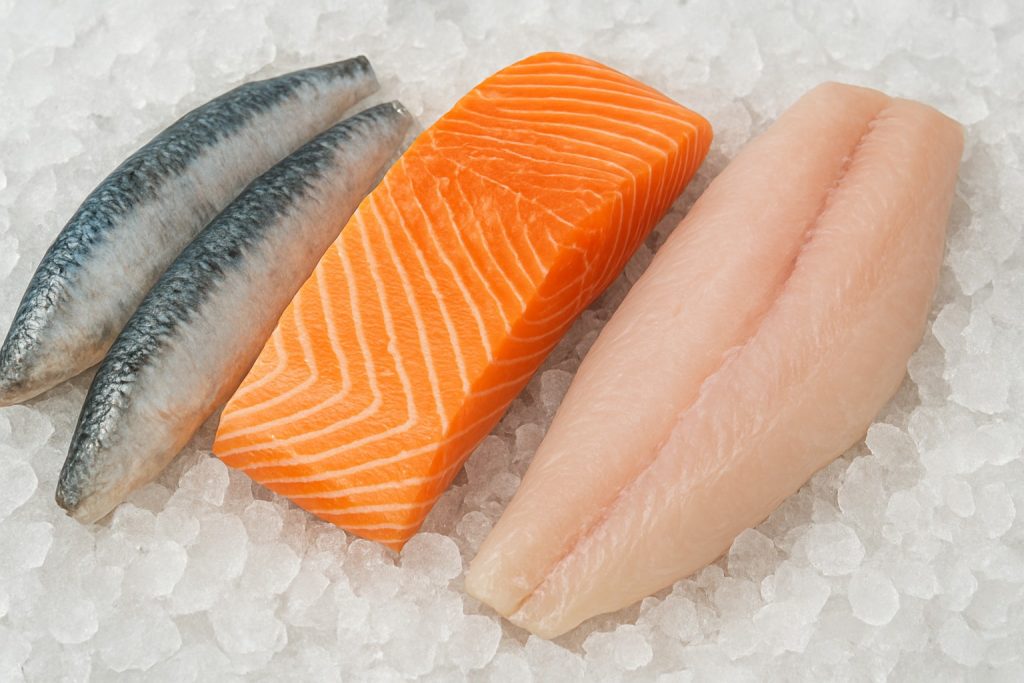
- Sardines: 5 → 8 days
- Salmon: 4 → 6 days
- Catfish fillets: up to 14 days vs. 4–6 with conventional ice
These gains help businesses deliver fresher product while reducing spoilage.
Natural Antimicrobial Protection
As ozonated ice melts, ozone reactivates in the water, reducing surface bacteria and slowing spoilage.
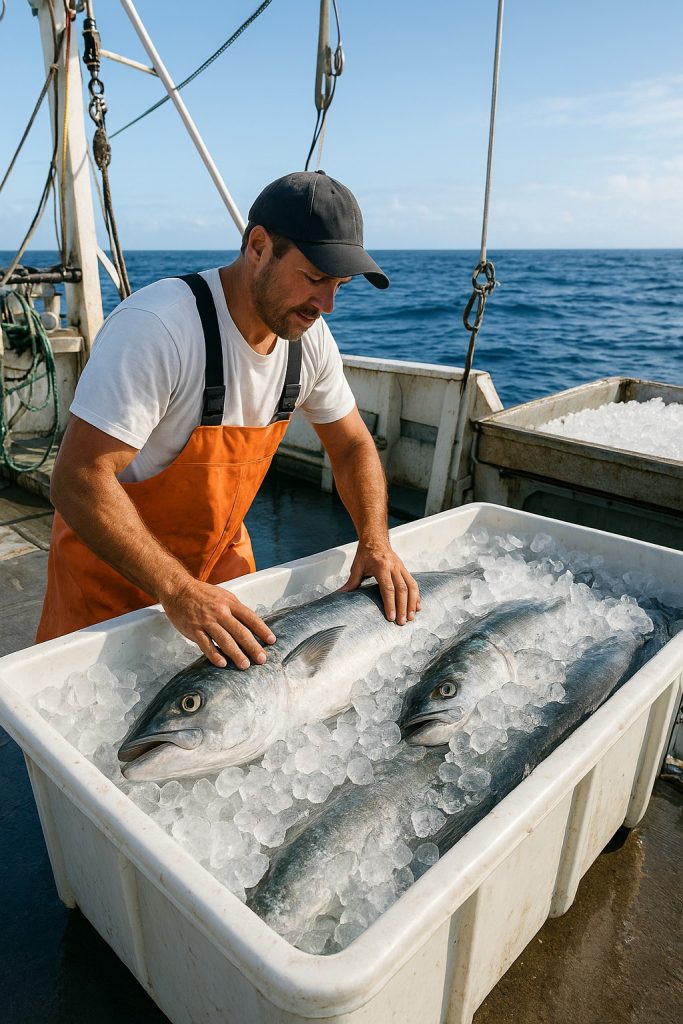
Better Appearance & Texture
Ozonated ice helps fish maintain their natural color, firmness, and freshness — crucial for retailers and buyers who rely on visual quality indicators.
Lower Waste, Higher Profitability
Longer freshness means more product remains marketable, reducing losses and improving efficiency.
Who Benefits Most?
Fishing Vessels
Long trips make freshness a challenge. Ozonated ice keeps early-caught fish at nearly the same quality as the most recent catch.
Processing Plants & Farms
Improved consistency, reduced bacterial load, and longer storage windows streamline operations.
Retailers
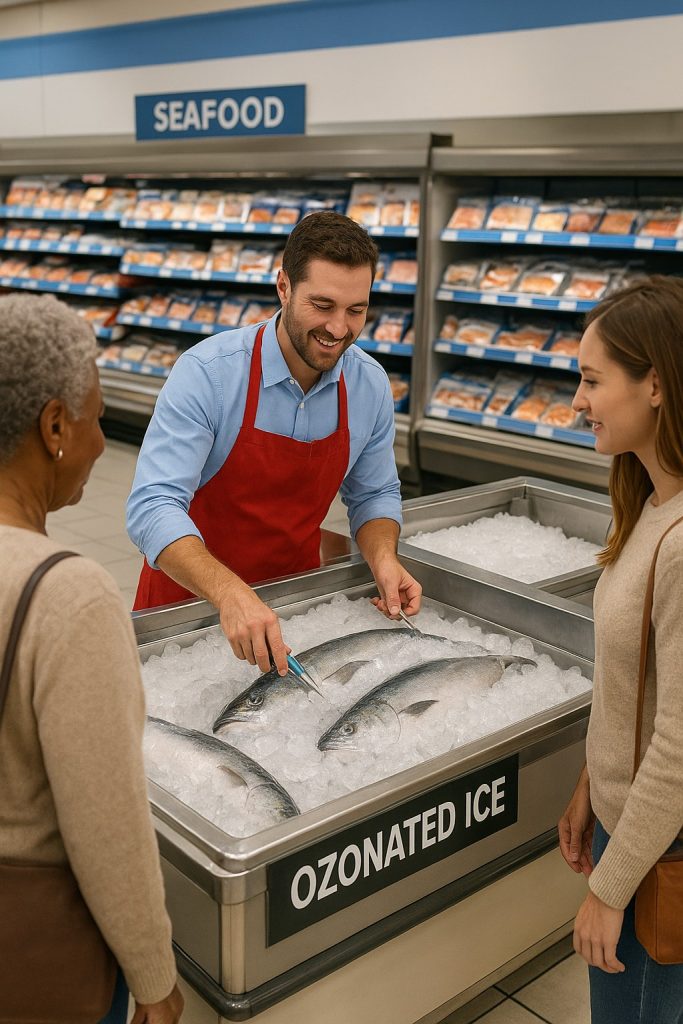
Better-looking, longer-lasting seafood increases display life and reduces waste.
Consumers
They enjoy seafood that stays fresh longer without chemical treatments.
The Takeaway
Ozonated ice is an efficient, natural, and cost-effective solution for preserving seafood quality. It extends shelf life, enhances product appearance, and reduces waste throughout the supply chain.
If your operation handles fish — from harvest to processing to retail — ozonated ice is a smart upgrade that delivers measurable results.