
CDU-15 Ozone Destruct Device
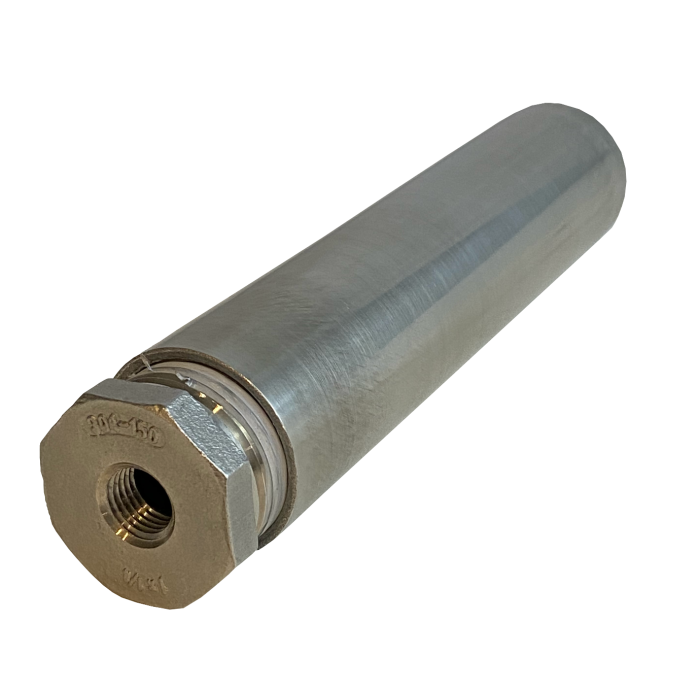
CDU-15 Ozone Destruct Device
Ozone Catalyst Destruct Device will safely destroy ozone in gas flows.
- 15 LPM gas flow-rate, dry ozone gas only
- SKU
- CDU-15
Related Products


Description / CDU-15 Ozone Destruct Device
True Catalytic Ozone Destruct Device will safely catalyze ozone to oxygen reliably with no consumables.
The CDU Ozone Destruct Device uses a simple design with all stainless steel materials and carulite-200 catalyst in the ozone gas stream. This will provide excellent material compatibility and longevity.
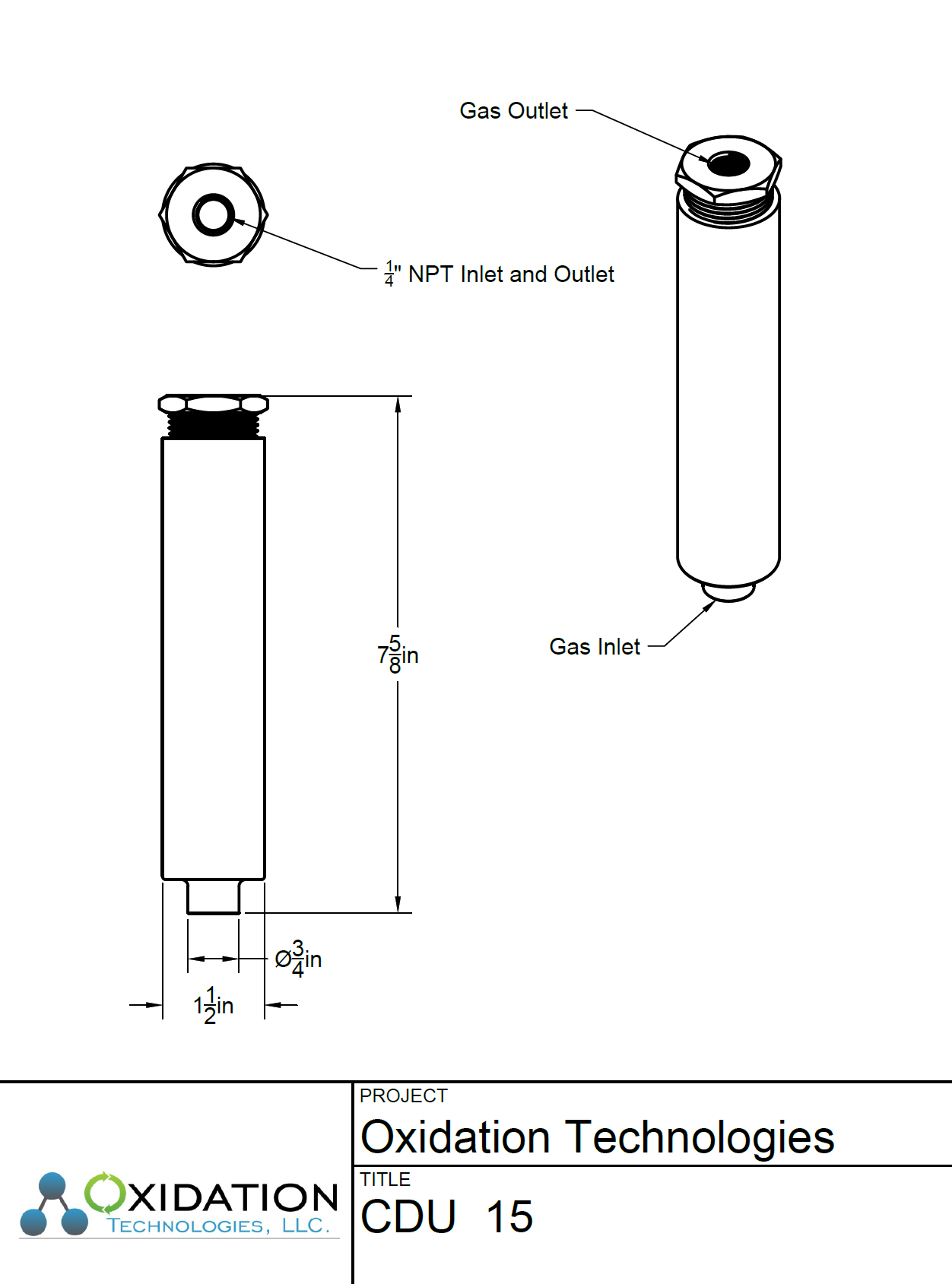
The CDU-15 should be installed in a vertical position only with the removal cap placed at the top. The inlet of the CDU is on the bottom. Both inlet and outlet fittings are 1/4" Female NPT connections.
Flow Capacities:
- 15 LPM in dry ozone gas applications
Dry air is considered a part of an ozone process where ozone gas is produced from oxygen, or dry air and ozone destruction is necessary as part of that process.
Ambient air applications may have some humidity and will fall somewhere between wet and dry process air classification. We suggest for humidity levels above 50% a heater band is used. The CDU-15 is not available with a heater. The CDU-30 should be considered.
Standard Features:
CDU-15 Ozone Destruct Unit – Stainless steel destruct unit filled with ozone destruct catalyst. Shell dimensions are 1.5” diameter x 7” tall. With a proper air-gap at inlet and outlet this provides a velocity of 0.72 ft/seconds and a contact time of 0.8 seconds.
Inlet/Outlet Fittings – Connections are 1/4" Female NPT connections at the inlet and outlet
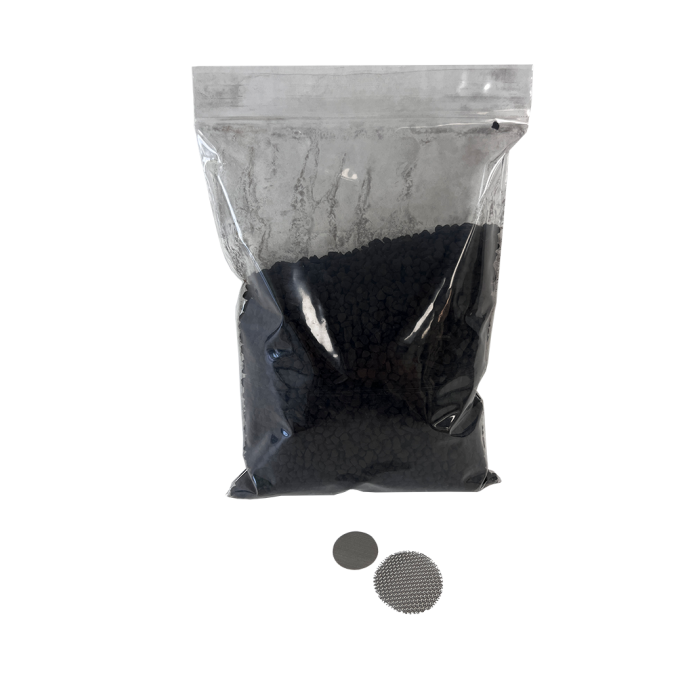
Replaceable Catalyst — Catalyst is replaceable easily with a removable threaded cap, screens used to keep the catalyst in place are also replaceable
Replaceable Catalyst:
The catalyst material used in the CDU Ozone Destruct Device is completely replaceable. While the catalyst is expected to have a life of many years in dry gas applications and at least 1 year in wet gas applications it will become contaminated with impurities in the air and loose effectiveness over time. Replacing the catalyst material is very simple. The top cap of the CDU is easily removable with a screen and gasket in place. Old catalyst can be poured out of the top, and replaced. Complete maintenance should take no longer than 30 minutes.
A complete catalyst replacement kit is available that includes the required catalyst material, replacement screens, and a new gasket. Follow this link for details and to purchase.
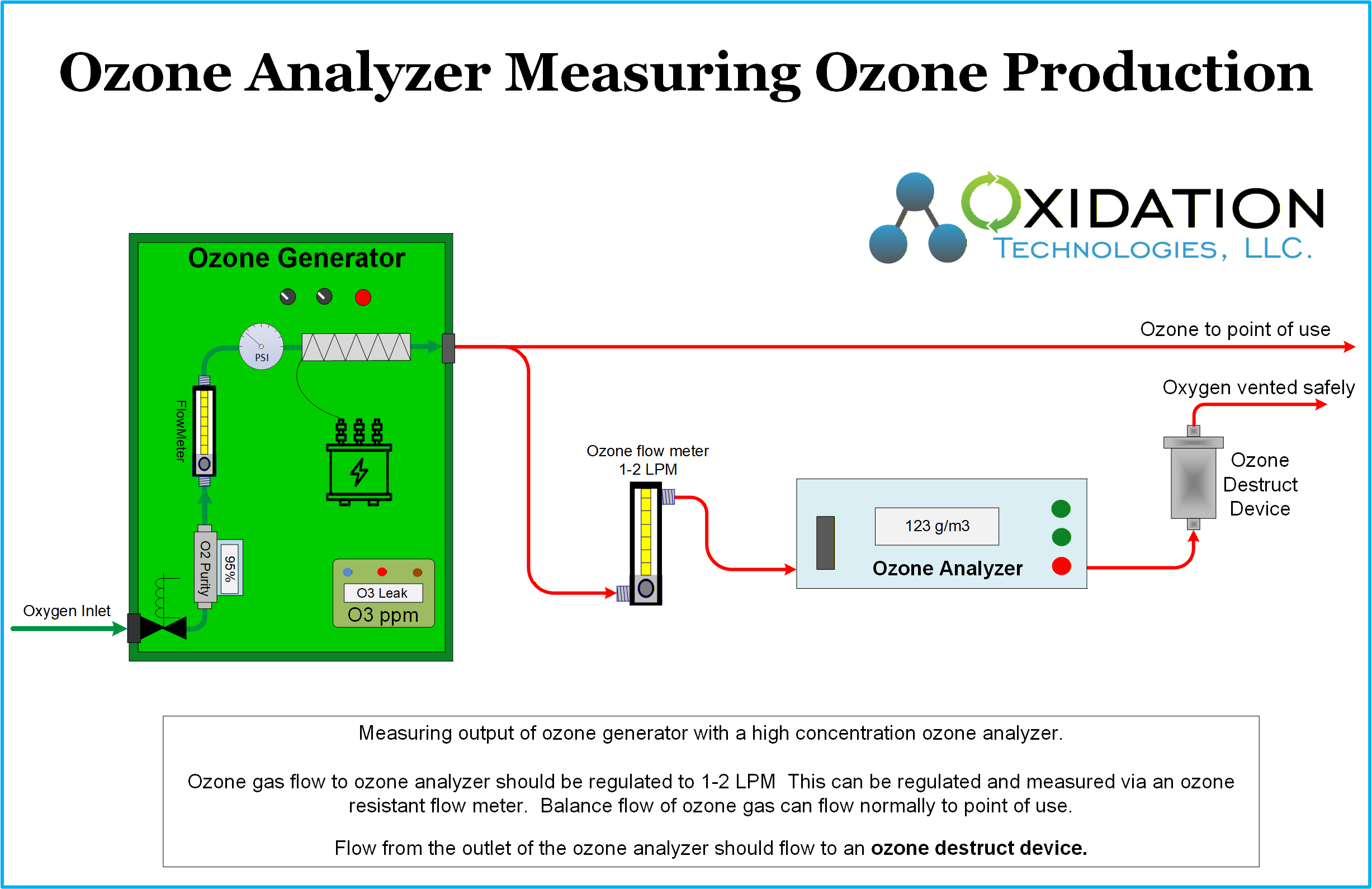
Typical Install:
Below is a drawing of a typical installation of the CDU-15 ozone destruct device used with a high concentration ozone analyzer. In this configuration, ozone generator output can be measured safely in real-time with an ozone analyzer. The ozone analyzer exhaust will flow to the CDU-15 to safely be reverted to oxygen.
Drawings:
Below are drawings of the CDU-15
Frequently Asked Questions:
QUESTION: What type of gaseous Ozone Destruct Unit is right for my process?
ANSWER:
There are a variety of factors to consider when determining what device and what configuration you should use. Below are a few of the most common factors to consider.
-
Will a High Concentration Destruct Unit or Ambient Air Unit be required?
-
High concentration is commonly referred to “Process Gas” destruct unit
-
High concentration = 1 ppm ozone or greater
-
Ambient = Less than 1 ppm ozone
-
-
Will the gas stream be Wet or Dry? Wet gas streams require a heater band and a specific design inside the destruct unit to eliminate the potential of moisture condensation on the destruct media.
-
Wet = Any air stream with the potential of condensation
-
Dry = Process gas streams with dry-air or oxygen feed-gas directly from an ozone generator
-
QUESTION: What is a High concentration Ozone Destruct Unit?
ANSWER:
A high-concentration destruct unit will revert ozone (O3) gas back to oxygen (O2) in the gas phase at ozone concentrations above 20% by weight. These units will use Carulite-200 catalyst media in a stainless steel shell. Proper design will consider air-speed velocity past the catalyst material. When designed properly, an ozone destruction efficiency of 99.96% will be achieved at peak design flow. Higher ozone destruct efficiencies are realized at lower flow-rates.
Oxidation Technologies builds the CDU-Series ozone destruct units to work with high-concentration applications. Take note of the Wet or Dry gas flow info below to determine what options may be necessary and how to size the unit properly.
QUESTION: What is the catalyst material used in the CDU-Series Destruct Units?
ANSWER:
Carulite-200 is used as the destruct media in all CDU-Series and High Concentration Ozone Destruct Units. Carulite-200 is a hopcalite-type of catalyst using manganese dioxide and copper oxide. Carulite-200 is a true catalyst method of ozone destruction. 99.96% efficient at rated flow-rates. Works well with dry ozone gas and humid gas such as off-gassed ozone from a water system. Carulite-200 performs well in both dry and humid gas streams but should be protected from:
- Condensed water
- Volatile organic compounds (VOCs)
- Acids
- Dust contamination
QUESTION: Can I get an SDS (MSDS) for Carulite-200?
ANSWER:
Yes link here – Caulite-200 Safety Data Sheet
QUESTION: How long will Carulite-200 last? Does it require replacement?
ANSWER:
Although Carulite-200 is a true catalyst (not consumed in the reaction), it gradually degrades due to dusting, contamination, or poisoning.
-
Typical service life: ~1 year under normal conditions.
-
Recommended maintenance: Replace annually to maintain performance and safety.
Catalyst life may be shorter in humid or contaminated gas streams.
QUESTION: My Carulite-200 Catalyst got wet, do I need to replace it?
ANSWER:
Replacement of the catalyst material is the simplest solution and offers the highest level of confidence moving forward.
However, it can sometimes be recovered.
-
Remove it from the destruct unit.
-
Bake in an oven at 500°F (260°C) for several hours until completely dry.
-
Allow to cool before reuse.
This process may also remove some VOC or dust contamination. However, for reliability, replacement is usually easier and safer.
QUESTION: Is Carulite-200 safe to handle?
ANSWER:
Yes. Carulite-200 is not classified as hazardous, but it is a fine granular powder. Use normal PPE for dusty materials — gloves, eye protection, and a dust mask or respirator if handling large quantities.
QUESTION: How do I dispose of Carulite-200?
ANSWER:
Carulite-200 is not a hazardous waste substance and can be disposed of in landfills. However, if the Carulite has been poisoned with toxic or hazardous materials, proper disposal criteria of those materials should be followed.
QUESTION: What destruction efficiency can I expect?
ANSWER:
Properly designed ozone destruct units achieve ≥99.96% destruction efficiency at maximum design flow-rate. Lower flow-rates will achieve higher destruction efficiencies. Achieving 100% ozone destruction efficiency is reasonable if lower flow-rates are used.
QUESTION: Can the ozone destruct unit handle vacuum or pressure?
ANSWER:
Yes. Standard CDU-Series units are designed for slight vacuum (-5 PSI) or low-pressure (+5 PSI) applications (typical of ozone off-gas systems).
For pressurized systems, consult Oxidation Technologies for pressure-rated housings and fittings.
QUESTION: How do I know when the catalyst needs replacement?
ANSWER:
Monitor the outlet ozone concentration using an ozone analyzer. If outlet ozone rises above trace levels (typically >0.1 ppm), the catalyst is no longer fully active and should be replaced.
QUESTION: Can I regenerate Carulite-200 indefinitely?
ANSWER:
Baking can dry and partially reactivate Carulite-200, but repeated cycles reduce effectiveness due to the absorption of dust and other contaminants that are not eliminated with temperature alone. It is not indefinitely regenerable. Regular replacement ensures consistent performance.
QUESTION: Do ozone destruct units require maintenance other than catalyst replacement?
ANSWER:
Routine maintenance is minimal:
-
Inspect for dust buildup or condensation.
-
Verify heater operation (wet gas models).
-
Replace catalyst annually or as needed.
-
Confirm outlet ozone levels periodically with a monitor.
- Gaskets can be replaced if they are damaged or cracked
- Screens can be replaced if they become damaged
QUESTION: What happens if ozone is vented without destruction?
ANSWER:
Uncontrolled release of ozone can be hazardous. Ozone is a powerful oxidizer and respiratory irritant.
Ozone destruct units ensure worker safety, regulatory compliance, and environmental protection by converting ozone to oxygen before venting.
Downloads:
Carulite-200 MSDS Hoja De Datos De Seguridad (HDS)
Carulite-200 MSDS Brazilian-Portuguese
Carulite-200 MSDS Canadian-French
Carulite-200 MSDS Canadian-English
Carulite-200 MSDS France-French
Carulite-200 MSDS Great-Britain-EU-English
Carulite-200 MSDS Taiwan-Chinese
Additional Information:
More Information
| Manufacturer | Oxidation Technologies |
|---|---|
| Operating Pressure | -5 - 50 PSI |
| Max Flow Rating | 15 LPM (0.53 CFM) |
| Gas Connections | 1/4" Female NPT inlet/outlet |
| Dimensions (LxWxH) | 1.5" diameter tube 8" long |
| Nominal Gas Flow Rate | 15 LPM Max |
| Wet Gas Rating | NA |
| Dry Gas Rating | 15 LPM |
| Operational Temperature Range | 0 - 125-deg F |
| Power Requirements | NA |
| Lead Time | 1-week |
| Warranty | 1 Year |
| Country of Origin | USA |